
Power
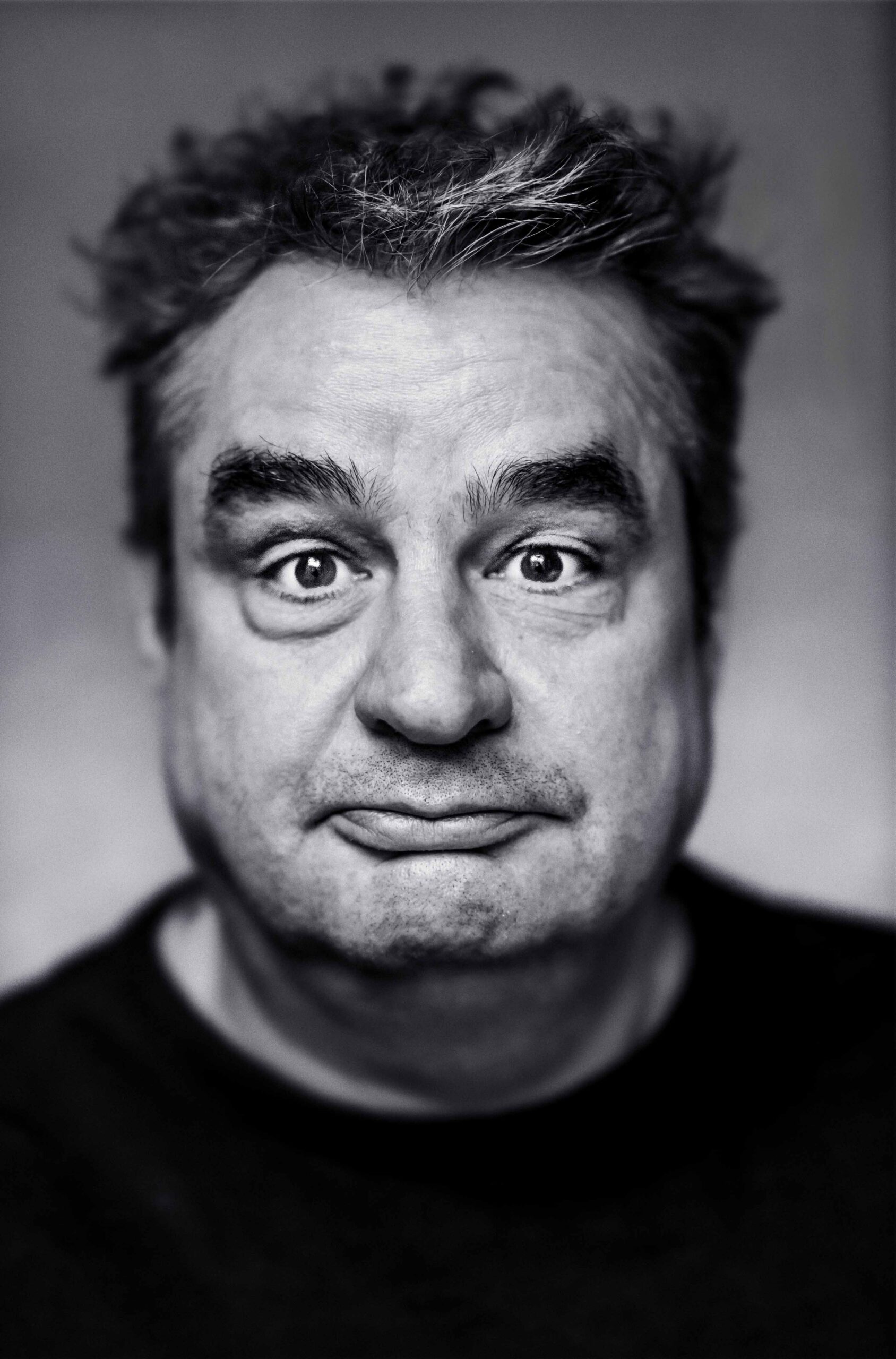
Frank Lammers: "People apparently like rascals"
Frank Lammers is an actor, director and voice-over artist. He has built a varied career on distinctive roles in film.
Frank Lammers is an actor, director and voice-over. He built a varied career with notable roles in films such as De Dominee, De Bende van Oss and Nachtrit, for which he was awarded a Golden Calf. He achieved his greatest fame with his role in the Dutch-Belgian series Undercover and the subsequent spin-off Ferry. MASTERS spoke to the Brabander about stereotyping, success and the secret of a good marriage.
INTRODUCTION
How do you look back on the year 2024?
“I am an optimistic person and always cheerful, but 2024 was not the best year for humanity. We are in a world full of crazy rulers. It is all so hard, cold and unkind. It is about greed and money. I have nothing to do with that. We cannot leave that behind us, because unfortunately it will continue for the time being. The election of Donald Trump was the low point of the past year. What that man says is downright wild. It makes me really sad. With what vision did I start the year? I am not a fan of making plans or dreaming. I try to live in the now.”
INTRODUCTION
You are approachable and have no manager. Don't need an agency?
"In the Netherlands, I don't think that's necessary. I can negotiate perfectly well for myself and I keep my own agenda. I negotiate mainly to my own satisfaction and not to maximise my return. Moreover, most people who make films know who I am by now."
INTRODUCTION
You were born and raised in Mierlo. To what extent do you still feel connected to Brabant, now that you have lived in Amsterdam for so long?
“My soft G has never gone away, just like the love for ‘my’ province. I always enjoy camping below the rivers. People from Brabant are not so difficult. In principle, we always say ‘yes’. Then we see what the problem is or what still needs to be solved. People from Brabant avoid conflicts and avoid confrontation. They prefer not to say it too loudly if they disagree with something. I recognize that in myself, certainly on a personal level. My father, sister and many other family members still live in Brabant, and most of my old friends have stayed there. Last year I went away for a weekend with a number of them. I organize a football tournament at my old club every year and I regularly go to a PSV match. These are great times to be a PSV supporter.”
INTRODUCTION
INTRODUCTION
If you hadn't become an actor and the cards had been dealt differently, you would now be an anthropologist. What triggered you?
“In our education system, you have to decide at eighteen what you want to do with the rest of your life. I think that this is an impossible task. I certainly couldn’t do it. The only thing I wanted to do, that I knew for sure I wanted to do, was to see as much of the world as possible. I was always fascinated by peoples and special destinations. I enrolled in a study of Cultural Anthropology in Utrecht. At the same time, I auditioned for the Amsterdam Theater School, because those around me thought I had talent. To my surprise, I was accepted. I wanted to seize this opportunity, so that I wouldn’t see it as a missed opportunity later.”
INTRODUCTION
What did your parents think of this choice?
“They found it quite difficult and advised me to study. The film world was a world they did not know at all and according to my parents there was no way to earn a living in it. I think it was healthy that they questioned that. When the letter arrived that I had been accepted, my mother had already secretly opened it. I was still asleep. Then she came in: “There is mail for you.” She was very happy for me.”
Your career is multifaceted. From a house husband in supermarket advertising, Santa Claus in Ziggo Dome to a drug baron in Undercover. Do you consciously choose diversity?
“Certainly. The highest achievable goal for me as an actor is not to be put in a box. When Jumbo approached me, that gave me a lot of financial freedom. But it was quite dangerous, because you risk getting a kind of label stuck on you. I immediately said: 'I'm an actor, so if I want to play a drug lord, I'll do it.' They liked that, that was nice. At the same time, Michael de Ruyter en J. Kessels out. Fortunately, I have reached a status where I can show extremes in terms of roles. If you put the friendly family man next to Ferry Bouman, you can play everything in between. It is so far apart that no one can say: 'That is the actor who always does the same thing.'”
INTRODUCTION
How do you explain the success of the series? Undercover and the spin-off series ferry?
INTRODUCTION
“Ferry Bouman is a crook, but people apparently like crooks. Both the series and the film were made by a team of very good writers. Everything about it is right. That doesn't happen very often in your career. I felt that quite quickly. I am convinced that the success is due to a team of people who put their heart and soul into this. They were given the freedom and appreciation for that. That made it a success, apart from a good script and some acting talent here and there, haha.”
INTRODUCTION
INTRODUCTION
What are the differences between the Dutch and Belgian film worlds?
“In the Netherlands, there is still too much coloring within the lines, while Belgian productions such as Undercover en ferry show that people can also be happy with series with a raw edge. In Belgium, culture is more appreciated. There is more money, time and attention for the product. In Belgium, they have a different approach, with a little more love and softness for what you are doing together. I feel more at home there than in the Netherlands.”
INTRODUCTION
What do you think about drugs?
"I've tried it all, but it didn't make me happy. It eventually makes you depressed. It destroys everything. I think we're going to have to ferry show that crime is far from a panacea, especially with the new film. In the end it doesn't yield anything and you look over your shoulder for the rest of your life. I do believe that many types of drugs should be made legal. Then excesses with violence and addiction will be a thing of the past."
INTRODUCTION
How long will a figure like Ferry continue to exist?
"For now I'm focusing on other projects. But if a good new story comes along, it's always negotiable. I love the character of Ferry and the people I've worked with. So if you ask if I still want it and why, the answer is 'yes', because after six years it's become family and I miss my family."
INTRODUCTION
INTRODUCTION
INTRODUCTION


