
Power
Esther Vergeer: Figurehead for life
She remains the figurehead of disability sport in the Netherlands. As a wheelchair tennis player, Esther Vergeer dominated the sport from 2
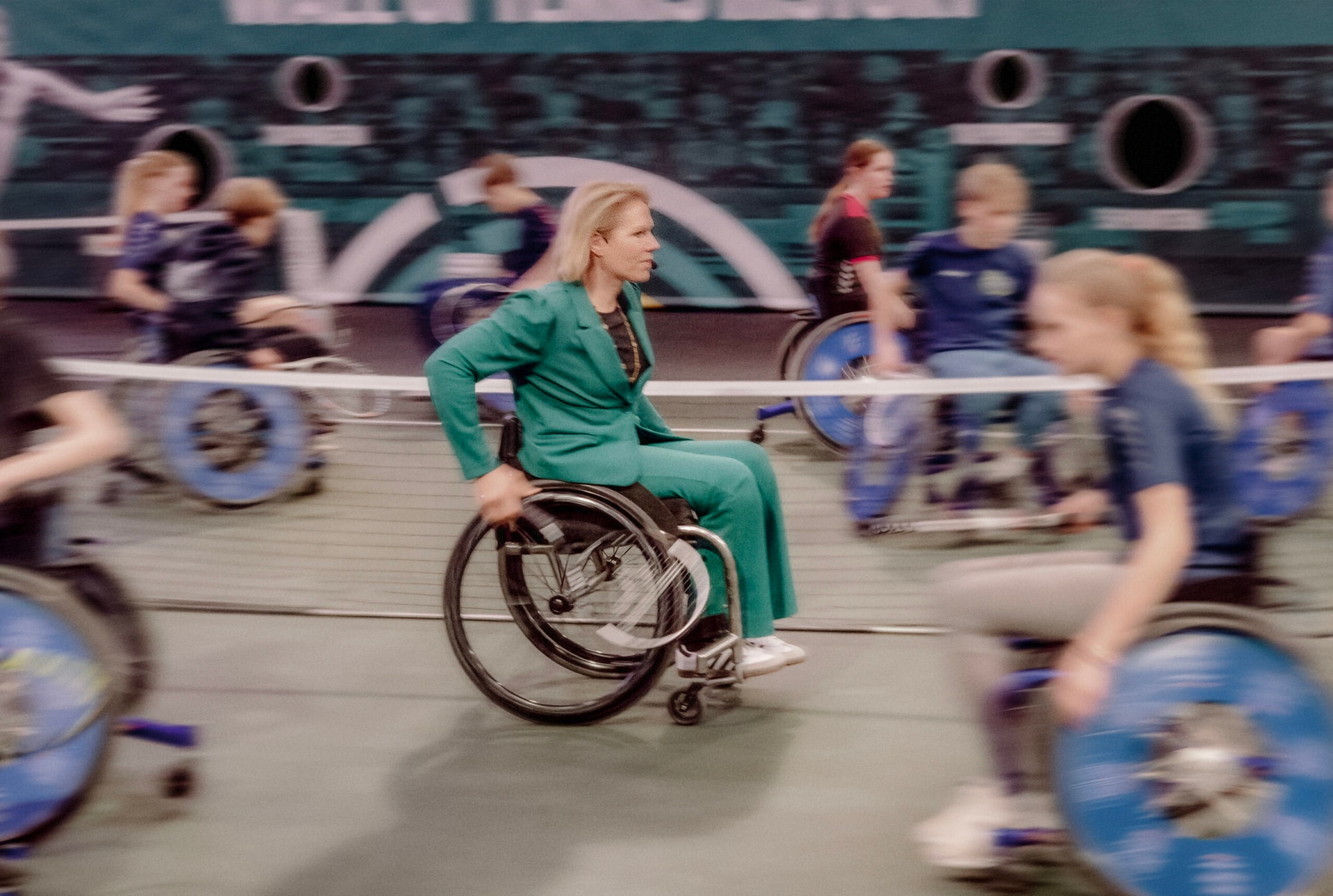
She is still the figurehead of disabled sports in the Netherlands. As a wheelchair tennis player, Esther Vergeer remained undefeated for 2003 matches in a row from 2012 to 470, won gold seven times during the Paralympic Games and was inducted into the Tennis Hall of Fame. She is still active at the highest level in the sport at the age of 43. Jaap de Groot spoke extensively with Esther Vergeer about her current activities and ambitions.
How do you currently earn your living?
“These are all assignments from my BV. One of them is my directorship at the ABN AMRO Open Wheelchair tournament since 2009, the largest indoor wheelchair tennis tournament in Europe. I am also chef de mission of the Paralympic team, with which I have been to four Summer and Winter Games. Furthermore, I do presentations at companies via Sportspeakers and I have ambassadorships at the Postcode Lottery and Adidas, among others. Recently I have also started doing something completely different and am active at &Samhoud Consultancy. In this way I hope to be able to broaden my horizons, which ties in with my need not to be seen only as the figurehead of disabled sports. It is therefore also a good way to hold myself up to the light. A bit away from sports to investigate where I can contribute something else and what else I like.”
As tournament director at the ABN AMRO Tennis Tournament, do you pay the wheelchair tennis players?
“Each participant does not receive a starting fee, but they do receive prize money. There is a prize pool of approximately 70.000 dollars available for this.”
Could wheelchair tennis players eventually make a living from their sport?
“They are already there. I think that worldwide there are about eight to ten who have made wheelchair tennis their profession. Not only men, but also women.”
To what extent have you also been a pioneer in this?
“When I started, wheelchair tennis was not yet integrated. I have seen this happen within the Grand Slams and that the prize money also increased as a result. When I played tennis, I earned around 10.000 to 15.000 euros per Grand Slam won. Diede de Groot now earns a hundred thousand. So in ten years, the prize money has increased tenfold. We have reached the point where it is also seen as an addition to the event at other tournaments. So not only at the Grand Slams, but also at the ATP and WTA tournaments. As a result, the income will increase even further.”
Why is interest increasing so much?
“Many organizations are looking to broaden the event. Moreover, it doesn’t really take much effort. The event is already set up, the courts are often free for hours, so why not fill it with other competitions? In addition, it is very nice for a main sponsor to show that they are also involved in other social values. These tone of voice is becoming increasingly important. The addition of women to wheelchair tennis during the ABN AMRO tournament is also to indicate that equal opportunities for women are supported. In this way, a certain color is given to this part of their philosophy to the outside world.”
Do you see this process in other sports as well?
“Absolutely. Rowing, triathlon and cycling also all have integrated events at European and World Championships. However, an event like the ABN AMRO Open is a leader when it comes to communication and equality. In our country, wheelchair tennis players have exactly the same facilities as able-bodied players. In other sports, this is sometimes different. Not the same hotel, not the same transport or dining options. Then you are a kind of side event. In that respect, there are still steps to be taken. But the development itself is of course positive.”
To what extent does this emancipation of Paralympic sports differ per continent?
“A lot is still determined from Europe. Also because many international sports organizations are located there. If they indicate that integration is required during a World Cup, then that should happen. Wherever that may be. The difference with the Netherlands and many other countries in particular is that we now consider it normal. Certainly outside Europe, disabled sports are still seen as confrontational here and there.”
On which continent is there still a lot of work to be done?
“I find it difficult to say. Recently there were the Next Gen ATP Finals in Dubai, with wheelchair tennis on the program. So they really want to, but I have the idea that they have trouble dealing with it. You don't see them on the street, which means that there is no general image of people with a disability in society. So it is not a lack of will, but a bit of clumsiness. What should we do with this group now?"
How did you experience that during the 2008 Paralympic Games in Beijing, when China had a bad reputation towards people with disabilities?
"We were a kind of freak show back then. That was really weird. When we were on the street, people always came to help us, because they thought we couldn't do anything. That's how it was seen in China, apparently. It's probably improved there now, but it's certainly not a given."
This shows how important the link between the Olympic Games and the Paralympic Games is. In London and Paris, the stands were also full at the Paralympic Games.
“That was also the case in Beijing, but then from a kind of obligation after people had received a ticket in the mail with the message 'you have to sit there on September 6'. There was no interest, it was made mandatory. Not to be compared with Paris, which was positioned and promoted completely differently. People wanted to be part of that Olympic vibe there. That's how the real fans are created. On the other hand, I still notice how difficult it is to get people to the stadium specifically for disabled sports. That's why integration at a regular sporting event, such as the grand slams and the ABN AMRO Open, is still very important. Last November, the Wheelchair Tennis Masters were in Arnhem. Apart from some family and friends, no one came. So it still has to be combined, like the past seventeen years in Ahoy. Then involvement is created, people come back every year and increasingly make a habit of also going to watch the wheelchair tennis. Then it ultimately adds something concrete to the event. As was the case again this year.”


