
Power
Anna Nooshin: flight to success
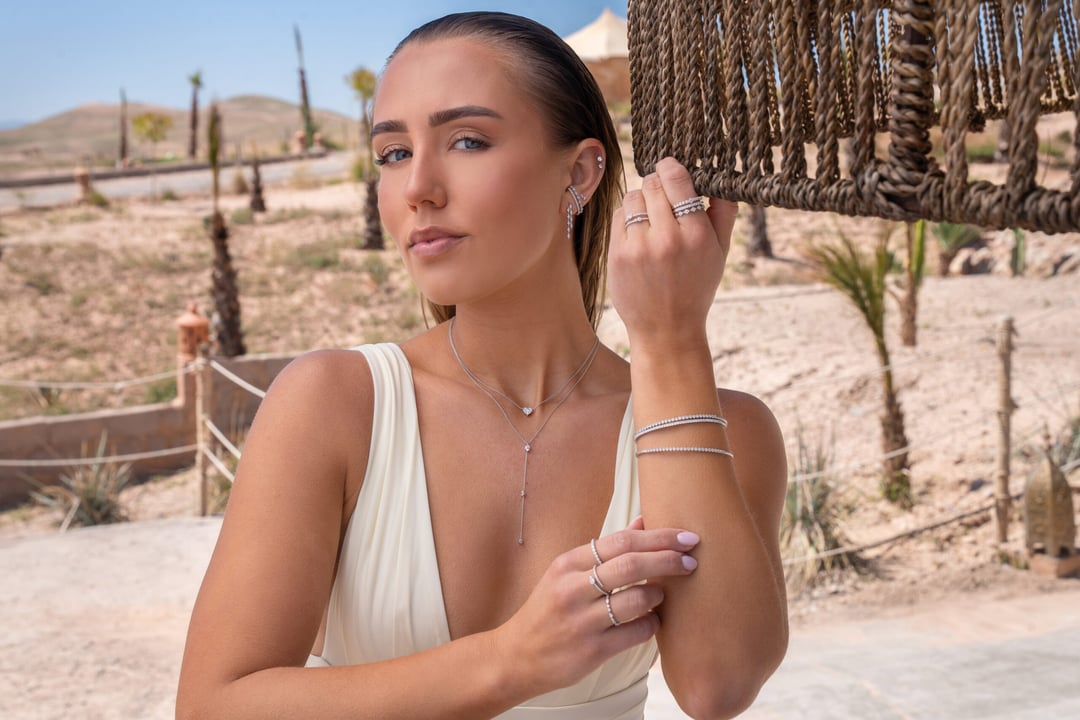
Anna Nooshin (Tehran, 1986) fled to the Netherlands at age seven with her parents and younger sister. She became known as an influencer and is now a leading entrepreneur.
Anna Nooshin (Tehran, 1986) fled to the Netherlands at the age of seven with her parents and sister, two years younger, to apply for asylum there. She became known as an influencer and has now grown into a top entrepreneur. Her documentary Status was launched at the end of April, in which she discusses her younger years. “I felt like a third-class citizen and that triggered an enormous willpower in me: I will continue until I am very successful.”
Styling: Esmeralda Schipper-Zijp
Styling assistant: Lieve Nieuwland
Make-up: Gwendolyn van Waveren
Her: Juliette den Ouden
What are the initial reactions to the series, which can now be seen on Prime Video?
“I'm very fond of it numbers & views, which does something in terms of viewing figures, but with this project that is very much out of my hands. My Instagram is full of nothing but sweet DMs, mainly from women. It has helped me so much, how good of you to share this. "
Did you have a purpose for it?
“Not really, because I wasn't in charge of the process at all. It took some getting used to relinquishing control and trusting others. I especially hoped that I would see myself in the documentary. That was 100 percent successful. Everyone who knows me well also says: 'Oh, I really see Antje in it.' Never before have I made something that has been so intimate.”
What motivated you to make the documentary?
“In my teenage years, when I became much more aware that I did not always feel mentally strong or comfortable in my own skin, I would have found it very nice to have some kind of fellow sufferers who were known to a large audience. That's what I was looking for, for example in interviews on YouTube. For me it would have been reassuring if someone I looked up to or whom I considered successful would admit very openly: 'I don't feel good every day, I'm also searching sometimes. And that's okay.' I hope little Annas who see this realize that you will fall many times, but the real loss is when you give up.”You were followed by the camera for months. How was that?
“The first conversations with a documentary maker Niki Padidar, also an Iranian one, took place in January 2021 and we filmed until just before the launch, last April 29. So you spend quite a long time on that process. Not only in terms of filming, but also in terms of getting to know each other. Niki is someone who works very much on feeling and wanted to have a lot of sessions with me before she even started playing. Even though it was a long process, I never got used to having a camera around. At most at times when I was absorbed in my work. I found it especially uncomfortable during the personal interviews and my sessions with a psychiatrist Glenn Helberg. But if you want to say something as purely as possible, that discomfort can also be visible. It doesn't have to be very serene.”
In front of the camera, you and your mother and sister Aida talk for the first time about issues from your youth, such as domestic violence. To what extent was making the documentary therapeutic in that respect?
“I had no illusions that we would suddenly be talking about it very openly every day. It does feel as if a very heavy blanket has been lifted from us - you no longer have to constantly refer to it. The therapeutic effect is much more about identifying what questions are in your head. Then the answers almost no longer matter.”
You make yourself vulnerable in the documentary. But vulnerability can also be used against you: weren't you afraid of that?
“Yes, but that didn't stop me. That negativity will come anyway. For ten years I made myself much less vulnerable and then I was not spared. And I struggle with that. In the documentary you see me crying to my mother because they were so mean to me. I find that quite painful to see again. You're a grown woman after all! Who cares what others say about you? But that just really affects me. I have always wanted to feel that acceptance and love. And if you don't get that, you take it very personally, because it is about you personally. While, in the end you have to realize: they have no idea who you are. It is my process to learn to deal with that. My intentions are good, I know what I do, what I show, how I am to my friends and family. Then it's inhaling and exhaling and let go, let God. There's not much you can do about that. I am currently in a phase where I try to be liked less anxiously. Now I'm much more relaxed about that hatred, because I know: with the documentary I at least have one thing in which I fully see myself reflected. And in my opinion, if you watch the documentary with empathy as a human being, you just see a girl doing her best.”Dress: BenchellalWhat was it like in 2011 when you started using social media?
“Everything was new and I felt very different. In the eleven years that I have been in the profession, your own perception has also changed a lot. Those first years were not at all about the things that are now about: the verbal abuse, the cancel culture policy and everything that goes with it. Also the question 'how real or how vulnerable should you be?' wasn't playing yet. It all just happened. I never had the feeling that I wanted to be as vulnerable as I am now in those ten years. I was on autopilot with what I was doing.”
Did you like it better at the time?
"Much nicer! Now you have to pay more attention. But that doesn't just apply to my little world: there is one in every industry nowadays high alert and you have to be very aware. I feel like in today's society the first thought is: How do I progress as an individual? While you all have to do it together. And I really miss that feeling in recent years.”
You are known as an influencer and entrepreneur, Status also zooms in on where you come from. As a refugee, would you ever have dreamed that you could be so successful?
“I didn't necessarily think that this would be it, but from the moment we lived in Aalsmeer - when I was about ten or eleven years old - a switch went off in me: this isn't going to be my life forever! That was due to minor setbacks. For example, it was confronting to hear that the second-hand sweater I wore at school was one of the discarded clothes of a classmate. And that the mother of a friend, when I stood at the door, literally said: 'Oh, you are coming to use our services again?' It made me feel like a third-class citizen. And that triggered an enormous willpower in me: I will continue until I am very successful. But I didn't know yet what form it should take.”
Did you have dreams?
“Yes, I have always had a lot of dreams, but I must say that I am a realistic dreamer. I wasn't going to become a pop star; I just don't have that talent. I did dream that I would become famous by writing books or plays, that I would work in fashion or work at the United Nations.”Dress: Benchellal
MASTERS MAGAZINE
Want to read more about this interview? In the summer edition of MASTERS an interview with Sven Kramer, a driving impression of the Bugatti Chiron Super Sport (> € 4 million) and a study into the Effect of Max. But above all, it features people who bring light to the darkness. Such as Henk Jan Beltman, who took over Tony's Chocolonely because with a company you can make the world a more beautiful place. Chef Emile van der Staak, who has the ambition to change our food culture and therefore cooks with plants and vegetables that he obtains from the food forest. Designer Nienke Hoogvliet, who has introduced natural seaweed paint as an alternative to harmful textile paint. And Anna Nooshin, who criticizes the current social media culture of pretty pictures. In her documentary she also shares the less beautiful aspects of her life. “In the hope that someone who recognizes themselves in, for example, domestic violence or the struggle with your mental well-being, can take comfort in the fact that I have also experienced that and am still standing.” All people who ask questions, hold up mirrors, take steps. Steps towards a healthier world and more understanding society.
Also read: “Hidden: a unique fine dining far off the beaten track”