PEOPLE
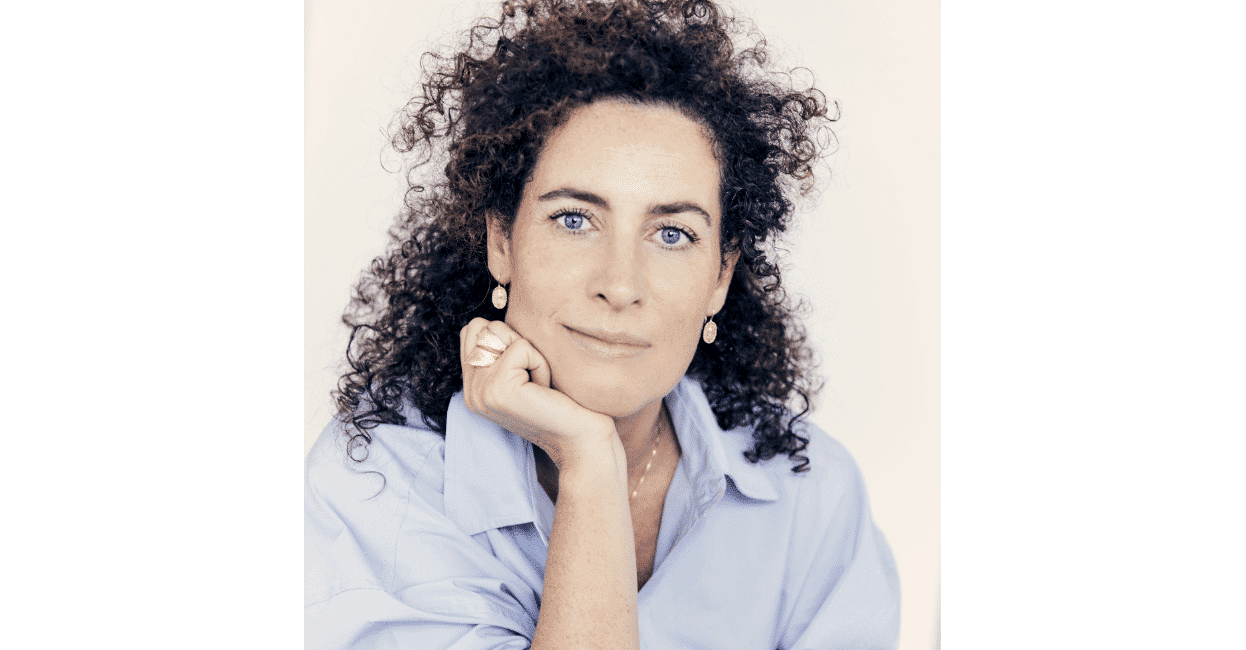
Tamara Gijrath, journalist
Tamara Gijrath spoke to sixty mothers and daughters for her book 'If I am very honest'. It became a personal exploration of the relationship between generations.
Tamara Gijrath spoke for her book 'If I'm completely honest' with sixty mothers and daughters. It became a personal search for one of the most complicated and defining relationships in a human life. The book all contains candid conversations with, among others, Nada van Nie, Günay Uslu, Thérèse Boer, Inge de Bruijn, Quinty Trustfull, Monique des Bouvrie, Frederique van der Wal, Aaltje van Zweden and Edsilia Rombley, who openly discuss their relationship with mother or daughter told. Now Tamara has opened up about MASTERS. Who helped her along her career path?Text: Mical Joseph
Image: Yvette Kulkens Photography
What did you aspire to as a young adult?
“I wanted to become a mother at a young age and I wanted to write. Nothing better than those two things. So from an early age I always wrote and absorbed a lot of my surroundings. After I obtained my HAVO diploma, I left for Israel for one year, where I followed a preparatory year of Social Sciences for foreign students at Tel Aviv University. That year I discovered that my heart lay in journalism.”
And then?
“I was accepted at the School of Journalism in Utrecht, but the journalism I had in mind was not what I found during my studies. I found the training quite dull and did not feel at home there. The late Feike Salverda, a celebrated journalist at the time, advised me that if I really wanted to learn the trade, the local newspaper was a good starting point: 'Sit next to the telex and write, write, write.' Shortly afterwards I met Yves. He started a publishing house and published a number of local newspapers and magazines. And so I could practice my profession. I started writing about nostalgic beef sausage on a crate at the local butcher. Eventually I made major human interest stories and interviews and became editor-in-chief of a number of titles.
Last year, when corona broke out, I took a step back in MASTERS HQ and decided to do what I always wanted: write a book.”
Who was your wheelbarrow?
“The women around me are my wheelbarrows. Before I started putting my thoughts and ideas on paper for this book, I already felt enormous support from my sister, my friends and in my mind my mother. I have experienced in my life that the power of women is so strong. In addition, Yves also plays an important role in my life. A wheelbarrow? He is half of the unity that we have formed for thirty years. We strengthen each other time and time again: what I lack, Yves supplements and vice versa. So I presented Yves with my idea for the book on a beautiful sunny day on the terrace of Hotel De L'Europe in Amsterdam. In a split second, Yves showed his enormous enthusiasm and said: 'This is it'. That moment gave me such power.”
You indicate that you knew from a young age that you wanted to become a mother. Have you ever had moments when you were completely 'surprised' by motherhood and you imagined maternity completely differently?
“Certainly, when I became a mother for the first time. It was a moment of worry, pain, uncertainty and vulnerability. In a fraction of a moment you become the most vulnerable person on earth. It is exactly as one of the mothers in my book so eloquently said: “You are only as happy as your unhappiest child.”
How did the idea of writing a book about the mother-daughter relationship come about?
“I already had this idea when my mother was still alive, but it was not yet the time to start this process. After my mother died, I couldn't just go on with life without thinking about hers. I spoke to someone who helped me to look at my mother as a woman and not as my mother. Only then did I understand her better. I wanted to find out that fact. That is why I find the openness and honesty that the sixty mothers and daughters have shown for this book so special, because talking about this relationship is so personal, it comes so close.”
What did you learn during 'If I'm being completely honest'?
“Talk, ask and listen, as long as you can. It deepens your relationship and you not only learn a lot about your mother, but also so much about yourself: where do my beliefs come from? You can say that your mother largely determines who you are. The book is above all a celebration of the love that can exist between a mother and her daughter. My mother is so close to my heart, I still miss her every day. So start the conversation with each other. It is what you as a daughter, as a child, take with you for the rest of your life.
You yourself have two adult sons. What do you give them?
“As a parent, you often only want to show your powerful side, which means the child does not understand his or her own mistakes and doubts. So that's exactly what I'm not preaching about: a good balance between being 'strong' and showing doubts, that's where your strength lies. And above all, a positive outlook on life.
What do you remember most about what your mother taught you?
“The way she lived her life. My mother was a woman who was good to those around her. Parenting does not just consist of telling you how to do it, but above all of setting a good example.”
What has been the biggest learning moment in your career?
“There are so many. For example, the regret you can feel when you give in, when you allow others to persuade you to do things differently than you had in mind.”
What advice do you give your 18-year-old self?
“Always feeling a certain fear and not wanting to stand out has offered me security, but has also limited me. In any case, it did not stimulate me and I had to unlearn that. That's why I would say to the younger Tamara: 'Jump and go!'.
Who have you been a mentor to?
“To be honest, I'm not really concerned with that. I especially try to be a caring, sweet mother and wife for my children, my husband and those around me. I hope to make a difference by being there.”
'If I'm being completely honest' is available for purchase in the (online) bookstore.