
People
Simonis: Tradition with future vision
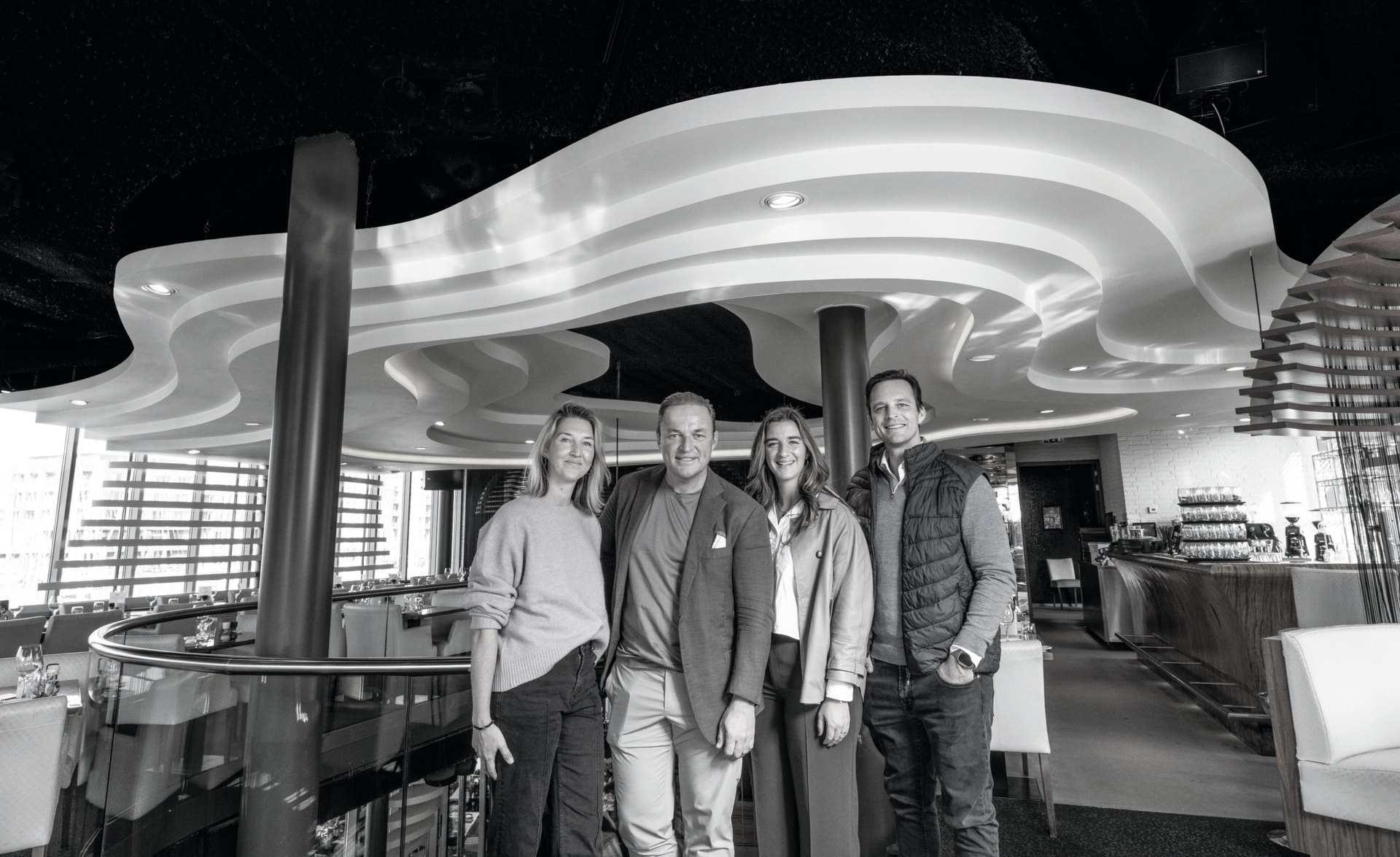
For generations, the Simonis family has stood for fish, craftsmanship and vision. What began as a small eel business has grown into an empire with restaurants including Simonis aan de Haven, Catch by Simonis, Encore by Simonis and, most recently, La Petite Encore. The spirit of the family business remains unchanged: hard work, honest entrepreneurship […]
For generations, the Simonis family has been synonymous with fish, craftsmanship, and vision. What began as a small eel business has grown into an empire with restaurants like Simonis aan de Haven, Catch by Simonis, Encore by Simonis, and, most recently, La Petite Encore. Yet, the spirit of the family business remains: hard work, honest entrepreneurship, and a constant focus on the future. Because at Simonis, it's not just about fish—it's about tradition, family, and the art of continuous innovation. Alain Simonis shares his perspective on entrepreneurship.
How does your slogan "Fish, tasty, affordable, and fast" remain viable in a time of rising prices, higher margins, and increasing pressure?
"We originally come from the fish industry, but in the hospitality industry, you naturally also deal with meat. And then you see: the world of meat is actually quite limited. It revolves around a few main products – beef, pork, chicken, some game – and that's about it. Fish, on the other hand, is so much broader. You can play with it much more, control it much more. But both sectors face the same challenges: rising purchase prices, higher energy costs, and government measures that further increase the pressure. This is especially noticeable in the fishing industry. Of the one hundred family businesses the Netherlands once had, at least sixty have disappeared. This is partly due to the wind farms that literally hinder the fishermen, but also to the sky-high fuel prices. A single trip at sea easily became 25.000 to 30.000 euros more expensive. You have to recoup that from your catch, and that's not always possible. The sector tries to help each other, for example, with an energy surcharge on every kilo of fish sold to support the fishermen. But ultimately, of course, the fish becomes more expensive. And then you have… You also have to deal with rising personnel costs. That's a vicious cycle that affects everyone in the Netherlands, whether you work in the hospitality industry, the clothing industry, or in an office.
What do you mean by 'steering' for fish?
We don't buy from a wholesaler, but directly at the fish auction or from suppliers who supply the wholesaler. That's how we started, and we know that market inside and out. This allows us to skip one or two links in the chain – which saves considerably on costs. Moreover, we're right on the harbor here, with the fish auction literally across the road. So we can adapt very quickly. At seven in the morning, we know what the price has dropped, and we react immediately. The next day, it can be completely different again, because prices at the auction are influenced by countless factors: export, catch, weather, demand. With meat, it's much more stable. Prices are high and hardly fluctuate. Just go to the butcher: a steak or ribeye is practically unaffordable these days. I jokingly say: come eat with us; it's often cheaper, your kitchen stays clean, and the food is even prepared for you. In 2013, we sold two whole sole on a plate at Catch for 25 euros. In other restaurants, you'd already pay €40 or €45 for a single sole. Now, twelve years later, it costs €38 at our place. Not because I like it, but because the purchase price of sole at auction has quadrupled. We've kept pace with the price, but not at that pace. And even now, we're still more attractively priced. Just look at a Van der Valk or similar establishments: you'll easily pay €55 for a sole. Then I think: we offer a higher experience here, better quality, and we're still at €38. That feels fair. Fish should be affordable, fast, and delicious – that remains our philosophy."
Does the fish you buy go to all your restaurants?
At Simonis, the guiding principle is always that the fish we buy must be suitable for both the store and our restaurants. At Encore, that fish gets an Asian twist, while at Catch, we use a classic approach. Naturally, the prices there are higher than at the fishmonger next door. There, you order at the counter, get your own drink, and your number is called out. At Simonis aan de Haven, a table sometimes rotates seven times a day. That volume allows us to keep prices low. Many customers who used to only buy fish in the store found the restaurant too crowded or cluttered. With Catch and Encore, we're responding to that: tranquility, service, and experience are central there. That proved to be a bull's-eye. Now, we cater not only lunch and dinner there, but also business meetings, conferences, and parties. This way, we've tapped into a new market, while the core remains the same: fresh fish, quickly processed, and with minimal waste. What we buy today must be sold within four days. A good example is the tuna from Balfegó, a renowned brand that catches off the Spanish coast. Their tuna is of such high quality "The quality is such that it normally goes straight to Tokyo. We sometimes buy a 150-kilo specimen, which we use as an eye-catcher in the store. We cut it up for the counter. If it doesn't sell that day, it goes on the plate in the restaurant that evening. And whatever's left over, we use in the kitchen. This way, nothing is wasted, and the quality is guaranteed."
Is that the big advantage of a family business, that there are several restaurants under it?
Absolutely. My cousin sells fish at the auction, so we often have direct contact in the morning: what's come in, where's the opportunity? We don't have to work through all sorts of channels; we can switch gears immediately. He might say, for example, 'We have a lot of monkfish in stock,' or 'The mackerel is great right now, should we go all out for that?' Our volume also works in our favor. For example, we buy mussels from Adri & Zoon in Yerseke, another family business. They know exactly where the best mussels are and ensure we always get top quality. At the end of the season, it's difficult to find large mussels, but because we buy a lot, we still get them. That's the advantage of scale. The same goes for our wines. In Catch alone, we sell around 8.000 bottles of Chablis annually. If it suddenly goes up by three euros, I call the importer: 'Are you sure? What if I order 8.000 at once?' Sometimes it works, sometimes it doesn't – and then I look elsewhere. I call other importers: 'I do 8.000 bottles of Chablis a year. What can you offer?' It's not about the lowest price, but about consistency and value. Fish has to be delicious, affordable, and fast – but that applies equally to the rest of your products. That requires a quick turnaround and the courage to innovate. It's in our DNA. My grandparents started with one product: eel. It came from Portugal and swam along the coast to the Zuiderzee. When the Afsluitdijk was completed in 1932, that eel was gone. But Simonis is still around.
Is it difficult to serve both mass and high-end dining under one name?
No, quite the opposite. We find that they reinforce each other. A strong brand name is worth its weight in gold. Take Catch: it's much more than a fish restaurant. Catch is family, business, lunch, and dinner, but also a Sunday afternoon with live music. And all of that under the quality seal 'by Simonis'. That name is synonymous with quality in fish throughout the Netherlands, and we want to live up to that every day, even though it's more challenging these days than it used to be. At Catch, we serve a clientele that wants the best: guests who order the most expensive menu without hesitation and enjoy top quality. At Simonis aan de Haven, the clientele is different, but they belong together. The brand name defines the concept, and the concept defines the experience. Encore is even more festive in that respect: a venue with 480 seats inside and 250 outside. Keeping that full seven days a week isn't a given, but we think: we also pay staff and real estate seven days a week, so we have to go all out seven days a week. That's how we started with a DJ during brunch one Sunday a month, just to create some excitement. Creating. It was an immediate hit: a video went viral, celebrities stopped by, and soon we were doing it every Sunday. I didn't need to earn anything from the music; I just wanted to fill it up. Other concepts followed: an Abba special, Back to the 90s, Lunch with the Stars with artists like Tino Martin, Lee Towers, Gerard Joling, André Hazes… almost every Dutch artist has performed here now. Recently, we had Dinner & Dance with La Fuente – what energy, what a party! And recently, a private party where the birthday boy's family flew in the Gipsy Kings by Patchai Reyes. Fantastic people: warm, honest, musical. The day after their performance, they came over for lunch at Catch, and before I knew it, they were playing guitar at the table. Those are magical moments – you can't plan them. I immediately booked another performance here. We often host special guests here: big business owners, Dutch celebrities, and even members of the Royal Family. Princess Laurentien was here recently. But what I love most is that our music evenings attract a very wide audience. The audience. It's that combination of great atmosphere, food, and live music that draws people in. Whether it's the Gipsy Kings, André Hazes, or Tino Martin, it makes little difference in terms of revenue, because the venue is packed. For me, it's a thrill to bring artists here who normally play at Ahoy or AFAS Live. They get an intimate setting, and we get a full house. And it works both ways: I promote them, and they promote us. André Hazes has a million followers. If he posts something about Encore, it instantly reaches a million people. You can't get any better than that.
The guests who came were satisfied, but Beso didn't get the chance to truly grow. And then you have to have the courage to decide to stop. Entrepreneurship is also about that: being honest and letting go. You can't always roll a six.
Catch and Encore were a huge success, but Beso by Simonis didn't make it. How did that affect you?
The idea behind Beso by Simonis was to establish Spanish cuisine at an international level—something that complemented our other businesses, but with its own identity. On paper, everything was perfect: a good team, a great location, thousands of people passing by daily. And yet, it didn't work out as hoped. After a year and a half, we took stock. If something is a five, but could still become an eight, you keep going. But if it stays a five, you have to be honest: it's too meager. That was the case here. While everything seemed to be right, the feeling wasn't there. Simonis was located five hundred meters away on the harbor, where four thousand people eat on a Sunday afternoon. Then you wonder: what's the problem? Slowly, we realized it was mainly due to the perception of Spanish cuisine. Dutch people tend to think: I'm not a tapas person, or Spanish food isn't for me. While the concept was much broader. The guests who came were satisfied, but it didn't have the chance to truly grow. And then you have to dare to decide to stop. Entrepreneurship is also about that: being honest and Letting go. You can't always roll a six. My youngest sister was there every day, so we saw exactly what was happening. Nobody did anything wrong—it just wasn't quite right. We tried to improve the atmosphere, but the feeling remained cold: too close to the road, not enough warmth. And then comes the moment you have to choose: do you invest even more time and money, or do you pull the plug? Besides, Catch and Encore are strong brands with a clear identity and online experience. Beso lacked that. After a year, we had ten thousand followers, but it lacked experience. People weren't coming back consistently, and it wasn't being used online. And that's crucial these days. After a year and a half, we decided: it's time for something new. We wanted to make it more our own, closer to Simonis and Encore. Initially, we considered a smaller version of Encore. Then, during a trip, we came across a concept: Asian with a Mediterranean flair. That combination stuck: oriental refinement, but with that warm, sunny atmosphere. That felt right. Then the search for a name began, because a name defines Your brand. On the plane back, I wrote down La Petite Encore out of the blue. It sounded perfect. Encore, of course, means "once again," perfect for the idea of a reboot. And La Petite had a double meaning: "the little Encore," but also "the female Encore." I liked the latter, because my sister is in charge. Everyone I showed the name to was immediately enthusiastic. That feeling of: yes, this is right, something we'd never experienced at Beso. From May to September, we deliberately kept communication open: something new is coming, we are working on it, but we are not telling you exactly what yetThat worked well. Before the opening, we organized three test days. We invited regulars with the message: come eat, order what you want, just pay – we'll take care of the rest. Six hundred people showed up in three days, and everyone was enthusiastic. From that moment on, things took off. The first few weeks, we were full; we even had to hire extra staff. And the best part: it just flowed. We'd thought about involving big names in the launch, maybe even having Rico Verhoeven post something, but we didn't even get around to it. It just flowed. And then we knew: that negative feeling about Beso has completely turned around. La Petite Encore feels like a reboot, but also like coming home.
What have you changed?
The outdoor space has been completely upgraded. The terrace was too chilly, too close to the road. Now it's warm, green, and atmospheric. I called the owner of a large garden supplier and said, 'Help me create a real garden.' And he succeeded. We've given the terrace a Parisian flair: awnings, soft tones, warm lighting. Inside, all the tables are set with linen, which makes it more intimate and chic. The same team remains, but with renewed energy and a revamped menu. We've introduced more accessible dishes with an Asian accent. One of the highlights is the hand roll – a new way of eating sushi that's already popular in London, Paris, New York, and Dubai, but hardly exists here yet. We're the first in the Netherlands to offer it and are billing ourselves as 'the first handroll bar in the Netherlands.' The response has been overwhelming. The handrolls represent the Asian side of the concept, combined with Mediterranean influences – a mix of Italian, Greek, and French, but always with that Parisian feel: sexy, stylish, photogenic. And you can see that reflected directly online. La Petite Encore has quickly become a true brand. It's doing well on TikTok with a young audience, and on Instagram and Facebook with the older generation. After such a short time, you can't draw any firm conclusions commercially, but you can feel it in every detail: it's right. The team is enthusiastic, guests are responding positively, and the place is full from Wednesday to Sunday. That inspires confidence."
In a normal company, someone quickly falls if something goes wrong, but not at Simonis.
Exactly. In corporates, someone gets replaced and someone else takes their place – but that doesn't mean things are better. In a family business, you do it together. You don't just look at what went wrong, but especially at how you can turn it into something positive.
What has been Beso's biggest lesson?
"Not everything you touch automatically becomes a success. And that's entrepreneurship: taking risks, trying something new, and accepting that it won't always work."
What role does your father play in such decisions?
“Everything is discussed at the kitchen table, and he is right there.”
Beach House Scheveningen will be a recurring topic…
My father has been working on it for almost twenty-five years. Beach House Scheveningen is more than a construction project for us: it's an opportunity to further develop Simonis – both the fishmonger and the hospitality industry. But new things are constantly emerging. The last hurdle was the power supply. On paper, there's sufficient capacity, but in practice, municipalities, grid operators, and energy companies are all at odds. Of course, there's electricity – for years, seven companies had existing connections – but the administrative side of things is just not working. So we took action ourselves and have now found a solution, with the right parties at the table. Meanwhile, the website has been launched for the Beach House Residences: sixteen apartments and two penthouses. Interest is enormous – within two weeks, we received five hundred applications. It makes sense: it's a unique location, right on the sea and near the harbor. You won't find anything like that in Cadzand or Noordwijk. There's also a tax advantage: they're holiday homes, so you can buy them with your private limited company. You can stay there your entire life, just not be registered. Construction will begin as soon as the apartments are sold. Then we'll move in. We're moving Simonis aan de Haven to the ground floor of the new location – approximately 4.000 square meters. And on top of that, there will be a catering level of almost 900 square meters: for now, we're calling it Catch 2.0."
Aren't you ever afraid that you'll grow too big and that Simonis' soul will fade away?
"No, as long as you keep looking at it the right way, that soul remains. My father always says beautifully: 'We're all just temporary popes.' And that's true. You're there temporarily, you do your best in your time, and then you hand it over to the next generation. Not to make it bigger, but to leave it a better place. We don't have a Catholic background, but I find that image of the Pope fulfilling his duty and handing over the baton striking. We do this for our families, for our children—for those who want to take over later. And if not, that's okay too. It's about freedom: having the choice to follow your own path. My brother initially pursued medicine, just like my father once did, but ultimately chose the family business. That choice was entirely his own—and that's what makes it strong. For us, it's not about growth for growth's sake, but about continuity. About seeing opportunities and building a future. That future now lies primarily in the new construction project, where we have far more possibilities than at our current location. So no, the soul of Simonis isn't fading. It moves with the times, and with the generations that work on it.
MASTERS EXPO
You'll find the refined snacks from Encore by Simonis in several locations during MASTERS EXPO. Want to try them yourself? You can do so in Hall 10, stand 640, and in Hall 12, stand 80.


