
People
Sarah van Rij: Poetry of the Everyday Eye
She sees what others walk past. In Sarah van Rij's work, a hand, a shadow or a passerby becomes a scene of timeless value. Self-taught, sought after internationally and unmistakably distinctive, she builds a photographic universe in which time dissolves and the everyday becomes poetry.
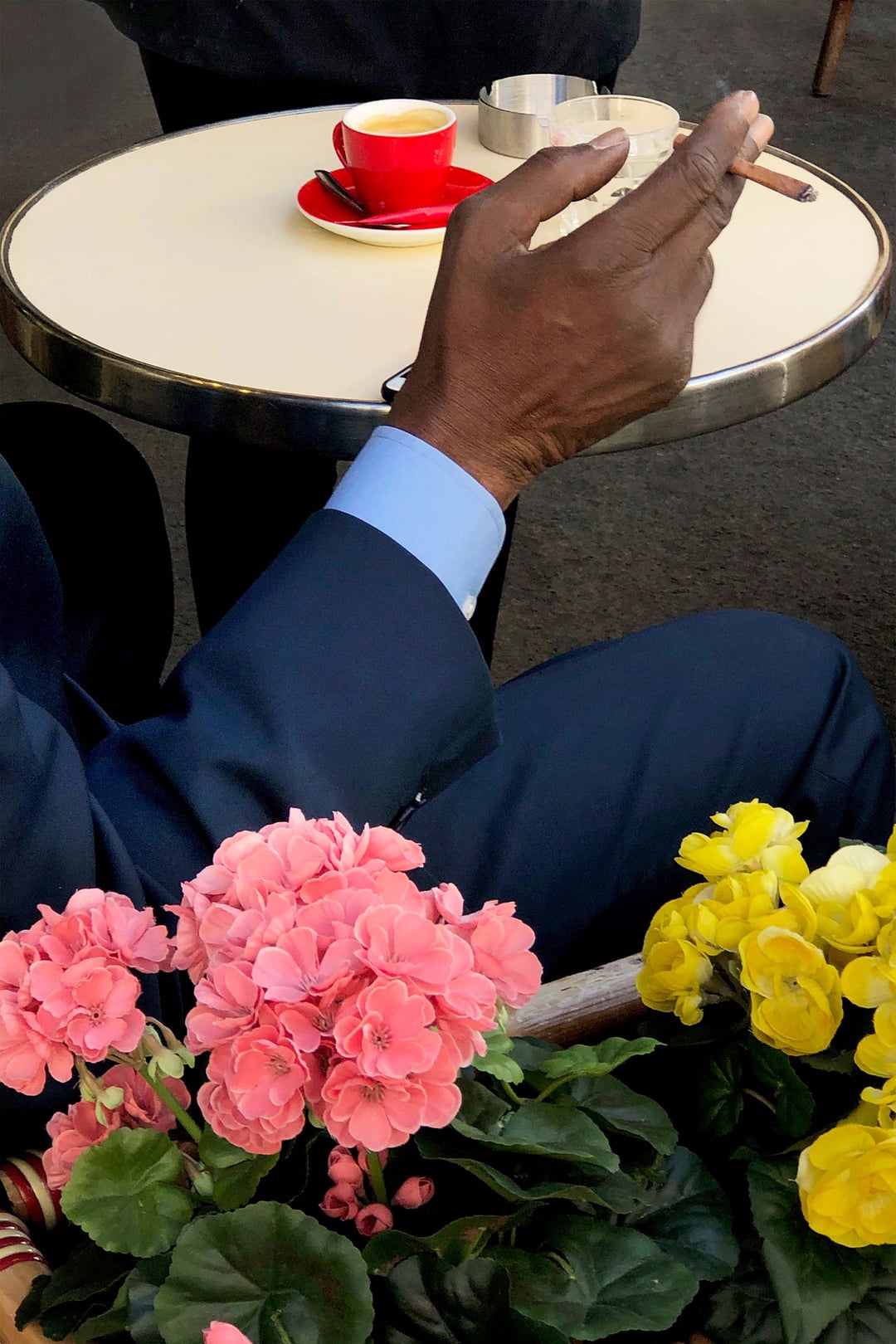
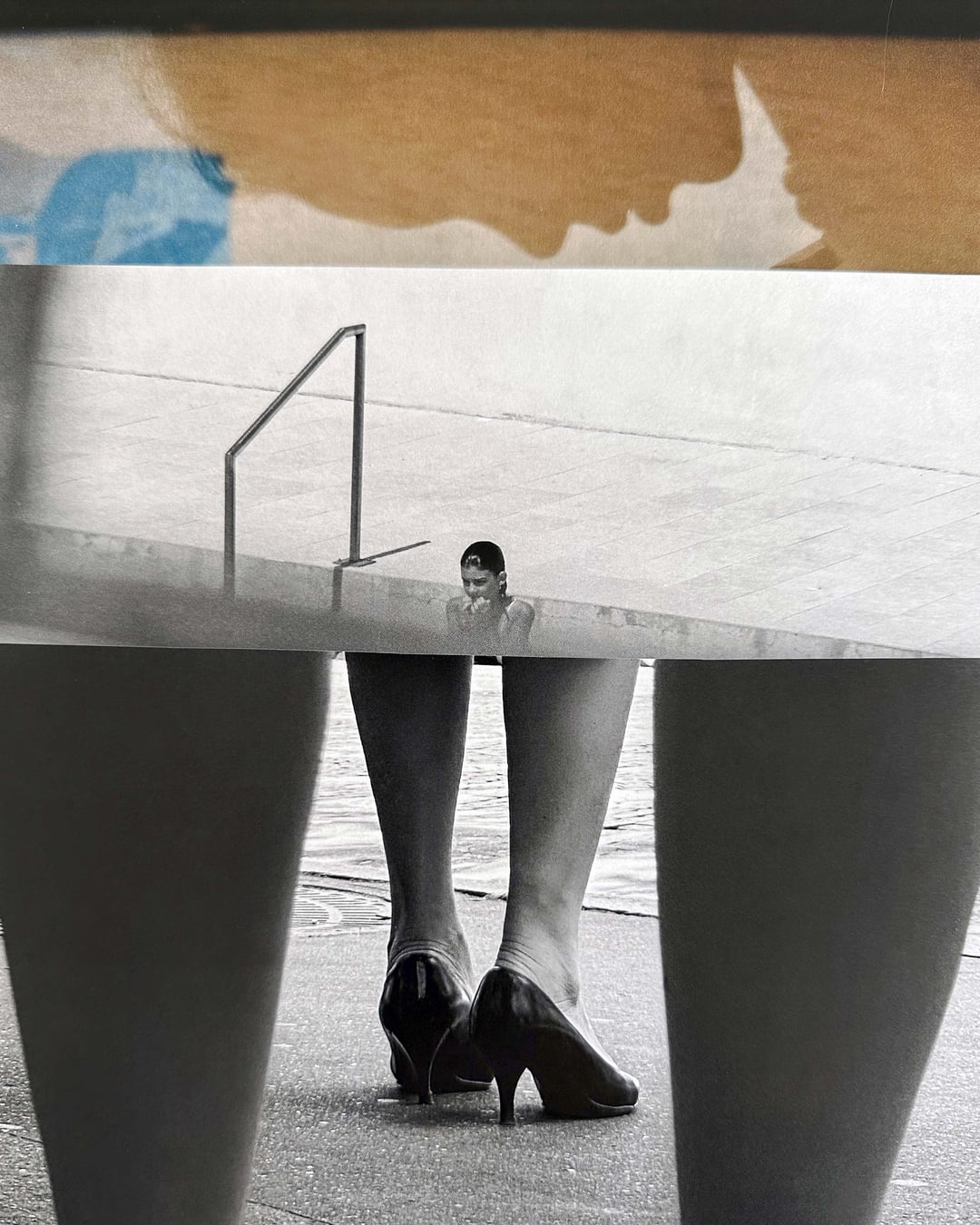
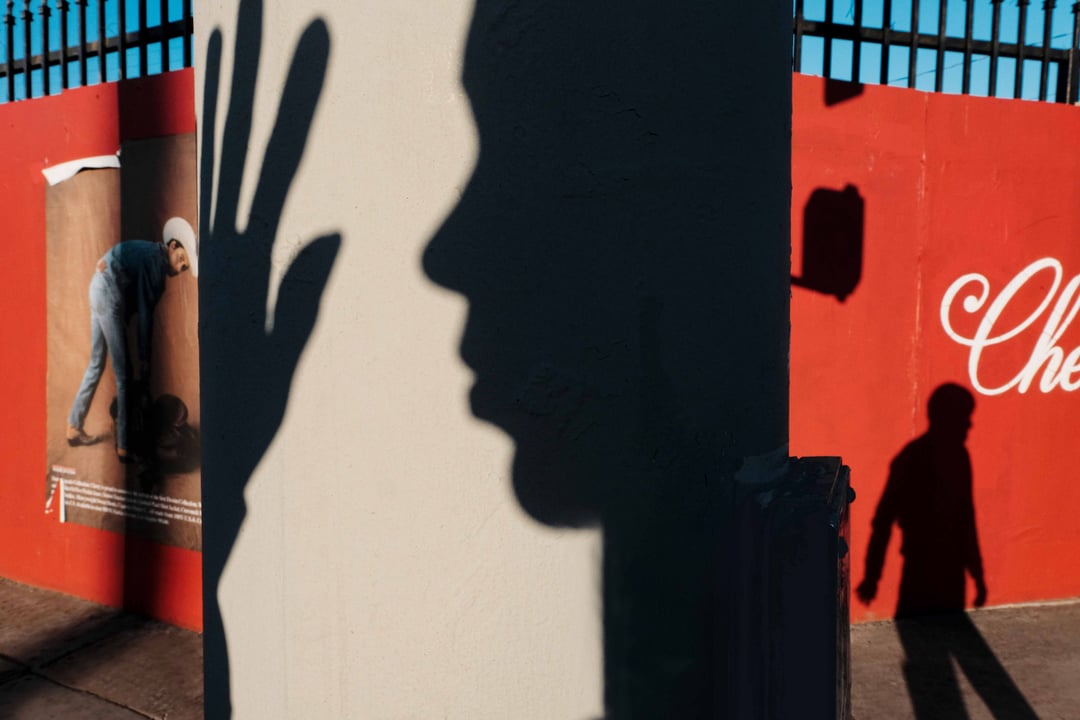
Sarah van Rij does not simply look. She sees. And more importantly: she sees more than what presents itself at first glance. Her photography moves at the intersection of observation and imagination, where the everyday tilts toward something cinematic, timeless and slightly uncanny. Based in Amsterdam and Paris, the self-taught photographer (1990) has built a body of work that is now recognized and appreciated internationally, not for its spectacle, but for its subtlety. Street scenes, still lifes, landscapes, portraits and collages flow seamlessly into one another in Van Rij's work. Her images have a clear signature: careful framing, surprising perspectives, saturated yet measured colors, and always that one suggestion of human presence. Sometimes it is no more than a hand, a shoe, a leg or a silhouette. The human figure is there, but never dominant. Time is not either. It is precisely the absence of concrete time markers that makes her photography hushed and almost nostalgic, as if each image escapes a specific moment.
''Every detail carries weight; nothing is accidental.''
This sensitivity to atmosphere and time emerged early. "I always longed for the world out there," Van Rij tells 1605 Collective in an interview. "When we drove to my primary school in Den Haag, I insisted we keep driving south, until we would arrive in Italy. I wanted my parents to sell our car and live off the proceeds. There was an overwhelming sense of adventure, and a longing for something I could not find in my immediate surroundings. Even at a very young age, I was incredibly nostalgic." That early inclination toward escapism and imagination still resonates in her work. Not as a longing for something greater, but as attention to what unfolds right before our eyes, provided you are willing to look closely.
Van Rij never attended art school and received no formal photography training. What began as a personal fascination, first with disposable cameras, later with early camera phones, slowly grew into a full-fledged practice. She collected images, created visual stories on Tumblr and gradually developed her sense of color, form and composition. Only at age 22 did she buy her first camera. The absence of rules proved not a loss, but a freedom. Her way of working is intuitive, yet never arbitrary. Rather, it is methodical in its attention, almost scientific in its precision.
That layered way of seeing is deeply rooted in her vision. "I experience the world in layers that come together in harmony," she says on the website of We Folk, a London-based artist management bureau. "In a sense, it feels more like building a 'canvas' and filling in planes. It is almost always about forms, graphic lines and colors. People are always part of my photographs, but usually very subtly or only as a detail, barely fully visible. They form part of the layers I observe and how they merge with their surroundings." This approach explains why her images remain so rich, even when they appear minimalist. Every detail carries weight; nothing is accidental.
Cinema plays a significant role in her work. Van Rij openly draws from arthouse and classical films, yet her images are never illustrative. They breathe film without quoting a scene. A stewardess in uniform hurrying to her gate transports you back to the nineteen sixties; an older woman in red overlooking the street from her balcony, hands shielding her eyes from the sun, becomes the protagonist of a Fellini film; men in flat caps seem to have stepped straight out of nineteen twenties New York. The images transport through association, not spectacle. It is no coincidence that Van Rij feels a kinship with photographers like Harry Gruyaert. His conviction that light, setting, colour and detail matter as much as the human subject itself resonates completely with her. This equal weight given to all elements creates the quiet tension in her work. We are not simply looking at a subject, but at a carefully composed whole, like a painting built in layers.
Internationally acclaimed
Though her work is intrinsically artistic, Van Rij moves with ease through the worlds of fashion and editorial. International publications including The New York Times, The New Yorker, Vogue, i-D and ZEIT work with her regularly, as do fashion houses such as Hermès, Chanel, Dior and Louis Vuitton. Notably, she does not consider herself primarily a fashion photographer. These houses are drawn to her precisely because of her independent vision. As she explains, it feels essential that commissions allow her space to enter her own universe, not to sell something but to imagine something. This personal inquiry forms the core of her practice. Exhibitions at Foam, the Maison Européenne de la Photographie in Paris and institutions in Japan and Germany underscore her position as an artist. This trajectory comes together convincingly in Atlas of Echoes, her first monograph. The book presents black and white and colour photography, collages and iPhone images since 2018, and reveals a consistent vocabulary of recurring motifs: hands, shoes, profiles, traffic lights, reflections. Sarah van Rij does not photograph to document what is visible. She photographs to show what lies just beneath the surface, how the everyday, when truly seen, can shift into something timeless, cinematic and poetic. Her work does not demand attention. It commands it naturally.
Distinctive formal vocabulary
Atlas of Echoes is the first monograph on the work of Dutch artist Sarah van Rij. The book immerses the reader in her complete body of work, bringing together her black and white and colour photography alongside the collages she has made since 2018. It traces the development of her early years as a photographer. Whether captured with a camera or an iPhone, her images explore a broad range of subjects: urban and natural landscapes, everyday objects, the human figure. Yet they carry a distinctive, coherent aesthetic that has evolved into the artist's visual signature. Atlas of Echoes reveals the distinctive formal vocabulary underlying Van Rij's practice.