Power
Sanne Wevers: Gymnastics diva takes the lead
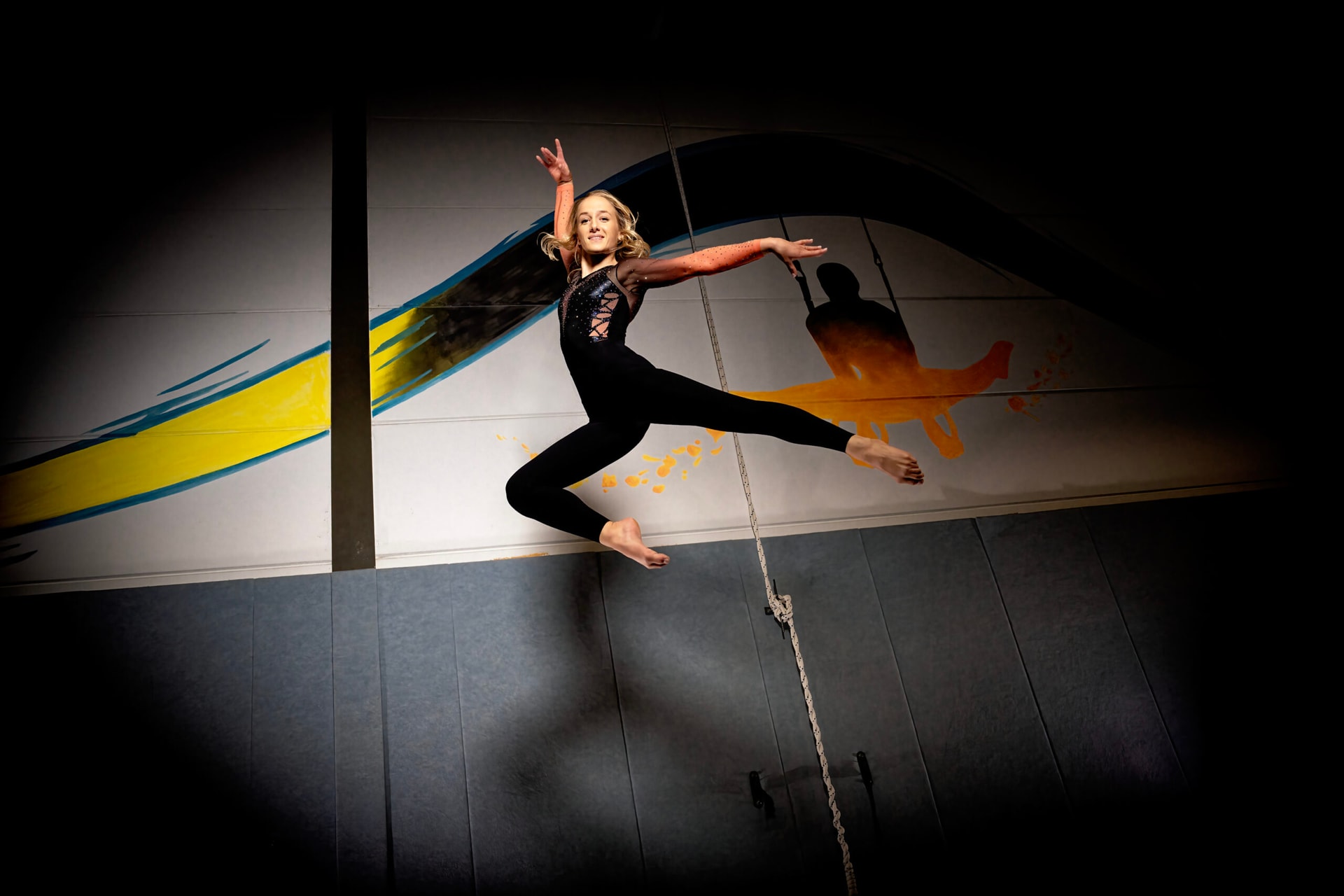
In 2016 she was the first Dutch woman to win Olympic gold in gymnastics. Yet the establishment disrespectfully sidelined Sanne Wevers during the crisis within top gymnastics caused by transgressive behavior. As a result, the Tokyo Games fell short and she decided to step away. More than a year later, the 31-year-old gymnastics diva is back.
You were out for a year, yet within six months you became European champion again.
“Of course I kept up with my fitness, but I really didn't do any gymnastics for a year. I made do with running and fitness. However, with the idea of keeping the option of a return open. Moreover, quitting does not mean quitting as a sports fan. When so many training hours suddenly disappear, it is not only a physical shock, but also a mental one. I still keep track of that running. It has brought me a lot in terms of fitness.”
How did you get through your sabbatical year?
“I was coming out of a difficult time and there was a lot to process, a lot to think about, wondering why things happened the way they did and wondering if maybe I could have done things differently. Learning lessons, also from the idea of how we should handle things if I were to return. To be less dependent and to be able to choose my own routes more. Those kinds of thoughts have been present for a very long and very intense time. I also did fun things. Such as setting up my own leotard line, presentations at companies and an English speaking course. But what I have mainly discovered is that I now know even better what motivates me and that I would very much like to continue developing myself. Exactly what I find in my sport. In top gymnastics I am always trying to push the boundaries and try out something new.”
So top gymnastics started to beckon again.
"Beats. During the presentations I discovered that it is very easy to talk about top sport, but that talking about it does not come close to what it really is like. The dilemma is that if you go into a little more depth after the clichés, you just have to wait and see whether the audience continues to follow it. Proclaiming it feels like something easy, while I know how much is really behind such an achievement. That difference was so big for me that I even started to resent it. The ease of talking about it like that, while the reality is so complex. That triggered me to experience once again how difficult it is, to feel the challenge again and to go for it.”
How harsh is it that outsiders judge top sport based on their standards?
“That is very difficult. Of course there are frameworks and boundaries everywhere, but if that is determined from outside your world, that is very strange. You don't let ordinary citizens determine the military standard within Defense, do you? Those who made the decisions were far too far removed from us. Take the assessment of coaches and the choices made therein. Sometimes a raised voice has to do with safety of someone who slackens during the training of a risky part. The coach does this in the interest of the athlete to prevent a serious accident. Outsiders who do not see or understand such a detail may look at it strangely. I especially noticed this when we were suddenly assigned other coaches. As if that's just possible. At our level, coaches have been involved in the development of an exercise for years. They know our movements and know where to stand during a performance, especially in case things go wrong. Also often changing positions. Someone who does not know this and simply stands on the side of an apparatus, which is what ultimately happened, increases the risk for the athlete. And therefore also his or her safety. I had a lot of trouble with that. Not only that people without a sense of top sport made decisions for that top sport, but also talked about a safe environment, while they themselves had made it very unsafe.”
How did you feel that Marieke van der Plas and Mark Meijer, two people who destroyed your Olympic dream, left the KNGU after Tokyo?
“Somehow you expect it too. Marieke van der Plas is now director again at Rutgers, the sexuality expertise center. And I said to Mark Meijer, among other things: 'For you it is a job, for us it is our life's work.' That difference in intensity of how you experience something indicates how big the difference is.”
As a result, you have started a professional gymnastics team and can now prepare independently for the 2024 Games. When did that idea come about?
“The idea did not really originate with me, but here in Varsseveld, where training for the top sports section has been arranged. However, the flow in the region was in danger of completely disappearing. Top gymnastics center Nijmegen was not much anymore and Almelo stopped. To guarantee Varsseveld's right to exist, a top coach had to come here with a senior team. That's how the idea came about to bring my father and me here. Financed by entrepreneurs from the Achterhoek who like the initiative and hope to put their region extra on the map. I have been involved in the background, because the lines mainly go through my father. Last summer we started with a small group and I joined in October. You immediately notice that an entire community is behind it. That feels really cool, that you get to deal with people around you who believe in you again. That alone was special to feel. And it's true here. For me as well as Naomi Visser and Sara van Disseldorp. All facilities for a top sports team are excellent, as is the housing. All arranged by a handful of entrepreneurs.”
And financially?
“We are talking about a budget of a few hundred thousand euros, of which 75.000 euros was used to adapt the hall. My dream is to one day set up a professional team with good contracts for the gymnasts. That is the next step.”
How do you earn your income now? Is there still a grant from NOC*NSF?
“Since I won the European Championship, I have a chance of A status again. I don't officially have it back yet. So the income is still difficult, but as an athlete I don't need much. Of course, the intention is that all my attention is focused on the sport and that I do not have to work. That's why it's nice to have that A status again.”
Is there a basis for a commercial gymnastics team in the Netherlands?
“Difficult to estimate. Professionalism naturally goes hand in hand with commerce. In terms of visibility, we can still learn from other sports and we need to better assess what people actually want to watch. The advantage is that gymnastics is beautiful to watch. Truly a spectator sport. But how do you get more out of that? How do you make it more visible, how do you make it more interesting for a sponsor and what does he or she get in return? I have some nice ideas about that myself. But in order to develop this further, you become increasingly distant from the associational mindset, which is still firmly anchored in gymnastics. These are all steps that still need to be taken.”
What is the relationship like with the gymnastics association, one of the reporters of your now acquitted father?
“New people have arrived and we are in positive discussions with them. Not much more than that. We need each other, because ultimately we have the same goal. If we can respect each other's route, then we have the best combination at the moment. I have been around for a long time and know that we simply speak a different language. You have to give each other freedom in this, because ultimately the association, and also recreational sport, can benefit a lot from top sport. But then it must be seen and recognized as a different industry. This way you can bring top sport back to top sport. To ultimately move it in a direction where it becomes a recognized professional group. Including a recognized top sports training course, so that top athletes can actually contribute to the development of the sport.”
After the gold in Rio and the failure in Tokyo, Paris is the goal again.
"Indeed. Paris comes first. One more time, everything is dedicated to that one moment. That's what I live for now.”
And after that?
“In terms of active career, it is over. That doesn't mean I'm ready for something else, because I still find most of the challenges in being a top athlete. In pushing boundaries and taking steps. That demands everything from me and that is what I continue to look for in top sport.”
MASTERS MAGAZINE #54
Want to read the entire interview with Sanne Wevers? The summer edition is a fresh cocktail of entrepreneurship and sport. In this edition, several entrepreneurs from the Champions League of business are reviewed. Including Freddy Heineken and hospitality tycoon Richard Caring, whose expanding empire has been called the 'restaurant equivalent of LVMH'. Doing business is top sport, but top sport is also doing business. Take Formula 1: the sport is increasingly developing into an octopus with arms that touch all aspects of our society. Jaap de Groot investigated how millions are converted into billions. Also interviews with gymnast Sanne Wevers, two-star chef Guido Braeken, hotelier Robert-Jan Woltering, designer Maarten Baas and Rico, together with his Naomy. The 'King of Kickboxing' also turns out to be an octopus (with very strong arms): as an entrepreneur he is active in various industries. “When I look back later, I don't want to think 'I wish I had this or that'. I just want to, boom, accelerate, do fun things, enjoy.” Boom, the new MASTERS: enjoy!