PEOPLE
RUTGER GEERLING, TOP PHOTOGRAPHER
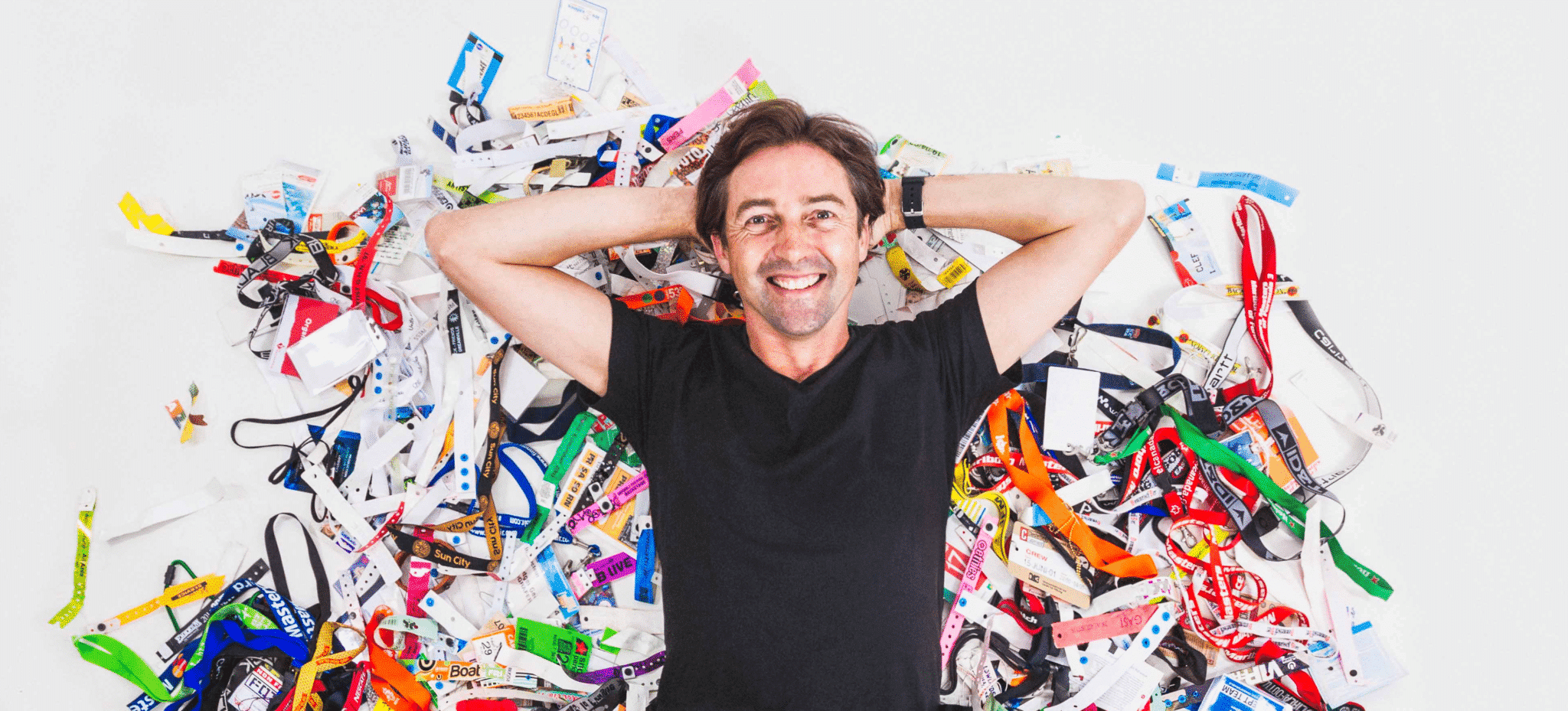
Dance photographer Rutger Geerling has photographed many prominent DJs including Tiësto, Armin van Buuren, Afrojack, and Don Diablo. MASTERS asked him about his career.
Dance photographer Rutger Geerling has captured many prominent DJs such as Tiësto, Armin van Buuren, Afrojack, and Don Diablo with his camera. He is also the main photographer of Ultra Music Festival and Tomorrowland and Rutger travels all over the world: from Seoul, Nepal, Bangkok, Jakarta to Miami, Rio de Janeiro and back to The Hague. In addition, one of the world's best EDM top photographers released his book five years ago This Is My Church released, after which the Pop Media Prize followed in 2015.
Rutger has been in the profession for exactly 25 years and exhibits in the Photo Museum at the Vrijthof in Maastricht. A selection of impressive photos from his repertoire forms the exhibition This Is My Church. MASTERS wonders: who focused on Rutgers' career?
Text: Mical Joseph
Image: Rutger Geerling
What was your very first job?
“I had the newspaper district in Rotterdam that none of my peers wanted, because the district was much too big and I often spent three days delivering the leaflets. At some point I quit the neighborhood, but luckily I was able to buy my first computer with my hard-earned money. Having a computer was quite unique for a 1981 year old at the time in 12. After that I had several jobs and was always busy.”
Were you told from home that you had to work?
“Yes, working was always an important part of our family. My mother was the Head of Nursing at Bronovo Hospital and my father was a lawyer. My parents met when they both worked for the Holland America Line. They made me want to study after high school, there was no doubt about that, so I went to study economics. Becoming a manager was my goal, but why? Purely to make money, because I had no idea what it entailed. And this was also visible in my drive: I didn't like it at all!
After six months I quit my studies and started studying public administration. This study suited me better, but I did not get ultimate satisfaction from it. I started taking photographs in my spare time in the Rotterdam skateboard scene and after graduating I told my parents and myself that I was going to make a living from my photography for a year. Didn't this work? Then I would 'just' look for a job. The photography year actually went better than expected, I was a talent.”
How did you end up in your current job?
“I photographed for a friend of mine's snowboard and gabber magazine. The gabber scene was of course a different kind of scene, but because of this connection I also photographed at Mysteryland and other large parties. That's how I got into the music scene. This is exactly 25 years ago. I was a pioneer then, no one else did what I did: capture the entire Dutch dance scene on film. There were a number of club photographers in Amsterdam, but that was basically it. At one point ID&T picked me up and things got spectacularly out of hand.”
And how did your parents ultimately react?
“Luckily my parents helped. Secretly they also thought it was really cool to see what I did.”
Who was actually your wheelbarrow?
“I haven't had a specific wheelbarrow, but I do have many people who have always been very supportive of me. That is of course something different from the definition of 'wheelbarrow', but this stimulation and energy that I always felt due to the goodwill factor also helped me to a certain extent. There are always moments in your career when things are not going well and an opportunity suddenly arises, I have had these kinds of moments more than once in the past 25 years.”
What is your greatest passion in your profession?
“Capturing the beautiful moments. I'm happy when I walk around a festival with two cameras around my neck. It doesn't have to be bigger, crazier or more extreme. Just let me do my thing and it will be fine. If I can do this for another ten years, I'll be happy.
What also makes me happy is when I see the energy and joy of a DJ through the lens. For example, I have a shot of Hardwell at Tomorrowland where, after being away for a while, he is back in the booth at Tomorrowland for the first time. You see his emotion.”
Hardwell @ Tomorrowland 2018DJ Avicii @ Ultra Korea, Seoul 2016Armin van Buuren @ Armin Only 2013
When you look back on these 25 years, which DJ is your favorite to capture?
“I think that is a really difficult question to be honest, but then I choose Carl Cox. This is because he is a very beautiful, imposing and large dark man and I find this a challenge to capture in photos. This involves creativity in getting the right light. In terms of personality, I really like the Australian DJ Timmy Trumpet. The click between us was enormous and I toured Asia with him last year. This was truly one of the best tours of my life.”
Who or what would you like to have in front of the lens?
“I would like to have Calvin Harris and Deadmau5 in front of my lens. They are super difficult with photographers, as in: they have nothing to do with other photographers and always have their own photographer with them. I would actually like to show how cool we can do things together with photography. So a challenge!”
What has been the biggest learning moment in your career?
“People sometimes say that you have to do something for ten thousand hours before it really gets into your system and you master it well. The biggest eye opener for me was Ultra Music Festival in Miami in 2012. For me, Ultra was that ten thousandth hour, because I was already quite well known in the Netherlands, but in America the dance scene had only just broken through. The organization knew that I occasionally did something for National Geographic and Ultra brought me in in a very bombastic American way: 'Wow, this is the guy who also shoots for National Geographic'.
Ultra was my first really big overseas festival. It was complete madness: spring break, American youth going wild, nice weather, amazing stage and DJs. Some of my photos went viral after the festival with my name attached. This whole spectacle was so non-Dutch and I learned from the American photographers that I could be proud of myself and present it that way. I started promoting myself, creating the Rudgr brand and I let go of that mentality of 'just act normal, then you're acting crazy enough'.”
Steve Aoki @ Tomorrowland 2012Afrojack @ Ultra Japan, Tokyo 2019Tiësto @ Innercity, Amsterdam 2003
You are of course in the events industry, how is 2020 going for you?
“This year is actually the first year in my entire life that I have been without work. I help a good friend with his livestreams 'We Own The Night' for ZIGGO, then I still feel like I'm doing something. I feel the unrest and my hands are itching to go to cool festivals again to take photographs, work with DJs and travel around the world.”
What advice would you give to your 18 year old self?
“As described above, I never really thought much about what I wanted to do. My parents were quite conservative with what they thought I should do: a high-level job. The our kind of people feeling. I should have actually looked a little earlier at where my strengths lay and what I wanted to do.
Have you been a wheelbarrow for someone?
“In collaboration with Canon, I have done projects for emerging photographers in the past. This was always during Amsterdam Dance Event (ADE). The nice thing is that many of these talents are now my actual colleagues. In addition, I always make time for new, young talent when they come with specific questions. I actually see it as my duty to also help the next generation.”


