
Power
Robert Eenhoorn: from top baseball player to football visionary
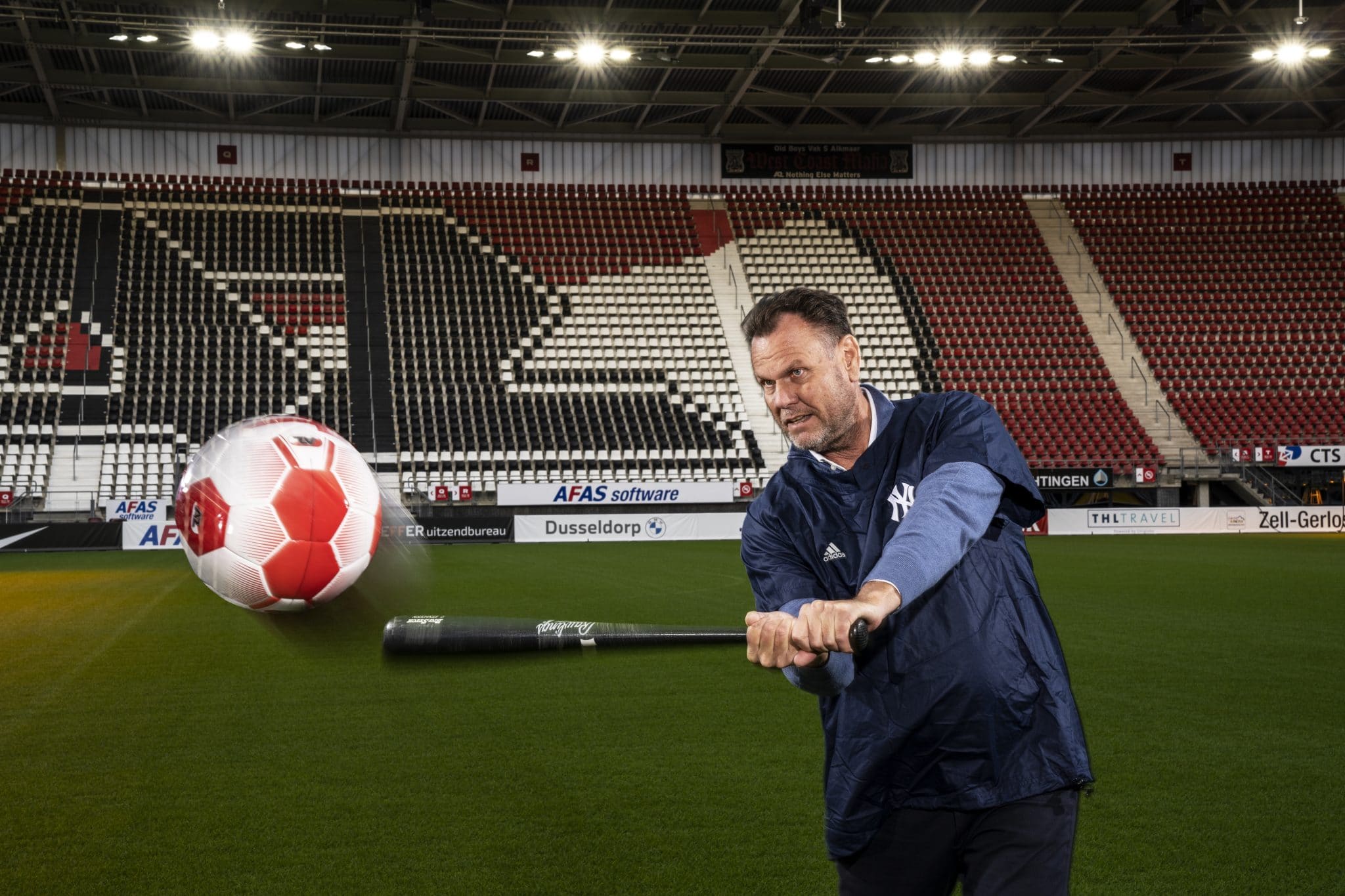
He built a successful career as a baseball player. He played for the New York Yankees, won the European title as national coach and, as technical director, saw the Dutch team achieve the impossible by becoming world champions in 2011. For Robert Eenhoorn, top sport means realizing what others consider impossible. This vision convinced AZ chairman René Neelissen to appoint Eenhoorn as general manager in 2014. Seven years later, the 53-year-old Rotterdammer is regarded as a visionary in Dutch top football, and AZ continues to develop as a dynamic professional organization. "Small things make big things happen."
He was successful as a baseball player. Played for the New York Yankees, won the European title as national coach and, as technical director, saw the Dutch team perform a stunt by becoming world champions in 2011. In short: for Robert Eenhoorn, top sport equals realizing the impossible. This appealed to AZ chairman René Neelissen so much that he appointed Eenhoorn as general manager in 2014. Seven years later, the 53-year-old Rotterdammer is considered a visionary within Dutch top football and AZ continues to make progress as a dynamic professional organization. “Small things make big things happen.”Text: Jaap de Groot
Online editorial: Noa Verseveldt
Image: John van Helvert
The common thread throughout your career is that you always want to reach the top. You wouldn't do it for less?
“Let me first say that it is correct. Top sport is all about excelling yourself. There are all kinds of reasons why it won't work, but I have always looked for challenges. That is what top sport is essentially about. Strengthened by how I experienced America and the Yankees in particular. There it was either win or not good. There's nothing in between.”
Where does that drive come from?
“I don't dare say that. I don't really know any better. When I was young I decided to go to America, while many people wondered what I was going to do there. Yet he managed to play for the biggest club and win prizes. The same story after my return to the Netherlands, where everyone in baseball was very satisfied with regularly being the best in Europe. So the bar was raised and joining the world top became the goal, even though we had less money, fewer players, some of whom were also amateurs. Then it's about everyone having the same goal in mind. If you succeed, then as a team you will be capable of surprising things. As became apparent in 2011 during the World Cup.”
Can't you live with not winning?
“Not winning is difficult. And if that does happen, it must be possible to explain it. If the goals are set high and you do not achieve them, the discussion that follows is: what went wrong? Immediately make sure you are standing in front of the mirror. If you do that, you are always trying to get better. In the safe Dutch culture, this sometimes means that you are not always understood.”
What requirements does a top sports organization have to meet today?
“It is easy to give vision and strategy as an answer. Which I find a bit of a dead end, because what do vision and strategy mean? For me it mainly revolves around two aspects: a core goal must be expressed and there are core values within the organization. Only then do you come to strategy. Which must then be explained in very simple terms. To all sections that are directly or indirectly affected by it. Because not explaining is a reason not to do it. Moreover, you give people an outlet to tell stories. In summary, a top sports organization is about five things: vision, objective, ambition, strategy and winning. You are especially busy with the first four on a daily basis. You talk about it with each other and test it regularly. That process must ultimately lead to winning. So when I started here seven years ago, we set the target for the top four. And it has been made clear that you can only achieve this if you go to the extreme together. This means that within the club people will join and people will lose weight. The latter went reasonably well, because several people felt 'I no longer fit in here'. Yet there remains a big difference in the Netherlands with how things work in America. Everyone can go there up to and including the college participate, then your career is over or you become a professional. What I said before: from the beginning in American sports it has been a matter of winning and surviving or not good. Which makes it clear that every selection process is a reflection of the culture of a country. But whether it is America or the Netherlands, ultimately it is about people who are persistent, who are curious. If not, you will get people who stand still. That is why I am attracted to people who find it important to develop further in an inspiring environment. They function based on the attitude of what an organization can do for you instead of the other way around. And of course they must have quality. That is why it is so important that the core values within the organization are strongly substantiated in fact. For example, when I arrived at AZ, people were unhappy moneyball (film about how AZ commissioner Billy Beane allowed his club Oakland A's to stay at the top with never-applied data analyzes and limited financial resources; ed.), but this had not been converted into a clear digital policy. I am in the fortunate position that I can quickly get people to the table who can tell me sensible things about it. People with responsibility within an organization do not experience this as threatening, but understand that the more information you have, the greater the chance of a good decision.”
And all this was set in motion within an organization that is still described by many as a glorified provincial club.
“Every change you implement creates an opportunity for negative tension. Especially if it doesn't work immediately, which is not entirely illogical if you are concerned with the long term. In top sport you often see that when things go badly, people become afraid, express assumptions and then look for confirmation. Instead of answering a complex question based on thorough research, there is a danger that it is replaced by a simple question and people think that a simple answer answers the complicated question. Like firing a coach. Some things just require more research, otherwise decisions are made based on emotion. The sport is saturated with this. So that is a thing and danger is always around the corner. Also via fans and press. To be persistent in the strategy sometimes requires courage.”
Would you like to continue reading the interview with Robert Eenhoorn? Order the new MASTERS MAGAZINE now!