Power
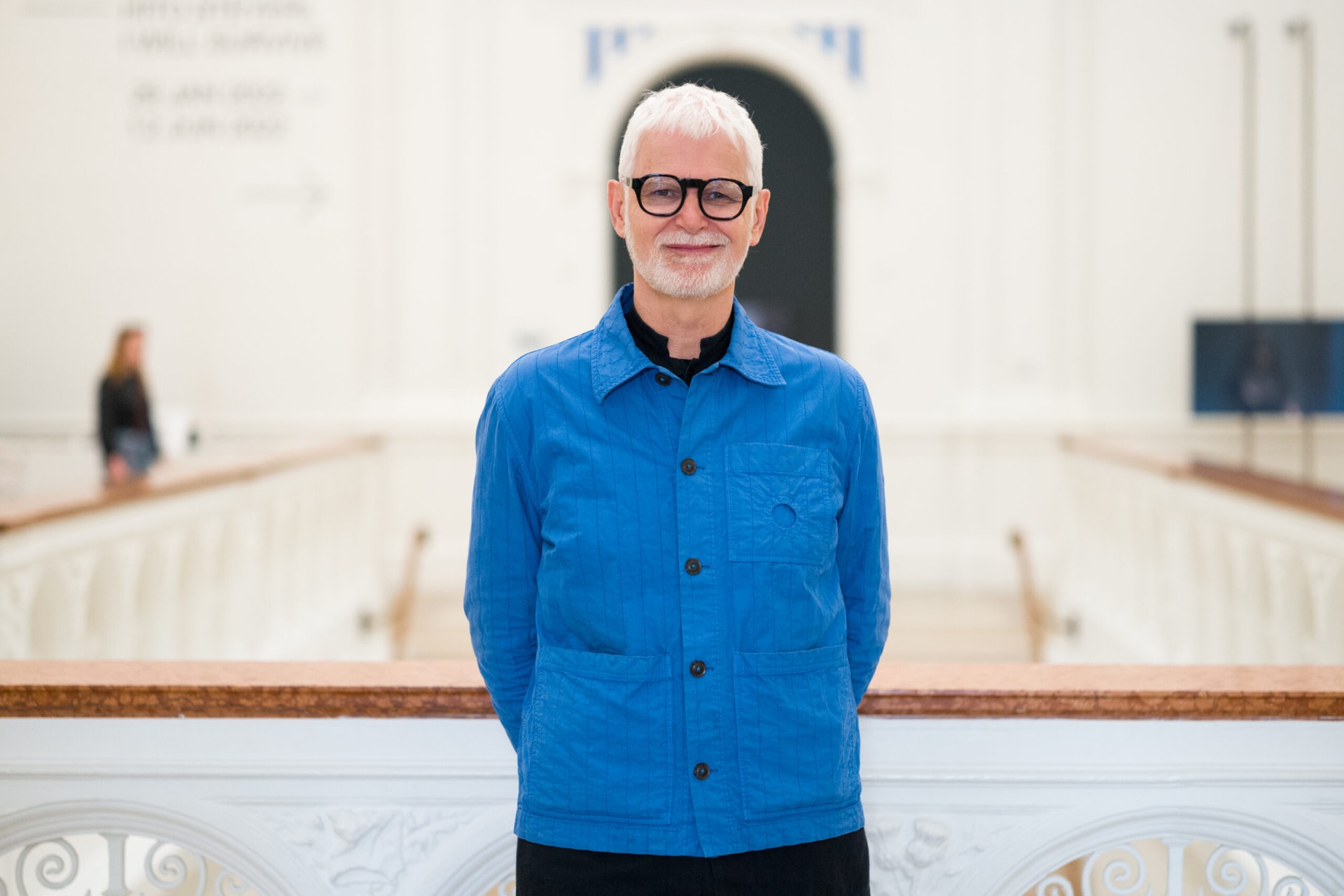
Rein Wolfs: "The city is our muse, the Stedelijk its mirror"
Over 750 years, Amsterdam has grown into a cultural metropolis brimming with stories, images and voices. Nowhere is this more tangible than in its museums, gateways to the past and mirrors of the present. At the helm of Stedelijk Museum is Rein Wolfs (Hoorn, 1960), who has been guiding its course since 2019. MASTERS spoke with him […]
Over the past 750 years, Amsterdam has evolved into a cultural metropolis brimming with stories, images, and voices. Nowhere is this more tangible than in its museums—gateways to the past and mirrors of the present. At the helm of the Stedelijk Museum is Rein Wolfs (Hoorn, 1960), who has been setting the course since 2019. MASTERS spoke with him about the anniversary year, the evolution of art, and why rebellion remains essential in a world of rules.
What does art mean to you?
"Just like television or the internet, art is a lens on the world. You see certain things reflected in a slightly different way."
What experience ignited your love for art?
As a child, I went to Amsterdam with my parents about twice a year, and at least once to the Stedelijk Museum. That's where my fascination with art began. I specifically remember the work of the Swiss painter and sculptor Jean Tinguely: those large kinetic machines, with a big red button you could press—and then everything would move. Magical! That's where it all began.
You could also have become an artist yourself?
Certainly not. I'm not creative—I can't sing, dance, draw, or paint. But I can observe, think about it, reflect, and act on it. I'm a secondary player, but that doesn't diminish my commitment.
In 2019, you were appointed director of the Stedelijk Museum. What did you find?
Suspicion, mainly. From various quarters: the municipality, sponsors, patrons, visitors, the art world… There's been quite a bit of messing around with you guys, what are you going to do about it? We've brought peace. And an exciting program. We remain a cutting-edge museum. That's been in our DNA ever since Willem Sandberg (director from 1945 to 1963, ed.) brought CoBrA here shortly after the war – against the grain. The criticism of that exhibition at the time was devastating. Today, we all know that Sandberg is the man who revolutionized the Stedelijk and made it a truly important museum worldwide.
Is that rebellious element also in your policy?
"That's even necessary: we can't be a conservative museum; we must constantly reinvent ourselves. We have to dare to move forward and occasionally be ahead of the curve."
Name an achievement of that policy.
We've become more global in our thinking, looking beyond just Western art. At the same time, we've become more open and transparent. We're more visible about what we stand for and trying to open doors more widely.
What do you see as the greatest strength of the Museum Quarter?
Together with the Rijksmuseum and the Van Gogh Museum, and the Concertgebouw as the other major cultural institution, we form a world-class powerhouse. We truly complement each other well. This makes Museumplein a rare place where you can find our art history, from the Middle Ages to the present, all within a single square kilometer. There are few places in the world where this is done so comprehensively and with such a focus on quality. With these museums, we belong to the most important collections imaginable – one large 'collection of the Netherlands.' As a result, over the years, Museumplein has become a place of pilgrimage for art lovers from around the world.
How can the Museum Quarter be further strengthened?
"In the design of the public space. The square is quite complex: one large green space surrounded by museums. It should convey more of what the square stands for. Sculptures in the greenery, a connection between inside and outside – without fences, with a focus on safety."
How do you experience Amsterdam in this anniversary year?
"Like a city that's eternally young. International, too, yet distinctive. Amsterdam always strives to be just a little bit different. That's what makes it unique."
The Stedelijk Museum's gift to the city celebrating its anniversary is the Don Quixote Sculpture Garden, which was opened by Queen Máxima on November 14, 2024. Tell us.
150 years after the museum's founding, we wanted to create a new space where everyone—young and old, tourists and locals alike—can enjoy impressive works from the Stedelijk collection. Thanks to the generous support of the Don Quixote Foundation, we have succeeded in realizing this ambition and reviving the Stedelijk's beloved sculpture garden in the same spot where it stood until the beginning of this century—what was then a garden is now the museum's entrance area. The construction of the 'bathtub' made a significant architectural statement, but it wasn't always easy to immediately recognize that you were entering a museum. By incorporating the entrance hall, with the placement of sculptures by artists like Henry Moore, Anne Imhof, Damien Hirst, and Karel Appel, that space, too, has instantly become a museum.
The support of wealthy individuals was crucial to the Stedelijk's founding in 1895. How important is that private involvement today? And how does the museum ensure that this support doesn't compromise the independence of its programming?
Private involvement is incredibly important. It allows us to do additional things that wouldn't otherwise be possible, but also to engage people and thus enhance the museum's emotional value. As director, I'm perfectly placed to articulate our independent position. We stand for a specific purpose, and it's my job to inspire private individuals to embrace it, so we can work together to find elements that will strengthen the museum. These include important acquisitions, restorations, and, most recently, the sculpture garden.
What role does Amsterdam play in the Stedelijk's collection?
There are so many works of art that tell us something about Amsterdam, partly because the city is so diverse and multifaceted. Like the large, colorful work Karel Appel painted in 1956 in the museum's former restaurant, depicting a crested bird, a person, and a flower dancing across the wall. A work that not only harks back to Amsterdam's history but was also created specifically for the museum. Just like the "Keith Haring Velum," which the American artist created specifically for his 1986 solo exhibition at the Stedelijk. The 12-by-20-meter canvas, painted with dancing figures, crawling babies, and wriggling creatures, served to filter daylight. Keith Haring created it in a single day with spray paint on the floor of one of the museum galleries, moving rhythmically across the canvas to hip-hop music. This work was hung under the glass canopy above the historic staircase. It was an instant crowd-pleaser. We can only show it once every ten years because it's very light-sensitive. Two years ago In the IMC hall, another large work by Keith Haring, which he painted especially for Amsterdam in 1986. In this 38-meter-long work, Amsterdam Notes "The title of the exhibition explores all sorts of contemporary Amsterdam themes, such as the Three Crosses of St. Andrew, AIDS, and drugs. You also see the city reflected in works by Marina Abramović, who lived in Amsterdam for almost thirty years. And I could go on and on. The city is our muse, the Stedelijk Museum its mirror."
When was the last time you were touched in a museum?
“That happens quite often. For example, when you discover things in artworks that you hadn't noticed before. But it also has to do with the way visitors interact with the museum. For example, lately I've seen countless people with their phones in hand taking videos or photos of the installation that Anselm Kiefer created especially for the Stedelijk: the impressive Tell me where the flowers are, which covers the entire circuit of the historic staircase. I then look through the eyes of the visitor."
Are there art forms that you find difficult to embrace, such as AI and NFT?
No, not really. I find artificial intelligence very interesting; it offers possibilities. I've been quite skeptical about NFTs from the start. It was a very commercial hype, right from the start—more market than art. And a very short-lived hype, too.
Last year, Marina Abramović unveiled her own NFT at the Moco Museum. Is that museum, with its focus on digital and immersive art, an enrichment for the museum landscape?
Personally, I find Nxt Museum and STRAAT Museum much more enriching for the field. They demonstrate in their own unique way how to approach immersive art. I find Moco a bit more complicated. That has to do with the fact that it calls itself a museum, and I don't really see what that museum-like aspect entails. Because I believe you should have a collection. And a museum without a collection... that's a contradiction.
In the case of AI, there's often debate: is that even art? But if I find something beautiful, then it's art for me, right?
As a museum director, it's my job to judge and decide on art. But I fully realize there's a subjective aspect to it. Art is interpretation. I'm happy when people see art in something.
Does the fact that art isn't a completely defined field make your work even more interesting?
Yes. I love tensions. And art is a special tension because no two people see it exactly the same way. I always say: leave some interpretive room in this world. Not everything needs to be laid down in black and white; a few riddles must remain. The world has already been deciphered so far. We don't need to know everything. And I find art a typical domain of life where we can push against the limits of knowledge and understanding.
How does the Stedelijk connect its layered history with the city's future dreams?
By remaining true to ourselves. We've always said we don't want to be exactly the same as the Pompidou in Paris or the Tate in London—we want to be just a little bit different. And that's also an opportunity for the future. We shouldn't try to copy. Just as Amsterdam wants to remain unique, the Stedelijk remains true to itself.
You see quite a few museums around the world. Which ones have also shown innovation?
When the Tate Modern opened twenty years ago, it was innovative. You could really learn from it. Just like the Zeitz MOCAA in Cape Town offers a fresh perspective. And a while ago, I went to Seoul, where the museum world is very different. That's how we continue to learn.
Art is certainly not having the wind in its sails due to the current political climate. How has the Stedelijk noticed this in concrete terms?
Subsidies are under pressure. The inflation adjustment is lagging. And then museums are also reaching their limits in terms of visitor numbers, while Amsterdam's tourism growth is also hampered. Where the government isn't contributing, we increasingly have to look for other sources of funding. Fortunately, there are many private individuals in the Netherlands who have developed a keen interest in art. Art is hot, and I've noticed that many people are open-minded and interested in contemporary art.
"At Museumplein, you'll find our art history, from the Middle Ages to the present, all within a single square kilometer. There are few places in the world where this is done so comprehensively and with such a high regard for quality."
And sponsorships?
"They've become more sensitive, because museums are under considerable pressure from activism. Look at the protest action last March by Extinction Rebellion against the Rijksmuseum concerning its sponsorship by ING (the action group had reserved many tickets in advance but didn't collect them, resulting in a quiet atmosphere in the museum, ed.). Not that we currently have sponsors who attract activists, but you never know what will happen. So we have to invest more in our financial security. At the same time, we want to remain distinctive. A positive trend is that sponsorships are increasingly developing into partnerships. This means you share certain qualities that you already share. For example, we have a partnership with ABN AMRO in which we both work on addressing inequality of opportunity. The exhibition of the winner of the ABN AMRO Art Prize has been on display annually at the Stedelijk since 2024. By shifting the focus of this prize from encouraging young talent to encouraging women in the arts, we contribute to breaking down existing gender barriers and creating equal opportunities. And that aligns with the shared themes." of opportunities and equality that we formulated together with ABN AMRO.”
Even if you don't make art, as a museum director you still have to be creative...
That's absolutely true. Until twenty years ago, museums were a municipal service. We've now become independent foundations. And cultural entrepreneurship is part of that. I discuss this with the other museum directors: I regularly meet up with the neighbors for coffee. We have good contact, which was reflected last spring in a collaboration with the Van Gogh Museum: for the first time in our history, we joined forces for a single major exhibition about one of the most important artists of our time, Anselm Kiefer.
How do you think Amsterdam should further develop as an art city to distinguish itself from other global cities?
"By staying just a little bit different. Not mainstream, but distinctive and open. I think we're on the right track as Amsterdam."
Imagine you could dine with one artist—living or deceased—for one evening. Who would it be?
"Kazimir Malevich (1879-1935), because his work forms a foundation of our collection. We have the largest collection of this artist outside Russia. And besides Mondrian, he is one of the founders of abstract art. I would have loved to dine with someone like Keith Haring, but unfortunately, he died very young. I've regularly had the pleasure of sharing a table with other artists. But we shouldn't romanticize the artist—everyone has their own unique character. In the past, the artist was for us a figure who was non-conformist, outside of society, and created a masterpiece in a stupor of alcohol and other mind-altering substances. Today, art has also become part of economic processes. The artist leads a small, and sometimes even medium-sized, enterprise. And wasn't that also true historically, when artists worked with many assistants?"
How does the Stedelijk involve young artists in discussions about Amsterdam's future?
Two years ago, we established a 'project' space. This is a place, located within the Stedelijk Museum itself, where curators, artists, and other creators have the freedom to create and present new works that will revitalize Amsterdam. Buro Stedelijk, as we call this hybrid art space, which is externally funded by two major private foundations, encourages groundbreaking art and is attentive to the needs of the community.
What do you hope visitors will take away from their visit to the Stedelijk in this special anniversary year?
That Amsterdam has always been very special—a city of freedom, openness, tolerance, and curiosity. And that the museum is a sanctuary that reflects that.
What is your message for Amsterdam in the next 750 years?
Be yourself. Be different. Cherish your past and your dreams for the future. And try to allow the old and the new to coexist. We are a city of contrasts, but contrasts rooted in a sense of freedom and difference.
If you could make one daring intervention at the Stedelijk, what would it be?
"Opening the doors even wider. Literally. Including more outdoor space in the museum. But yes: climate control, security... It remains a dream."
What is the biggest challenge for museums in the next ten years?
Remain relevant. In an increasingly virtual world, the museum must remain the place where the real thing still exists. Where you're touched by something you can touch. Let's hope people realize that. And that we can continue to offer that counterbalance to a completely virtual world with the museum.