Power
Pieter van den Hoogenband: started at fifteen, still going at forty-eight
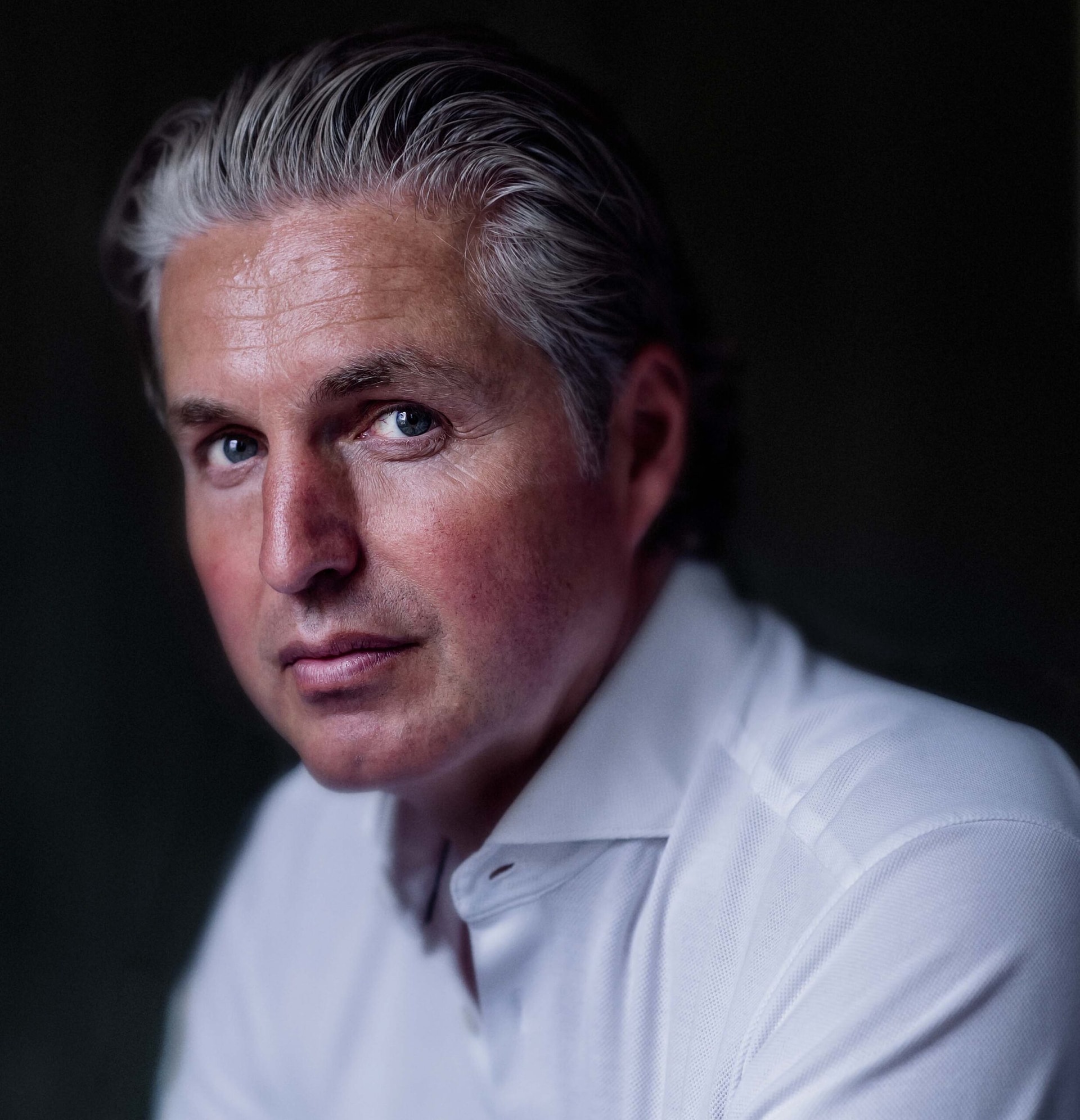
He is regarded as one of the greatest swimmers of all time. A global citizen, yet at the same time strongly connected to Brabant, where he can indulge his love for innovation and collaboration. Meanwhile, Pieter van den Hoogenband continues to seek inspiration. Not only to excel himself, but above all to enable others to do so. Jaap de Groot in conversation with an as-yet-driven idealist.
What are you doing at the moment?
“I am involved in many things, but the most important is the Topsport Community. There, I do what I did with the Olympic team and as an athlete: bring worlds together. Sport and business, and especially innovation and science. I started building that bridge while walking across it, and now, fifteen years later, I have permanent partners who make that possible. Coupled with a great network. Through the Community, I can express myself fully, just as I can with the various hats I wear. Alongside all kinds of other activities, this is definitely my core activity.”
What has the Topsport Community achieved?
“I strongly believe in collaboration by bringing people together. This leads to knowledge sharing, the exchange of information, and the emergence of new ideas. In elite sports, we are very often working to eliminate chance, and we do the same through the Topsport Community. That is why parties with different strategies and challenges come together throughout the year, and the Community tries to make a useful and positive contribution to realizing them. In between, we have a theater event, Walk and Talk, where we bring together top people from the business world and sports. It is very accessible, yet again with a focus on stimulating knowledge sharing.”
Can you give examples?
A book by a former top executive at Fokker will be published soon, for whom the Community was able to make a difference in his insights. He was extremely skeptical at our first meeting. He thought that the old swimmer was just there to take. Then he saw the interaction and everything that was happening. Ultimately, the Community was able to make the difference for him in the transition of their ideas and in making the strategy feasible. In the meantime, we have also entered into a collaboration with TU Delft on the Sport Team for the Century project, in which socially engaged athletes and coaches will provide input. Together with academia, to once again offer new and excellent solutions to all the challenges we currently see in our world.
Is the Topsport Community a typical Brabant project?
“In Brabant, it is true that you always have to deliver quality. I have a great network, and I am friends with some of them. I can call others once, but I have to come up with a good story. That builds trust, they seal the deal, and never look back. I learned that way of working and doing business from childhood.”
Like during your swimming career with the professionalization of the sport?
“Because there was no plan at the swimming federation at that time, nor any money, we indeed started a foundation. As a result, I had to work proactively with the network of my father, who was a well-known surgeon. These were regional entrepreneurs who thought it was fantastic to make my dream and that of other swimmers possible. To create something out of nothing. I did that at the age of 15 and I am still doing it at 48. Is that typically Brabant? I don't know, but I certainly learned it here.”
The High Tech Campus is just around the corner. To what extent do your activities interact with innovation?
“I know many politicians and am close to the Triple Helix, in which captains of industry and top scientists collaborate. At some point, you realize that what they are doing is not empty talk, but a very smart way of working together. Things have been created, such as the High Tech Campus, where chance is eliminated. Beautiful things are being realized there through collaboration. When the swimming stadium in Eindhoven was named after me, it was a must for me that innovation would also be incorporated into it. That young, ambitious specialists and scientists were given a chance there. By now, we have created the smartest starting blocks in the world, and top scientists are working on all kinds of research in the lab every day. From biomechanics to heart rate variability. They are testing how the body reacts to water. Cold water, warm water. All sorts of things. That is an ongoing process. In elite sports, too, it is essential to continuously give innovation and science a place within the program. Those are the small details that ultimately make the difference at the top.”
Is it an advantage that you are located here and not in the Randstad?
“I can’t say much about that. I do know, however, that I am grateful that it went my way. That I sometimes wonder why, in the Randstad and other places where there is a lot of talent available, things are sometimes not organized efficiently. It often has to do with vested interests, with granting each other favors. While it is very simple. You pair talented people with very good, skilled coaches. You have to keep that up for years. With good facilities. Then you see successes emerge. Like in 2000 with the Olympic Games in Sydney. Leontien van Moorsel had organized her own team, Anky van Grunsven had her own stables, Jeroen Dubbeldam of course; I had my thing here and was lucky that Inge de Bruijn had similar ambitions. Basically the work of a number of dedicated professionals who had chosen the Games to peak there. By now, so many years have passed, and the way we organized it is now the standard.”
Does the utilization of knowledge here in Brabant differ from that of the Randstad?
“I recently spoke to Worthy de Jong, who is working on setting up a sort of basketball arena in Amsterdam near the Johan Cruijff ArenA and the Ziggo Dome. With a number of wonderful people and investors, including some from America, who understand what he is doing. This allows a guy like him, with a story like his whereabouts, what he has achieved, and the gold medal as proof, to seize his momentum to leave something unique behind. Whether that happens my way or his, both are possible. I recently saw the documentary about Johan Cruijff. Just look at how much resistance there was. He had so many ideas, was far ahead of his time, but perhaps could have achieved even more in a different location. A beautiful combination of the Brabant mentality with a brilliant Amsterdam mind might have been truly spectacular.”
Have you experienced that yourself? Resistance because you stick your head above the parapet?
Of course. Because I have stuck my neck out for so many things. Take the swimming stadium. That idea originated when I looked around in Sydney and saw that there were 84 fifty-meter lanes, while we only had four in the Netherlands. When you see all those people doing the conga line because of your gold medal, you can use that moment to plant a seed. Fortunately, the then State Secretary Margot Vliegenthart showed courage and a swimming stadium was built in Eindhoven. Or in Beijing 2008, with the finals in the morning. As an Olympic champion, I also had to take responsibility and make a statement on behalf of the sport of swimming. IOC President Jacques Rogge had the class to take me seriously, to call me, and to explain what interests were at play. How important it was for the sport of swimming in America that it was broadcast on prime time television there. Subsequently, you experience that negativity is also involved. By now, I have learned to look at intense or angry reactions with friendly eyes. But also to see if you can change situations by doing so, especially in conflicts. The is a nice tool in some situations.”