Next
Paul Riemens & Maurits van der Sluis: "The growth of MASTERS EXPO feels like a shared achievement"
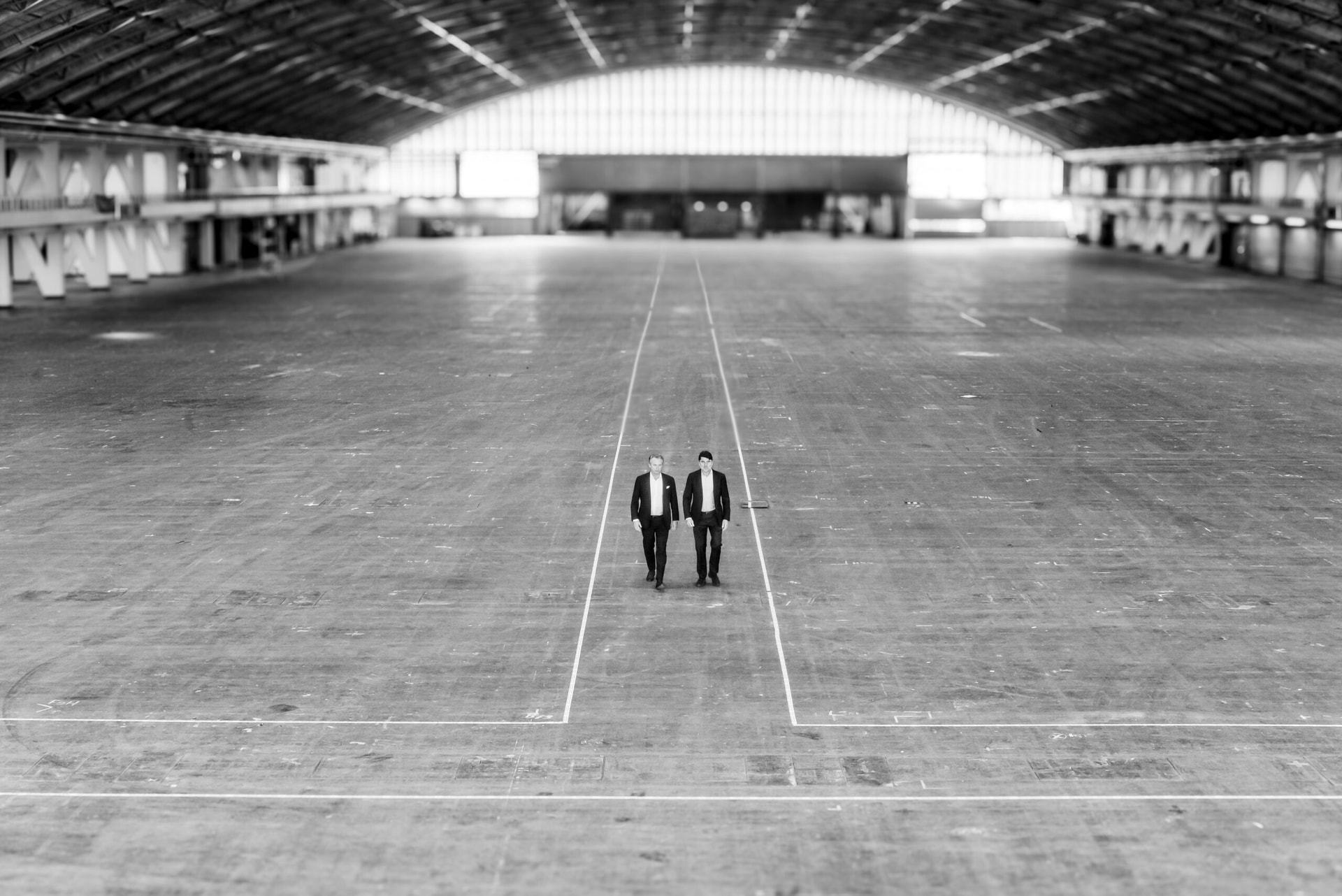
In a world where experience, innovation and hospitality are becoming increasingly important, Paul Riemens (CEO) and Maurits van der Sluis (COO) lead one of Europe's leading conference and events venues. With a focus on sustainable growth and international positioning, they are transforming RAI Amsterdam into a dynamic platform where entrepreneurs, […]
In a world where experience, innovation, and hospitality are becoming increasingly important, Paul Riemens (CEO) and Maurits van der Sluis (COO) are at the helm of one of Europe's leading conference and events venues. With a keen eye for sustainable growth and international positioning, they are transforming RAI Amsterdam into a dynamic platform where entrepreneurs, thinkers, and innovators converge. They share their story of leadership, future-proof strategies, and the power of connection.
She once competed in the Miss Universe pageant, and now she's using her charm to lure exciting men into interviews for MASTERS. This time, Irene van de Laar is targeting RAI directors Paul Riemens and Maurits van der Sluis.
How would you describe your leadership style and how do you complement each other?
Riemens: Inspiring, guiding, and connecting. I strongly believe in the importance of a clear compass: where do we want to go, what will our role be in the world around us, and how do we create value together? Value that goes beyond the economic, but also has social significance. I enjoy giving people the space to be entrepreneurial, take responsibility, and grow. I do, however, oversee the bigger picture and ensure that we operate as an organization with a focus on the future. Innovation, sustainability, and social impact are not separate themes for me, but building blocks of a future-proof RAI. In collaborating with Maurits, my strength lies primarily in further developing the vision for the future, strengthening our external profile, and initiating innovation. We share the same values, but complement each other in our approach. And that works because we trust each other and give each other space.
Van der Sluis: I see myself as a connector with an eye for both operations and people. In a dynamic environment like the RAI, it's crucial that clear frameworks are in place, processes run smoothly, and teams collaborate effectively. But just as important is that people feel seen and heard. My leadership style is down-to-earth, pragmatic, and collaborative. I enjoy distilling complex issues down to their essence and ensuring we achieve results together. Together with Paul, we form a strong team. We each bring a different perspective, which deepens and strengthens our work. Where he inspires and explores new possibilities, I bring focus and ensure that ideas take root and actually work, from technology to teams, from customer contact to hospitality. We have great trust in each other, which enables us to adapt quickly and stay on course, even in a constantly evolving market. What unites us is our shared deep belief in the power of connection. Ultimately, that is the core of what we facilitate as the RAI.
What is RAI Amsterdam's current long-term vision?
Riemens: We strive to be the leading international meeting place where people, markets, and ideas converge, with the goal of jointly building solutions that truly matter. We bring together professionals, from scientists to entrepreneurs, from physicians to policymakers, around themes that are relevant worldwide: health, energy, mobility, food, and digitalization. In doing so, we are a catalyst for progress within top sectors and contribute to the Global Goals. We achieve this through targeted investments in our core activities, in a future-proof building and area, and in an organization that operates agilely and responsibly.
What role do you see for RAI Amsterdam within our capital and internationally?
Van der Sluis: As a company, we've been deeply rooted in the city for over 130 years. We play a pivotal role in Amsterdam's economy, with a broad impact on hospitality, transport, and employment. At the same time, we operate as an international player at the intersection of business, innovation, and knowledge sharing. Thanks to our central location, facilities, and partnerships, we attract leading global events that strengthen Amsterdam's profile as an international knowledge and trade city.
How do you ensure a good balance between commercial interests and social responsibility?
Van der Sluis: This balance is fundamental to our raison d'être. Commercial strength allows us to invest. At the same time, we take our role as a socially embedded organization seriously: from minimizing the ecological impact of events to encouraging diversity and sharing our space with educational, cultural, and neighborhood initiatives. We strongly believe in 'business for good.'
What are the most important innovations recently implemented at RAI Amsterdam?
Riemens: We're investing heavily in digitalization and data-driven operations, from smart logistics to advanced visitor analytics. We're also starting the development of the RAI Quarter, where we're collaborating with the municipality, among others, to create a future-proof RAI Amsterdam and its surroundings, with space for meeting, business, and living.
What are your thoughts on the rise of virtual and hybrid events?
Van der Sluis: "We primarily view virtual and hybrid as technologies that enrich physical encounters and increase the impact of live events. They have the potential to make events more inclusive. Physical encounters are essential for serendipity, sensory experience, and building long-lasting relationships."
How does RAI respond to trends such as sustainability, digitalization and hybrid events?
Riemens: Sustainability is a strategic priority for us. We're among the leaders in the events industry when it comes to waste separation, energy reduction, and circular catering. We have a clear path to carbon neutrality. We use digitalization to optimize processes, personalize the customer experience, and develop new revenue models. For hybrid formats, we have the technological infrastructure and the capacity to support organizers in a new generation of events.
We take our role as a socially embedded organization seriously: from minimizing the ecological impact of events to encouraging diversity and sharing our space with educational, cultural, and neighborhood initiatives. We strongly believe in 'business for good'.
How is space created within the organization for new ideas and experiments?
Riemens: Innovation starts with trust. We consciously create a culture where employees are given the space to take initiative, ask questions, and think outside the box.
Van der Sluis: New ideas often emerge on the work floor, through interactions with customers, visitors, or partners. We encourage colleagues to share these ideas, whether they're about small improvements or larger innovations. Through pilot projects, project groups, and multidisciplinary teams, we then provide the space to experiment, learn, and adjust.
RAI Amsterdam has a long-standing partnership with MASTERS EXPO. What does this partnership mean for RAI?
Van der Sluis: "MASTERS EXPO is a strong player in the high-end segment. For us, this collaboration means not only an iconic event in-house, but also a long-term relationship with a partner who knows how to combine innovation, craftsmanship, and aesthetics. It aligns perfectly with our ambition to program not only large-scale events but also distinctive quality."
What makes MASTERS EXPO a valuable long-term partner?
Riemens: The strength of MASTERS EXPO lies in their vision of experience, community, and exclusivity. Year after year, they succeed in building a strong and loyal network. At RAI, we value their entrepreneurial spirit, design flair, and courage to constantly innovate. These qualities make them a partner we're eager to grow with.
How does such a partnership strengthen RAI's positioning within the luxury and design segment?
Van der Sluis: With MASTERS EXPO, we emphasize our relevance to the top segment of entrepreneurs, designers, and investors. The event attracts an influential audience and positions the RAI as a place where high-quality content, aesthetics, and networking converge. This strengthens our profile as a venue that offers more than just square footage.
What role does RAI play in developing or facilitating the success of events like MASTERS EXPO?
Van der Sluis: "We collaborate on hospitality, routing, sustainability, safety, and digital applications through co-creation. Our event teams operate as strategic partners, not just operational links. At an event like MASTERS EXPO, we collaborate intensively on the experience, growth, and impact for both visitors and the city."
What is the biggest challenge in your career and what have you learned from it?
Riemens: The biggest challenge in my career at the RAI is getting an organization moving that's deeply rooted in tradition, yet operates in a rapidly changing world. The challenge lies in breaking through rigid structures without losing faith in the organization. I've learned that you can only truly change when you involve people in the bigger picture. Not through spreadsheets, but through meaning and motivation. People don't change because they have to, but because they believe in it. I carry that lesson with me every day in my work. We're building a RAI that's not only successful today, but also future-proof. That's only possible if you create space for talent, connect perspectives, and let people contribute to something bigger than themselves.
Van der Sluis: For me, the coronavirus pandemic was the most intense period of my career. The RAI closed completely. An unthinkable situation in our 130-year history. Everything we took for granted fell away. What did I learn from it? That leadership in times of crisis requires calm, transparency, and closeness. You can't solve everything, but you can be there for your people. As a team, we experienced the power of solidarity and creativity. That ultimately made us stronger.
If you could change one thing at the RAI without any restrictions, what would it be?
Riemens: "Then I would integrate the entire RAI site with the city: no more boundaries between inside and outside, but an open, vibrant area where something is always happening, even outside of events. A place that adds value to the city, its residents, and visitors all year round. That's exactly what we're working towards with the RAI Quarter project: from an exhibition center to an innovative area for meeting, spending time, and connecting."
Van der Sluis: I would make the infrastructure and technology completely future-proof. Imagine a completely modular system for lighting, energy, and furnishings that would allow us to facilitate every event even more flexibly and sustainably. The RAI is already incredibly versatile, but if I had no limitations, I would make everything even more intelligent. Technology and sustainability must reinforce each other. That's where I see opportunities.
What is a project or event you are most proud of?
Riemens: I'm most proud of the development of the future RAI Quarter, the area surrounding our location that we're transforming into a vibrant city district together with our partners. It's an ambitious project that goes beyond just our own operations; it connects mobility, sustainability, architecture, and urban experience. With RAI Quarter, we're truly building an environment for the next generation. It's still very much under development, but the potential is enormous, for our employees, visitors, clients, and the city of Amsterdam.
Van der Sluis: I could name numerous events I'm proud of, including those we initiated and made successful. However, I'd like to single out MASTERS EXPO, because for me, it's a wonderful example of what the RAI can offer. It's an event with class, style, and courage. And it demonstrates how we, as a venue, partner, and facilitator, can contribute to a top-notch experience. From routing to atmosphere, from service to collaboration: it all comes together here. The fact that the event continues to grow with us feels like a shared achievement.
What advice would you give to young professionals who want to work in the events and trade fair industry?
Van der Sluis: My advice to young professionals: be curious, dare to take responsibility, and never forget that hospitality starts with you. The world of trade fairs and events is dynamic, demanding, and sometimes unpredictable, but also incredibly creative and people-focused. It's precisely that combination that makes it such a wonderful field. What you learn at school is important, but what you learn on the job—collaboration, adaptability, listening, and improvisation—is just as valuable. So go in with an open mind, ask questions, look beyond departmental boundaries, and don't be afraid to make mistakes. And perhaps most importantly: realize that you, as a professional, make the difference in the experience of thousands of visitors. That energy, that direct result of your work, is what makes this sector so special.
What do you envision the conference and event landscape to look like in 2035?
Van der Sluis: In 2035, the conference and events landscape will still revolve around encounters, but in a smarter, more sustainable, and more personalized way. Physical events will be a common occurrence, precisely because people continue to seek the value of genuine connections. At the same time, technology and data will play a much greater role in how we design events. Visitors will soon expect customized solutions: content tailored to their profile, interaction when it matters, and services that seamlessly integrate. Sustainability will no longer be a theme in 2035, but a self-evident prerequisite. Circular materials, zero waste, energy-positive locations—these will soon be the norm. For the RAI, this means continuing to invest in technology, infrastructure, and craftsmanship. Because even in 2035, the hospitality and quality of your events will make all the difference.


