Taste
A paradise museum visit on bare feet
Suzanne Swarts likes to venture beyond the walls of Voorlinden in search of the most beautiful spots to admire art. In MASTERS the museum director shares experiences from her travels to the most special art places. This time she travels to the southern French island of Porquerolles, where she visits Fondation Carmignac barefoot.
Suzanne Swarts likes to go beyond the walls of 'her' Voorlinden in search of the most beautiful places to admire art. In MASTERS the museum director shares the experiences of her travels to the most special art places. This time she travels to the southern French island of Porquerolles, where she visits Fondation Carmignac barefoot.
Text: Suzanne Swarts
The paradise island of Porquerolles is located in the Mediterranean Sea, approximately between Marseille and Nice. With a length of 7,5 km and a diameter of about 3 km, this small green paradise is the largest of the three 'golden islands' of the French Riviera. The island is framed by pristine white sandy beaches and turquoise water and has beautiful creeks and inlets, lagoons full of migratory birds and a special art collection. As soon as you get off the water taxi from Toulon or Hyères, you will soon see a sign for the Fondation d'art contemporain 0,6 km away. In just fifteen minutes you can walk through the village on a winding road to the vineyards of the Domaine de la Courtade. There, surrounded by the scent of eucalyptus, citrus trees and lavender, is Villa Carmignac.
In 1965 this was the setting for Pierrot le fou, one of the most famous films by Nouvelle Vague director Jean-Luc Godard. In the 80s, architect Henri Vidal transformed the old farm into a villa, where his daughter would later get married. Edouard Carmignac was a guest at that wedding. The French businessman made his money from his asset management company and had founded Fondation Carmignac in 2000 to promote contemporary art. He fell in love with the island, the landscape and the building. A few years later, when he started thinking about a special space dedicated to art, he bought the villa from Vidal and transformed it into a museum with the help of Atelier Barani and GM Architectes Associés.
Aquatic ceiling
You only notice how special this transformation is when you actually enter Villa Carmignac. From the outside it appears to be a relatively small but modern Provencal villa, which is beautifully embedded in the landscape. You can't actually imagine that there is a large museum here. And that is exactly the intention. The island of Porquerolles is protected as a Natura 2000 area, which means that Carmig-nac was not allowed to change the contours of the existing villa or the landscape. The asset manager therefore had its designers dig into the ground and create no less than 2.000 square meters of space in the shape of a cross. Even with a helicopter you cannot estimate from above how large the space under the villa is now. The special thing is that despite the underground, daylight and the surrounding nature seep into the spaces. For this purpose, Carmignac had a breathtaking aquatic ceiling and various openings installed at the top of the rooms. The underground spaces are entirely for the benefit of art. The sober architecture gives you the space to fully focus on the works of art.
Before you can do that, you have to take off your shoes and socks. Because as soon as you enter Fondation Carmignac, you are asked to place it in a large rack on your left. That may feel a bit strange, but it takes the museum visit to a higher level. Because then what I also noticed during the low-stimulus visiting hour Silence on Socks at Voorlinden happens; you feel a serene calm come over you and a kinship develops with the other visitors who also walk through the museum barefoot and marvel at, for example, the spectacular installation One Hundred Fish Fountain by Bruce Nauman, or works by Roy Lichtenstein, Gerhard Richter and Jean-Michel Basquiat.
Labyrinth of mirrors
Fondation Carmignac opened its doors in 2018. Now you can visit it every day between the end of April and the beginning of November for 15 euros per person. The museum is closed during the winter months and preparations are mainly made for a new temporary exhibition.
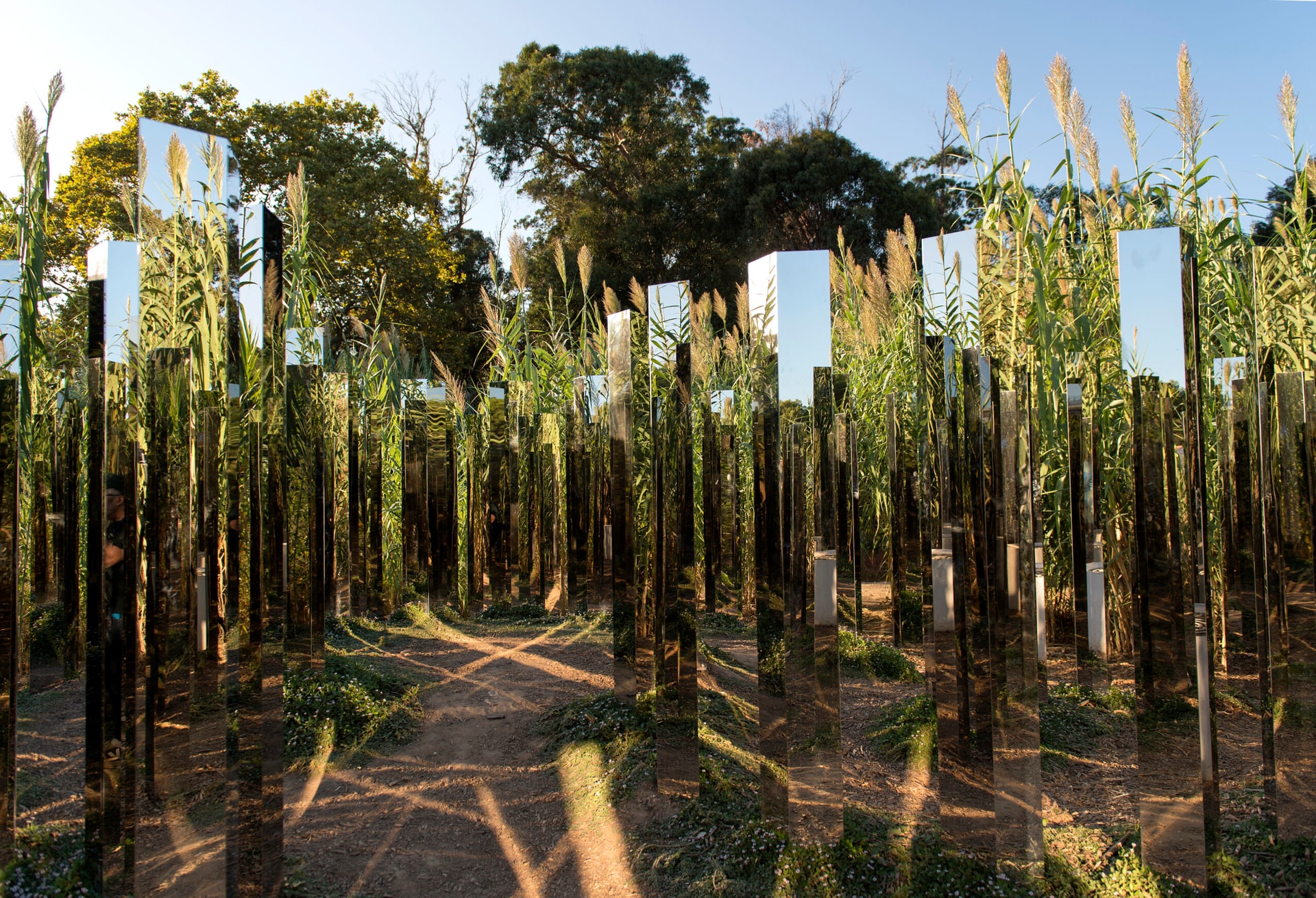
After discovering the villa, I definitely recommend that you put on your shoes for a walk through the sculpture garden of Fondation Carmignac. For the 15 hectare estate, Carmignac has asked a number of internationally renowned artists to come to the island, discover how nature plays with their senses and then create a work of art based on their experiences. As a result, you can now, for example, wander through the labyrinth of mirror pillars of Jeppe Hein's Path of Emotions, in which you see the sky and local nature reflected. Nils-Udo placed La couvée in the middle of the landscape. These five gigantic eggs made of Carrara marble refer to the natural cycles of birth and death. Cornelia Konrads made the wickerwork Le tourbillon during her stay. She poetically interweaves wood and wind, the most important natural elements of this simply paradise island.
MASTERS MAGAZINE #55
This article is from MASTERS Magazine. The magical autumn edition of MASTERS Magazine is now available. Artificial intelligence has now become an indispensable part of our lives. But, is this development something to celebrate or fear? Will Terminators take over or will friendly robots make our earthly existence even more comfortable? In this edition, AI is examined. According to philosopher Rowan Williams, it is important to remember that whatever AI does, it always imitates. And that we as humans distinguish ourselves through ingenuity. A good example is real estate entrepreneur André Snippe, who is developing an ultra-modern city district in Hoofddorp. Or nautical designer Jurjen Eerkens, who has developed a groundbreaking boat with his Hytender that is leading the way in making the yacht industry more sustainable. These and more resourceful entrepreneurs grace the pages of this edition. Which also looks ahead to MASTERS EXPO | The MAGICAL Edition, our exclusive business fair also born from ingenuity.


