Power
Equestrian icon on the entrepreneurial trail
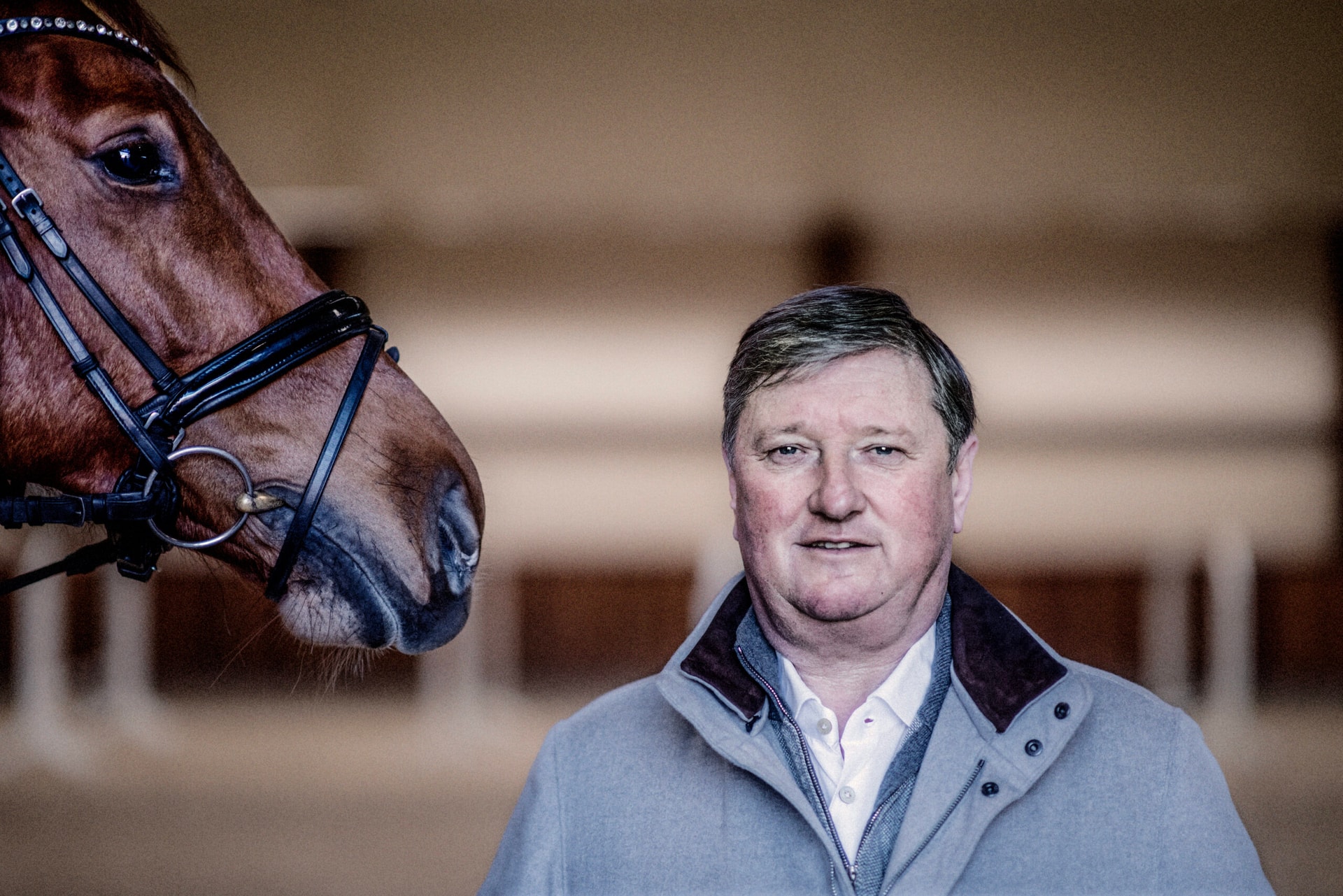
He is world famous outside the Netherlands. In 1992, Jan Tops won gold with his horse Top Gun at the Olympic Games in Barcelona, and forty years later he is doing business with the greats as a trainer and trader of show jumping horses. The Global Champions Tour & League, largely owned by the 61-year-old Brabander, is now considered the jewel in his crown.
Jan Tops recently again secured the watch brand Longines as main sponsor for more than 100 million euros for five years. But this year the Longines Global Champions Tour & League will not only visit fashionable places such as Miami Beach, London, Monaco, Mexico and New York, but also Valkenswaard. Still under the radar in the Netherlands, a modest Brabander is busy giving his native village a special status.
How does a baker's son end up in the world of horses?
“By starting small. As a pony rider. Which was somewhat successful from the start. If things are going well and something is positive, it will often be followed up. By the way, it wasn't that I was pushed from the family. On the contrary. My mother and father worked very hard in our bakery and restaurant and my father occasionally worked in breeding. His only link with horses. Not for trade, more as a hobby. So I started riding a pony at the age of five. If you are successful, it will be extra noticeable in this environment. After all, Brabant, together with Limburg, is the horse region of our country. Although the whole of the Netherlands has a thing for horses, here in Brabant in particular there has always been a concentration of good riders and many good events. After pony rider I became a junior, then young rider and three times European champion in that class. I started to expand on that success. Because I was working at a high level at an early age, I also came into contact with the horse trade around the age of eighteen. I was immediately very interested in that. Performing on the horse and acting smart at the same time actually went hand in hand from an early age.”
Who came first: the sportsman or the entrepreneur?
“I've always been both. I am obsessed with this sport. Even though I haven't ridden since the start of the Global Tour, I just love horses. For me, seeing a very good horse jump is the most beautiful thing there is. I also enjoy watching a great football match or a top race in Formula 1 and am interested in everything that is top sport and is practiced at a high level. I closely follow how Liberty Media develops Formula 1. That regularly makes me think. Just as I started the Global Tour in 2005 to bring equestrian sport to a different global level. Just like football and Formula I, our sport deserves that too. One of the most important things I wanted to change is that riders, owners and sponsors receive more attention and better earnings. Luckily, the spin-off has been huge in recent years. Not just for the riders, but the entire industry. From breeding to auctions. Both sports and trade have increased. And if things go well at the top, it trickles down and everyone else benefits from it too.”
What has the entrepreneur learned from the sportsman?
"A lot. Vision and perseverance are important in both cases. Of course, there is also a lot of sensitivity involved in recognizing a horse and feeling for trade and business. You have to deal with so many facets: from dealing with people and therefore building relationships. I have been working on this since I was sixteen, because since then I have been traveling around the world for forty weeks a year. So I learned that no matter what country or culture, the most important thing is that you first respect the people and the country itself. That not everyone has to be the same as a Dutch person. So I respect everyone and listen and see how I can anticipate that. On top of that, you must of course radiate knowledge and deliver on what you sell. This is not easy, especially when it comes to horses, because you are dealing with a living being. However, you can exclude a number of risks to ensure that the customer or partner is satisfied and remains satisfied. I also apply this long-term policy within the Global Tour. Ensuring trust and connection with sponsors, with riders, with teams, with organizers. Especially if you operate globally.”
You have now had the most beautiful, permanent equestrian stadium in the Netherlands built in your backyard.
“I learned from an early age to build everything up in steps. Ultimately you go for the perfect picture. I want to invest in what I have always benefited from and what future generations can benefit from. This stadium was not built for me, but for the next generation. I could also have put up tents, but I wanted something permanent for equestrian sports as a whole. As was achieved in Zandvoort with Formula 1 and in Wimbledon with tennis. Both not exactly Paris, London or New York, but known worldwide. Despite the Grand Slams in Australia, Paris and New York, that village outside London is still considered the Mecca of tennis. A place that radiates class and top sport worldwide. I also want to go in that direction with Valkenswaard. Top sport for everyone and in all categories.”
How do you see the future of Dutch top sport and equestrian sport in particular?
“Top sport is always difficult, because vision is required. Especially in the horse world, because the real top athlete is the horse. Top competitions are in principle 1992 percent decided by a horse with extra qualities. The differences in the top fifty riders are small, they are all good riders. It is therefore a top horse that often makes the difference. It is therefore important for the Netherlands to have and keep good horses in our country. Just like in top football with Messi, Ronaldo and Mbappé, millions are also bid on those handful of horses that are from the outside category. If you are lucky enough to have them in the Netherlands, you have to keep them together so that you can start doing good things. When we became Olympic champions with the equestrian team in Barcelona in 35, we had three horses from that outer category. Jos Lansink with Egano, Piet Raijmakers with Ratina and I had Top Gun. Those were three horses that were better than the rest. But to be honest, the situation now is more complicated. The sport is growing, with more people looking for horses and more riders wanting to play the game. We are partly responsible for this with the Global Tour. This season we are working with XNUMX million euros in prize money and everyone wants to participate. However, there are few horses that can easily handle that level. There is also more demand than supply. In addition to just Europe, America and South America, Asia, the Middle East and a bit of Africa have been added. The oil slick has become many times larger and the distribution of top horses has become more complicated. And the prices of course. They are skyrocketing.”
How autonomous is the Longines Global Champions Tour & League? More and more often you see organizations disconnecting from the traditional unions.
“We fall under the rules of the international equestrian federation FEI. In the meantime, the Global Tour has taken the sport to another level, bringing competitions to a different level across the board. The cooperation with FEI is currently good. It is important that a federation does not slow down growth and thus form an obstacle for the entire sport and the entire world around it. In 2005, the best riders competed in 45 competitions for 6,6 million euros in prize money, now they compete in 17 competitions for 35 million. Sponsors are also becoming increasingly interested, because unlike in the past, there is now a return on investments. That forces you to be even more professional. Unions must think along with this and above all not apply self-protection. That's why I think it's fantastic how Liberty Media is doing that in Formula 1. Bernie Ecclestone is the one for me inventor, but Liberty Media has taken everything to an even higher level. We are also busy with that. More and more investments are being made. Of course not at the level of Liberty Media, but it does advance equestrian sports. Then it is extremely important that an association supports this instead of imposing rules based on protectionism. It is the only way for owners and riders to develop further, which in turn trickles down to the breeding farms. Therefore, there should be no brake on this growth. Certainly not when it concerns the industry as a whole. We are talking here about healthy growth of the sport. With Liberty Media and Formula 1 as a fantastic example.”
How professional is the Longines Global Champions Tour & League?
“The most professional in our sport. We provide our own TV productions, with interviews, graphics and the horses are filmed in a special way. The play-offs, something completely new in our sport, are also unprecedented. They have been held in Prague in recent years and in the future we will switch cities. The play-offs are now called the Super Bowl of Show Jumping in equestrian sports. It's really unique. In terms of presentation, in terms of awards ceremony, in terms of ceremonies, in terms of entertainment. We now work with 16 teams, each contributing 2,5 million euros. Everything is facilitated for that money. The horses travel in business to first class and two veterinarians travel on each flight. The two Boeings are packed with a total of one hundred horses. Everything is also arranged down to the last detail for the riders. Only take Valkenswaard. There are 512 permanent stables on this site welfare are unique for the horses. The stadium has also been laid with the best grass, which is maintained like a professional football field. Horse welfare is a strong policy spearhead. That is also what sets us apart.”
As a born entrepreneur, are you involved in other activities?
"No not really. Top sport is both my hobby and my work. I am constantly wondering whether things can be even better. That's why I'm also interested in how Zandvoort is organized and all the entertainment during the Grand Prix in Austin. My challenge is to also realize this in Valkenswaard. This season with seven events, with top entertainment, which should give people a number of wonderful days in Valkenswaard. For example, we organize an Italian week under the name Brabant meets Italy. A combination of top sport, top entertainment and top culture. For children and adults. Just like during the Grand Prix in Zandvoort, people must experience an unforgettable experience. This has already been a fantastic success in Prague with the play-offs, and it will also be very nice in Valkenswaard. Especially in August during the Global Tour. And that every year. I won't do it for less.”
MASTERS Magazine #53
This article is from MASTERS Magazine. Want to read the entire interview with Jan Tops? This is possible in the spring edition of MASTERS! Furthermore, three entrepreneurs shed light on the future: Raymon Pouwels (GO Sharing), Merel van Helsdingen (Nxt Museum) and Tim van der Wiel (GoSpooky). According to the latter, ever-accelerating technological progress offers enormous opportunities. “There has never been a better time to have a good idea. The technology is in your pocket!” Sports journalist Jaap de Groot outlines the contours of the new playing field of international sport after the resounding success of the World Cup in Qatar. And futurist Adjiedj Bakas also sheds light on the future. According to him, next year will be all about the search for the economy of happiness. “We are not just going to look at what makes us money, but at what makes us happy.” Perhaps this edition will contribute to this, with a look back at MASTERS EXPO, a road trip with the new Range Rover and interviews with horse pope Jan Tops, Red Bull Racing team boss Christian Horner, chef Margot Janse and visual artist Spencer Tunick. Luck!