
Taste
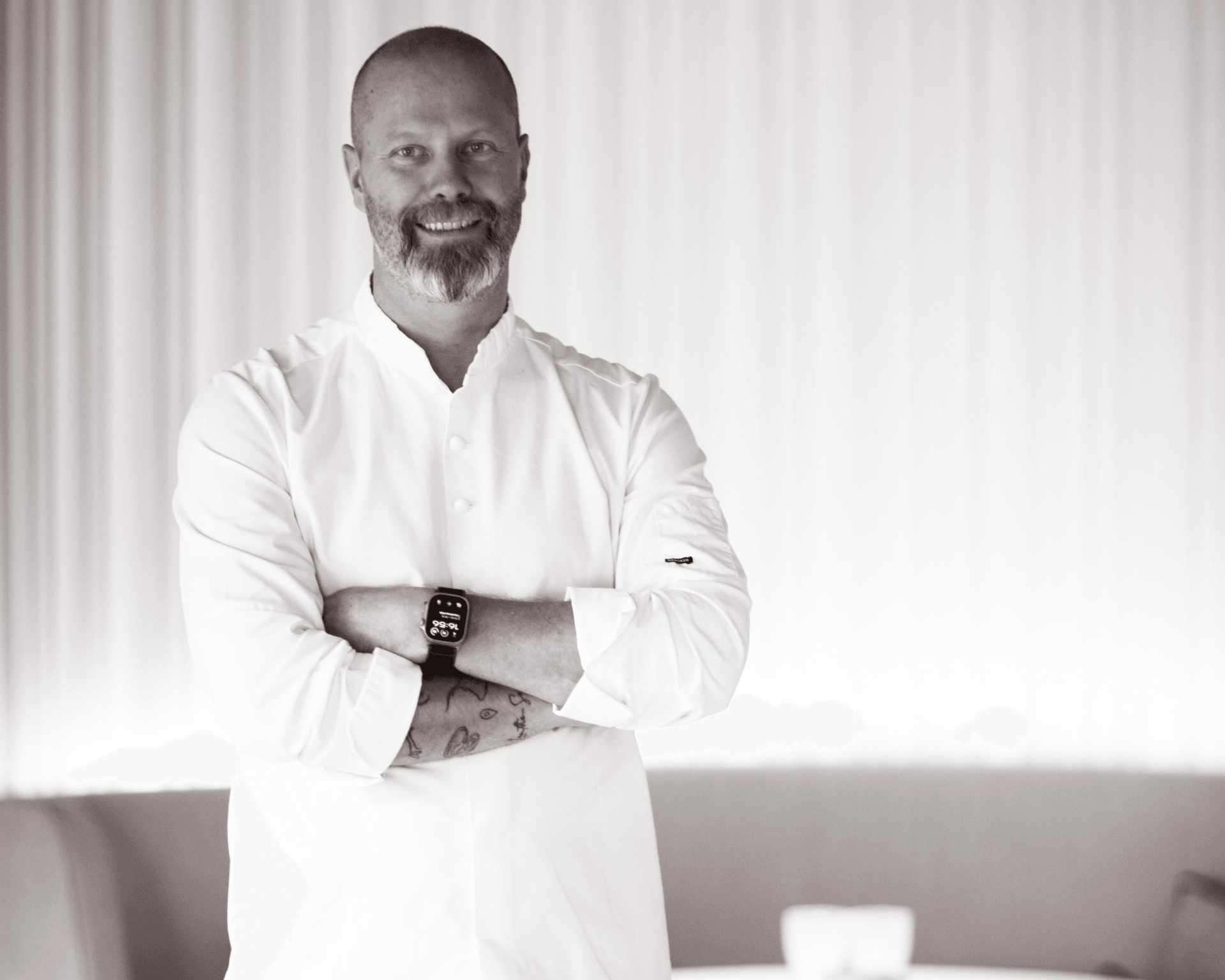
Entrepreneur in a chef's jacket: Sidney Schutte, Spectrum
From Amsterdam to Kuala Lumpur and from Mexico to Blaricum: his signature style is known worldwide. With five restaurants on three continents, a young twin at home, and an indomitable urge to create, Sidney Schutte (Middelburg, 1976) embodies the new generation of chef-entrepreneurs: visionary, demanding, and human. MASTERS visited him at his two-Michelin-starred restaurant Spectrum in Waldorf Astoria Amsterdam.
From student to leader
You started your career at De Librije and worked closely with Jonnie Boer for ten years. What did that period teach you, essentially?
"A lot! I started there as a young cook and left as a full-fledged chef. Jonnie gave me a lot of responsibility and the space to grow – he only adjusted where necessary. I now apply that same approach to my staff: if you truly want people to grow, you have to push them just enough to surpass themselves, without breaking them."
How did Jonnie's recent passing affect you, both personally and professionally?
That blow hit me hard. I was completely devastated for two weeks, and honestly, I still am. The moment I heard, we were in the middle of preparing for the opening of our new restaurant, Rust Wat in Blaricum. I just wanted to stop; everything was at a standstill. My thoughts were with Thérèse, the children, the entire team. A loss like that affects everything.
What is your fondest memory of him?
There are so many... But one really stands out. When I left De Librije, I gave Jonnie and Thérèse a hot air balloon ride. The six of us—Jonnie, Thérèse, Isabelle, Jimmie, my ex, and I—went up into the air and soared over Zwolle, Giethoorn, and the surrounding area. It was magical. After he passed away, I was leafing through some old photos. In one of them, we're like children, looking down from the balloon in wonder. That really touched me.
Your years in Hong Kong with Richard Ekkebus (Restaurant Amber) also shaped you. How?
Hong Kong isn't Zwolle, of course: you're on duty 24/7. And my role was different: not chef de cuisine, but executive chef. I was responsible for the entire hotel. The move from De Librije was a conscious decision: I wanted to broaden my horizons. With Richard, I learned classic French cuisine inside and out. Jonnie had his own style, and here I was exposed to different techniques and insights. I also grew outside the kitchen: I learned how a hotel works. I still reap the benefits of that every day at the Waldorf Astoria Amsterdam.
Didn't you feel the need to take even more steps before returning to the Netherlands?
Absolutely. I was in talks about an executive chef position at the Mandarin Oriental in Tokyo. A tremendous honor. Only, there are 140 chefs working there. So you already know you won't be spending a second in the kitchen, but practically all alone in the office. You'll wear a chef's jacket, but purely for show. That didn't appeal to me. Sure, it looks great on your resume, and the salary is impressive, but I was only 34. And then came the opportunity to run Librije's Zusje at the Waldorf Astoria. Back to where my heart lies: cooking. The small scale of the hotel also allowed me to easily combine that role with that of executive chef.
One vision, five kitchens
Within one year you were cooking Librije's Sister to two stars. What did that mean to you?
I've been cooking at a high level for years—it's what I'm good at and what I love most. But my love for hospitality extends beyond fine dining. Everything food-related appeals to me, even a burger joint. However, I've been trained in top-tier establishments, and after a while, you know how to achieve that standard. And when you have a strong team around you that shares the same passion and drive, things can move very quickly.
A few years later, you transformed the restaurant into Spectrum, retaining its two Michelin stars. What was your artistic and organizational vision?
My cooking style hasn't changed much; at most, it has become simpler. When I first came from Hong Kong, I wanted to show what I could do and bring everything together on one plate. I think every young chef feels that way. Sergio Herman was like that too. But with age, things become more relaxed, with a greater focus on cooking and flavor. Fewer ingredients, but every element has to be perfect. No more fuss. And that's precisely what makes it harder: there's nothing to hide behind; you can't disguise it with another flavor.
You've had those two Michelin stars for ten years now. To what extent are you involved with the third?
"Not at all. All we can do is try to be just a little bit better every day than the day before. Michelin is and always will be subjective. One person loves this, another that. You shouldn't get hung up on that. You shouldn't focus on Michelin, but on pampering your guests. The rest will follow."
No complaints about stars: restaurant Molina, which you opened in Kuala Lumpur in 2023, received a star after just five months. Why that step abroad?
A regular here—now a good friend and my partner—is building towers in the capital of Malaysia. One of those towers, with fifty stories, just happened to house a hotel, THE FACE. He took me there. We took the elevator to the top floor—it was completely empty, just concrete. From there, we had a view of the Kuala Lumpur skyline. 'Do you like it?' he asked. I said I thought it was fantastic, a dream come true. 'Would you like to open a restaurant here?' He didn't have to ask twice. I love Asia. That's how Molina was born.
The name Molina – Latin for mill – refers to the Netherlands?
"Above all, I wanted a name that everyone can pronounce. Moreover, Molina is not only a nod to the Netherlands, but—matching the skyscraper that houses the restaurant—also a reference to the tallest structures in the Dutch landscape in the past."
You were able to build the restaurant from scratch. What did you envision?
Because it was a stand-alone restaurant, separate from the hotel, we had complete freedom. We didn't want an Asian restaurant, but a European fine dining experience. We often hear compliments like, 'It feels like we're in Paris or London.' The cuisine is the same as here; my biggest concern was the staff. There are only a handful of fine dining restaurants in Kuala Lumpur. So I had to train the staff on everything. That was really tough. But now it's going great. The atmosphere is great, and they're very loyal. A former sous chef of mine is in charge of the kitchen; I don't have to worry about a thing. I go there six times a year and do the same thing Jonnie did for me: fine-tuning, guiding, guiding, and coaching.
You already had a restaurant in Mexico: Cocina de Autor, which received a Michelin star last year.
Michelin has only been awarding stars in Mexico since 2024. This year I was hoping for a second one, especially for the team, but I'm also proud that we kept the star.
How do you determine if a new location is right for you?
It's a similar story: one of Mexico's biggest builders came here for dinner. He was thrilled and told me I should cook at his new hotel. The next morning, there was an email. Three weeks later, I visited his hotel: the Grand Vela Resorts in Los Cabos, on the Gulf of California. Right on the ocean, whales, flying manta rays—a dream! That's when I knew immediately: I have to do this.
How does the tourist audience there influence your approach?
“It's mainly Americans who come there. And they don't like long sittings, they want the courses to be served quickly one after the other – boom boom boom – and after being gone for a maximum of two hours. I was going completely crazy, just couldn't get it right, and kept tinkering. In the end, we fine-tuned everything – serving appetizers simultaneously, restructuring the menu. It really took three months before I got the menu's pacing right, the speed of service. "
And do you also apply European cuisine there?
Yes, but much more with Mexican influences. It's become a really cool style. I also started Loto, a barbecue restaurant in the adjacent boutique hotel of Grand Vela Resorts: a robata concept with a Japanese charcoal grill. That's more of a hobby project.
From haute cuisine to poached eggs
In what other country would you like to open a restaurant someday?
Hong Kong continues to beckon. Shanghai too. And Dubai fascinates me; it's becoming more and more soulful. Things are developing there at a breakneck pace. It's not New York or London yet, but I'll talk to you in ten years: because no city accelerates as fast as Dubai. But since Jonnie's passing, I'm thinking twice before getting into anything again. He built an empire through hard work and didn't get the chance to enjoy his retirement. I was in the middle of opening Rust Wat and thought to myself: What am I doing? Another business, and for what?
For what then?
You know, I get so much energy from building something from scratch. Something that starts as an idea, gets put on paper, and then becomes reality. And then it becomes a success—that's still magical. I find that so special! Cocina de Autor is full every night with sixty people. We're expanding to a hundred covers and adding new staff. And it's also the most expensive restaurant in the area.
With Rest What made you choose a business closer to home? Why?
Ever since I ate there once, I immediately fell in love with it. A beautiful place surrounded by greenery and overlooking a body of water full of water lilies—a dream location! Even before the pandemic, I plucked up the courage and called the owner. Could I take over the business? Well, that came across as quite insulting. How dare you ask that? It was a very brief conversation. It was a well-established name, but in recent years, it had lost its appeal. And then I finally got the chance to take over. I don't know what it is, but I just find peace there. Even though a thousand things had to be done. It's a French brasserie. And from day one, it's been running smoothly.
You do this together with your partner, Gigi van Es. How do you divide the roles?
She used to be the director of a large restaurant group in the Gooi region, which includes establishments like Moeke Spijkstra and 't Bonte Paard. She's quit and now dedicates herself entirely to Rust Wat. She runs the restaurant, and I'm solely involved in the kitchen.
What is the difference in approach between a Michelin-starred restaurant and an accessible brasserie?
That's a huge difference. Both require a lot of attention, but it's a completely different way of organizing. At Spectrum, you work on a single dish for weeks, testing it fifteen times. At Rust, the challenge lies mainly in the logistics: cooking well for more people with fewer chefs. Believe it or not, I've been working on poached eggs for three weeks now: how do you steam 150 perfectly at once? Those kinds of challenges.
Doing business with time zones
You run five restaurants on three continents. How do you maintain an overview and control?
The time zones work in my favor: in the morning I call Kuala Lumpur, in the evening I call Mexico. Each restaurant has its own identity, but they all bear my signature. I oversee not only the quality, but also the style. I'm not eager to open another restaurant, but you never know what might come your way. My goal isn't to run twenty restaurants; I do it because I enjoy it. I don't want to become Gordon Ramsey.
How important is business acumen in your field, alongside craftsmanship?
Business acumen is essential. And I also really enjoy entrepreneurship. I didn't expect that. In Kuala Lumpur, there's always a dip in foot traffic after Ramadan. Then you have to get creative to still attract people. For example, by collaborating with brands like Louis Vuitton and Prada, developing a special menu for their best customers. An evening full of new faces, all from the upper echelon. Events like this not only boost revenue but also ensure lasting patronage. Because once you've dined with us, you'll always come back: it's high-end, with top-notch service, delicious food, and a spectacular view of the Petronas Towers.
How often do you actually stand in the kitchen yourself?
"Every day. But I'm no longer producing—there's simply no time for that. I develop things together with the chefs, oversee the overall process, and provide direction."
What can guests expect at Spectrum?
“Top products, many beautiful luxury ingredients, but not just caviar and truffle. Think of plump langoustines and wild sea bass. My roots "We're located in Zeeland, so shellfish always play a key role. And yes, lots of vegetables too – I really enjoy working with those."
Does working with different cuisines – from fine dining to accessible concepts – make you a more complete chef?
It doesn't feel that way, but it has to be. We cook for an international audience. Asian guests prefer less pronounced flavors; Americans like things to be fast-paced. We cater to that. That's the trade.
Balance is the new gold
How do you deal with the growing need for work-life balance?
You have to accept that people don't want to work five days a week anymore. You can argue with them, but you'll still lose. That's why we're only open Wednesday through Saturday. And shouting in the kitchen? Forget it. If you do, they'll walk away. And then you're left there, alone.
Does that shorter working week also make it easier for you to combine work and family, with young twins at home?
"Definitely, at least I see them now and then, haha. It's crazy sometimes: Gigi is at Rust Wat every day, and I manage five restaurants. Without a full-time au pair, it wouldn't have been possible. I try to take them to school every morning. Sometimes I even take them to Mexico."
How has fatherhood changed how you work and plan?
"Especially my priorities. I get a lot of requests to be a guest chef, but I've become much more discerning about that. Free time is free time. When I'm home, I'm there for the kids."
Where do you find peace or inspiration now, outside of work?
By traveling. I was recently in Istanbul, cooking with a colleague. I avoid the crowded hotspots and ask a local where I really need to be. That way, you discover places you'd otherwise never find. I also found Riyadh amazing. I expected a sandy plain with a few houses, but I was completely blown away. I cooked for a group of influential men in the old city—all wearing turbans. Afterward, a government minister thanked me personally. The next day, he showed me around their new city plans.
What did he show you?
A gigantic model of a renovated city. I asked, 'Where are the roads?' He pressed a button, and the entire model rose—three layers of underground infrastructure, sixty thousand parking spaces. Then he pointed to a construction site: 'This is where the most cranes in the world are.' In three years, that entire underground network will be finished.
Are hotels and restaurants also planned?
"What did you expect? Forty-five luxury hotels! Not just names like the Waldorf Astoria and Four Seasons, but they're also developing their own hotel group with, as the minister put it, 'true luxury.' He asked if I wanted to open a restaurant there. I said I didn't want to invest. He looked at me like I was crazy. Money's no object there. Anyway, the hotel will be built in two years. We'll see."
Looking back on your career, what are you most proud of?
That I've established successful, high-level businesses on three continents. Molina, in particular, was a tough birth. At one point, they said at home, "Holy fuck, you're so tense." I had to order every cup, every spoon myself. It was so intense. I walked around the restaurant thinking, "Did I arrange this, order that?" It was a tough year.
The new elite of fine dining
How do you see the future of gastronomy?
Besides delicious food, the experience is becoming even more important. Look at a place like Alchemist in Copenhagen: licking, smelling, sniffing—everything is part of the experience. And I think high-end fine dining will shrink significantly within five to ten years. Top-quality products will become scarce and exorbitantly expensive. Many restaurants operating at that level will disappear. What remains will become extremely exclusive. A niche for people willing to pay for true quality. Because it doesn't just have to be top-notch, it has to be right. You don't want to serve farmed turbot. Everything has to be sustainable and responsible. That makes the job harder—but also purer.
Will Spectrum survive this selection?
“I hope so. Yes… it must be.”
And otherwise?
“Then we'll just continue building in Riyadh, haha.”


