Power
MASTERS TO WATCH: DIEDERIK AND BRITTA VAN EGMOND
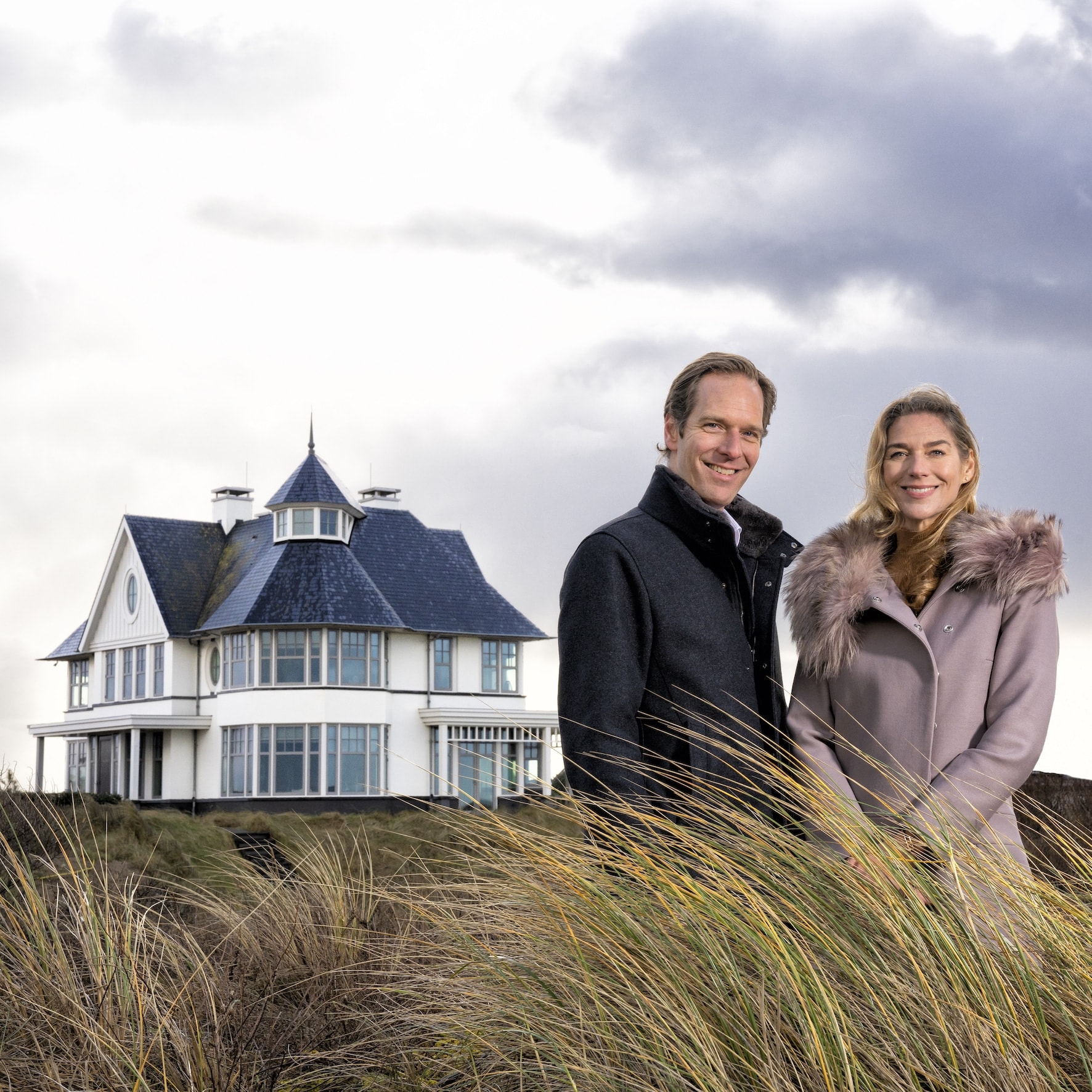
Owners Diederik and Britta van Egmond of Van Egmond Architecten grew up with architecture. The two masters tell MASTERS about their company, the interior project they completed for John de Mol and the Royal House. A fine piece of work.
With owners Diederik and Britta van Egmond, van Van Egmond architects, architecture was instilled in them at a young age. The two masters tell MASTERS about their company, the interior project they did for John de Mol and the Royal House. A fine piece of work.Text: Bart-Jan Brouwer | Online editor: Natasha Hendriks
Image: John van Helvert
Entrepreneurial test
Britta: “With a mother as an interior designer and a father as an architect, we literally grew up under the drawing board. It was obvious that we would both study architecture and eventually work in my father's office.” Diederik: “We took over the management in 2008. Then came the construction crisis. That was extremely cathartic. It was an experience that shaped us both, because you learn to appreciate every assignment. A good lesson in humility and gratitude. We survived the crisis by magic. That was really a kind of entrepreneurial test – nice that you can draw a beautiful house, but can you also run an agency well? During that period we identified what we are good at and what we are less good at. Our strength lies in solving complex cases. When we are asked for a simple plan, I don't know whether our added value is enormous. But if it is a case with a high degree of complexity, for example a complicated zoning plan or large-scale project, we are not only good at the design, but also at the entire guidance of the process and the realization of the goal we have in mind. . That goes much further than just 'is the house beautiful?' or 'are those hundred apartments stacked properly?'. There is a lot involved in architecture, and in that respect we are a kind of spider in the web.”
Future-oriented
Britta: “Architecture is much broader than just making a drawing. We work with builders, but also with lawyers, planners, demographers, artists... How do we get everyone involved so that we can achieve a result that looks fantastic aesthetically and also works very well functionally and meets all the preconditions? Our clientele has many requirements and conditions. It is always about complexity on different scales. From luxury villas in which we determine all the furniture, fabrics and finishes in detail, to projects at city level where we look at how we will live together in the future.” Diederik: “We strongly believe in the feasibility of the future. You have to look ahead: What will the population composition look like? How will we travel to work in the future? But also, on a smaller level: how does a villa client live now and in ten years' time? The house must be able to be adapted accordingly. For example, we did John de Mol's house. A successful entrepreneur, but also a loving grandfather. He must be able to be both in his home. He must be able to receive both international business leaders and his grandchildren. And how does he want to use that house in ten years?” Britta: “Every design starts with a personal story. We first sit down with someone: how do you live, what time do you go to bed, what kind of work do you do?” Diederik: “We also work for the Royal Family. Then you have to think about what the monarchy will look like in fifteen years. We look for future-oriented solutions that will stand the test of time. The same applies to office buildings: I am convinced that in fifteen years we will be laughed at for today's office building. Working is changing: more people are working from home, more is done digitally. What will that look like in the future?”
Social issues
Diederik: “Our designs are an expression of the spirit of the times, a response to social issues and personal dreams. Take the riots after the curfew. Everyone shouts: ridiculous! But you can also ask the question: why are those people so angry? It's quite a few steps: you're sitting at home watching television and decide to put on a hood and take the train to Rotterdam. Usually along the way there is someone who says: 'Would you do that?' Or do those people live in a place where no one says so? Have we been working together for years to create residential areas that we no longer have any social control over? These are big and uncomfortable themes, but you shouldn't be afraid to broach them. If an apartment building is created, see if it can be a mix of villas and small houses, so that social cohesion is strengthened.” Britta: “Shouldn't the way we do things be different? What is a healthy lifestyle in which you can be happy and happy? If young people have to live smaller because housing is not affordable for them, let's provide larger parks where they can exercise, design hubs where they can work, hotspots where they can make music and art together. How do we divide the space we have and provide impetus to create a happy society?”
Big thoughts
Diederik: “On the one hand, we do large-scale urban development plans, complete residential areas with mini companies. On the other hand, we do very exclusive villas, where the complexity of a mini-society is encompassed by one building. The common thread in both is formed by big thoughts, which we ultimately try to make very small and personal. We are not afraid to think big, but also down-to-earth enough to make it applicable. What is van Egmond Architecten good at? We know how to bring complex issues to essence at large and small levels and solve them with concrete examples.” Britta: “We do not have the idea that we are the great improvers who will organize the world differently, but we do want to commit ourselves to that. If everyone contributes, we will become a little better together.”Diederik and Britta van Egmond
Diederik and Britta van Egmond
Diederik and Britta van Egmond
Diederik and Britta van Egmond