
Power
Masters of Virtual
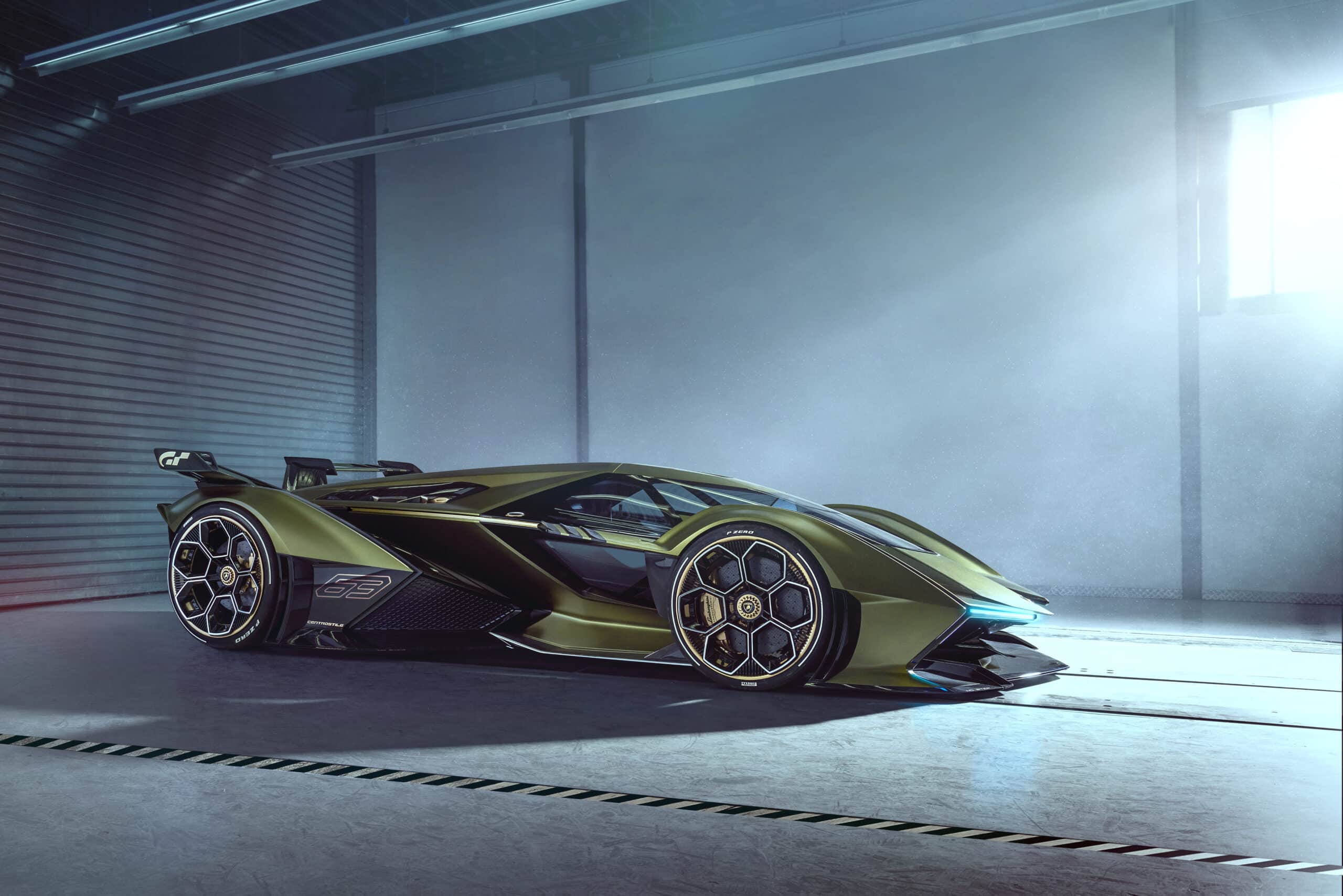
According to our guest editor-in-chief, the boundaries between virtual and physical reality are increasingly blurring. This also applies in the automotive industry, where cars from the virtual racing world make their marks on unadulterated asphalt and, conversely, concept cars make virtual kilometers so that drivers can train 24/7 without the costs and limitations of physical racing and testing.
Then in 1974 GranTrak 10 Before Atari came out, racing could be done on a computer for the first time, quite primitively. The first version was released in 1997 Gran Turismo in which various existing cars could be driven. It was the first game that aimed to create a realistic racing simulation. Upon the release of GT2 More dream cars were added in 1999 and this trend has continued in the years that followed. In this second edition of Gran Turismo our favorite was the Renault Espace F1. This concept car from 1995 was on the outside an Espace, Renault's popular SUV. Under the skin, however, it was a carbon fiber racing monster with a 3,5 liter V10 Formula 1 engine and a chassis that largely came from the Williams F1 team. In 1999, the Espace F1 had long been parked in the Matra Museum, where the public could only look at the one-off concept. Until the car was taken in GT2, after which it could be driven virtually ever since.
The simulator 'games' of the last century have developed rapidly and have become increasingly realistic. Today's games approximate the driving experience of the expensive setups used by Formula 1 teams. Most F1 team simulators are based on rFactor Pro, with a lot of proprietary software on top. The rFactor games are also based on rFactor Pro, but the differences are significant. The current F1 simulators can measure and process an enormous amount of data. Everything the car does with a certain tire, setting, road surface, temperature, air pressure, crosswind, etc. is measured and displayed in detail. The simulator of an F1 team, including the associated measuring equipment, servers, terminals and the like, costs at least ten million and is the size of a very nice apartment.
Virtual vs. reality
The first sim games provided the inspiration for today's F1 simulators. The teams saw their potential, and when unlimited testing for F2003 teams was curtailed from 1, they became even more interesting. F1 teams spent millions on simulators and software to compensate for the testing ban. Since then, new parts are always tested in the simulator first, and only when everything is correct and fine-tuned are they sent to the wind tunnel or the circuit. New designs and concepts are developed with CFD software. Computational Fluid Dynamics study the flows of liquids or gases. So in the case of F1, CFD software analyzes the effect of air currents on a racing car.
In 2010, the Virgin Racing team, as a newcomer in Formula 1, dared to skip the wind tunnel completely and design everything in CFD. There were two other newcomers to F1 that year, and Virgin was no match for the other two. But yes, all three started with such a technical and financial disadvantage that they have now long since disappeared. Yet Virgin Racing's choice illustrates the importance of CFD, because it is also indispensable for current teams. F1 teams now combine CFD with wind tunnel tests. However, only when the engineers are satisfied with the measured figures, graphs and simulations will they even consider testing the new parts and cars in the wind tunnel or on the race track.
Max and Lando
Sim racing game manufacturer iRacing works closely with TotalSim, a world leader in CFD. In this way, iRacing creates a high degree of realism in the aerodynamic behavior of the cars in their game. And so the boundaries between virtual and physical reality continue to blur. The consensus is that iRacing is the best game for an authentic racing experience. Formula 1 stars and top sim riders such as Max Verstappen and Lando Norris iRacing their favorite game, because iRacing comes closest to the feeling of racing in real racing cars. This way you immediately feel a small change in the car's setup in the handling. Or as Lando Norris describes it in race car language: “You immediately feel the feedback in your steering wheel.” That's why the cars in games approach like iRacing of rFactor reality very close. Even if virtual cars are developed specifically for sim racing games, they must be extremely realistic. Which immediately explains why there will be no nonsense creations, such as a Smartje with 2.000 hp, in serious sim racing games.
Automakers are going virtual
In September 2021, the Porsche Mission R concept car was introduced at the IAA Mobility in Munich. This electric racing car with four-wheel drive and up to 1.100 hp is designed as a study model for future Porsches and to live on in the virtual world. In addition, the Mission R's cockpit module can be used independently as a simulator. This means drivers can train 24/7, without having to go to the track, and therefore without the costs and limitations of physical racing and testing. The Mission R can also be raced on the iRacing platform. In the physical world, Porsche participates in the Formula E world championship for electric single-seaters. Here, Porsche tests the electric future of sports cars on the track. The Mission R, on the other hand, will never drive on a real race track, yet this virtual two-seater also tests Porsche's near future. And feedback from iRacing is gratefully processed.
MASTERS MAGAZINE
Curious about the rest of the article? The winter issue of MASTERS was created in collaboration with Jordi van den Bussche. Many will know him as YouTuber Kwebbelkop, but he has been working hard as an entrepreneur for some time, as he explains in the Great Interview. What is new is that his company JVDB Studios offers to do social media marketing and short format content marketing for other companies. “They can also figure it out themselves, but we cracked the code.” Jordi gives a platform to like-minded entrepreneurs such as Jay-Jay Boske, Demy de Zeeuw, Chahid Charrak and Marcella de Bie, and discusses developments surrounding games, crypto and NFT: “Just as bitcoin turned the financial system upside down, will that also happen with gaming.” This extra thick winter issue also focuses on Lengers' first own ship, an interview with Corendon CEO Atilay Uslu, specials about the new BMW 7 Series and Samsung foldables, and - exclusively for MASTERS! – an interview with Max Verstappen.


