
Taste
Masters of Future
The near future of cars is not difficult to predict: continued electrification, the arrival of self-driving vehicles and synthetic fuels to break the fossil fuel dependency. No crystal ball needed, because this is what the car industry and its test lab, motorsport, are clearly pursuing.
Giants such as Tesla, Uber, BMW and Toyota, among others, are investing many billions in self-driving cars. Even though a recent MisterGreen survey showed that almost half of Dutch people say they will never get into a self-driving car, they are still coming. These types of negative figures are of course also provisional, because when aircraft were still in their initial phase, for example, they really did not score any better. A certain degree of autonomy is already present in modern cars anyway. After the automatic parking assistance, we are now also used to things like lane assist, which keeps you in your lane, and adaptive cruise control, where the car itself keeps sufficient distance and adjusts the speed. These are functions that fall under level 2 autonomous driving. In the UK, fully autonomous driving (level 2025) is planned to be permitted from 5, and the rest of Europe is also preparing for its arrival.
Racing for the environment
Motorsport gives us the opportunity to look a little further ahead. For example, Formula 1 has been using hybrid cars since 2009, and the teams have since significantly advanced everyday hybrid technologies. From 2026 onwards, around 50 percent of the maximum power will be generated with hybrid systems. So development is going well, and that is why the goals are being shifted again. If we are realistic, the entire world cannot drive electrically. So combustion engines must become cleaner, and that is the next task for F1. From 2026, synthetic fuels will therefore be used - an important signal for the future. Once these fuels have been tested and optimized in the extreme conditions of a Grand Prix, they can hit public roads. The all-electric Formula E is also certainly not standing still. The performance of batteries and regenerative systems has improved dramatically in nine years of racing. For 2023, Formula E brake discs on the rear wheels have even been abolished and the cars will be braked with regenerative systems. The energy released when braking is converted into electricity to propel the car. Because, just like in F1, the power sources in Formula E are built by car manufacturers, these racing cars also function as mobile test labs for the passenger cars of the future.
Gamechangers
If we go back a few decades, you sometimes come across a car that you can say we hardly saw coming and was way ahead of its time. Think of the McLaren F1 from 1992. Despite the name 'F1', this was not a racing car, but McLaren's first road car, and the start of the hypercar era. For example, the F1 was the world's first carbon fiber production car. The McLaren was so far ahead of its time that when you put F1 on the track against modern hypercars, most still take a beating from this thirty-year-old design. Another game changer is the Lamborghini Miura from 1966. Not only is the Miura, according to many enthusiasts, the most beautiful sports car ever, it was also the first road car with a mid-mounted engine. Nowadays, this classification actually applies to every super and hypercar. It is therefore not without reason that the Miura is often seen as the first supercar. But what about in the modern era, are there any cars left that have the potential to be a new Miura or F1? Maybe. For example, anyone who went to MASTERS EXPO in December could see two very special cars there. The first was striking enough, because the Dutch PAL-V Liberty is the world's first flying car that can take to the road as well as the airspace with full approval. Of course, flying cars are a niche market for the time being and will not dominate the street scene. Yet they have the potential to become important. Consider, for example, emergency services, who can do much more with a car that is also a gyrocopter than if they have to choose from either a helicopter or a car.
Bespoke driving
Another trend is the increasing personalization of cars. In the higher segment, bespoke driving is important, and this now goes much further than choosing your own colors and options. Rolls-Royce, for example, makes this a spearhead, but it can go much further. For example, at the MASTERS EXPO there was a Deus Vayanne, a beautiful car with more than 2200 (electric) horsepower. But even though that is a spectacular amount, the special thing is the platform on which the Deus is built. Williams Advanced Engineering, indeed from the Formula 1 team, supplies an electric hypercar platform. This means that they supply a basic car with 2244 hp and breathtaking handling, after which a smaller builder devises a body and interior for it. This can then become a small series or one-off model. So the driving part is left to the nine-time Formula 1 world champion, after which the look & feel is tailor-made. That is Next Level bespoke driving.
Rainbow colors
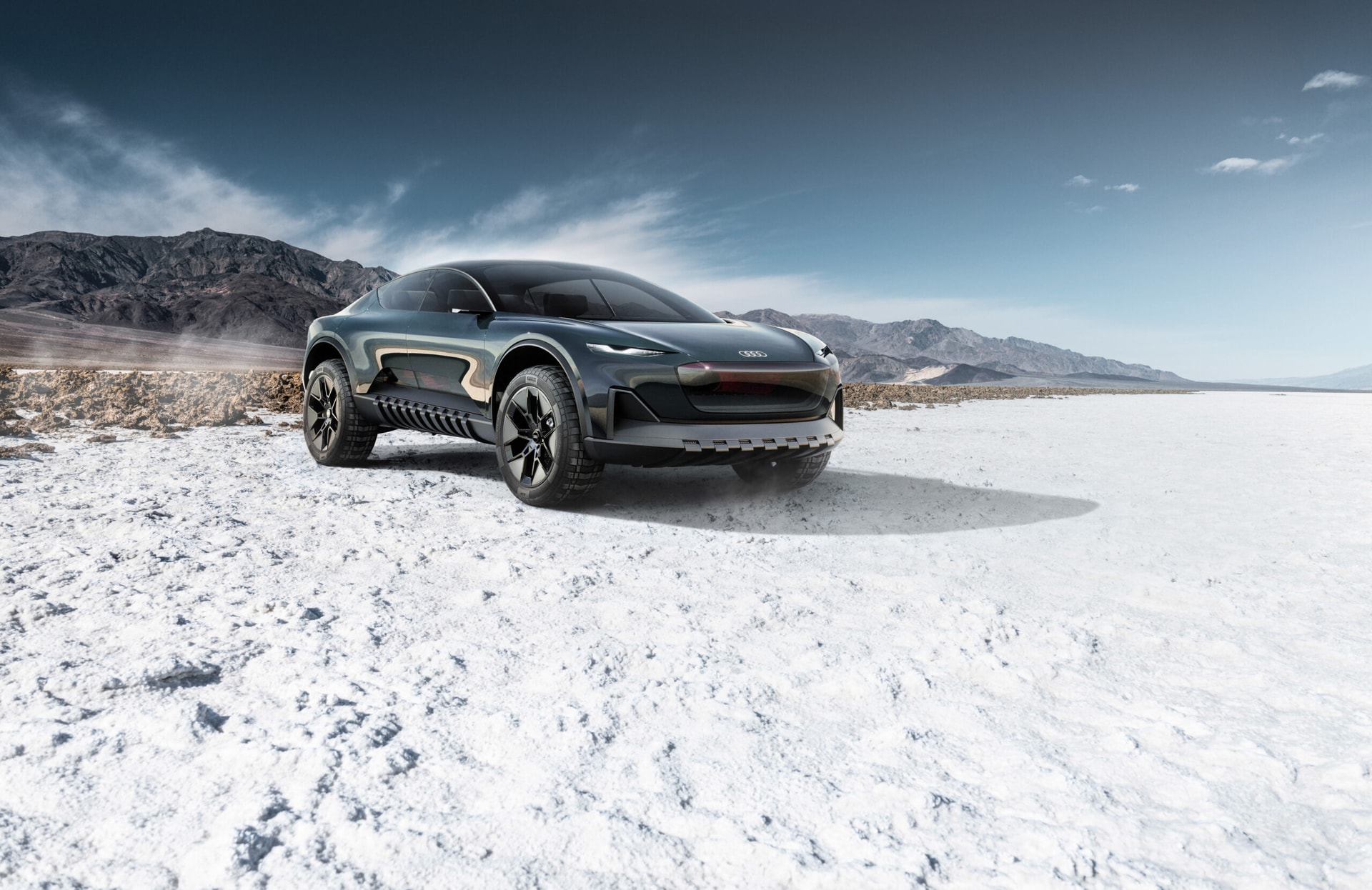
Even though trends such as increasing autonomy and electrification are easy to predict, there are still surprising concepts from the major manufacturers. Look, for example, at the Audi activesphere concept. According to Audi itself, this is a luxury sports car, but the activesphere also has a variable ride height for off-road driving, and becomes a pick-up at the push of a button. It will be interesting to see how Audi responds to future autonomy. For example, the interior is made for autonomy level 4, so the car can do everything itself, but a driver can always take over the wheel. However, if you want to drive at level 5 autonomy, i.e. without human input, the cockpit folds away. Another fascinating concept is the recent BMW i Vision Dee. The exterior of the BMW is finished in the latest E Ink, which allows the car to change color and pattern in seconds. So do you want to go to a business meeting in dark blue, then to a football match in club colors and go out in rainbow colors in the evening? The i Vision Dee switches from one look to another in a few seconds. And that's the nice thing about cars. Yes, you can predict the future in broad terms, but there are always surprises.
MASTERS Magazine #53
This article comes from the new MASTERS Magazine. In this spring edition, three entrepreneurs shed light on the future: Raymon Pouwels (GO Sharing), Merel van Helsdingen (Nxt Museum) and Tim van der Wiel (GoSpooky). According to the latter, ever-accelerating technological progress offers enormous opportunities. Sports journalist Jaap de Groot outlines the contours of the new playing field of international sport after the resounding success of the World Cup in Qatar. And futurist Adjiedj Bakas also sheds light on the future. Also: a look back at MASTERS EXPO, a road trip with the new Range Rover and interviews with horse pope Jan Tops, Red Bull Racing team boss Christian Horner, chef Margot Janse and visual artist Spencer Tunick.


