
Next
HOW TO DISCOVER THE NEW WORLD: SUSTAINABLE AVIATION
The future demands sustainability. Each year, we see growing awareness of its importance. In LXRY List 2021, we examine several concepts shaping the sustainable aviation trend.
The future demands sustainability, and fortunately every year we see that people are becoming more and more aware of it. Airlines also have sustainability high on their agenda. In LXRY List 2021 we look ahead to sustainable trends in aviation. Online editor: Natasha Hendriks
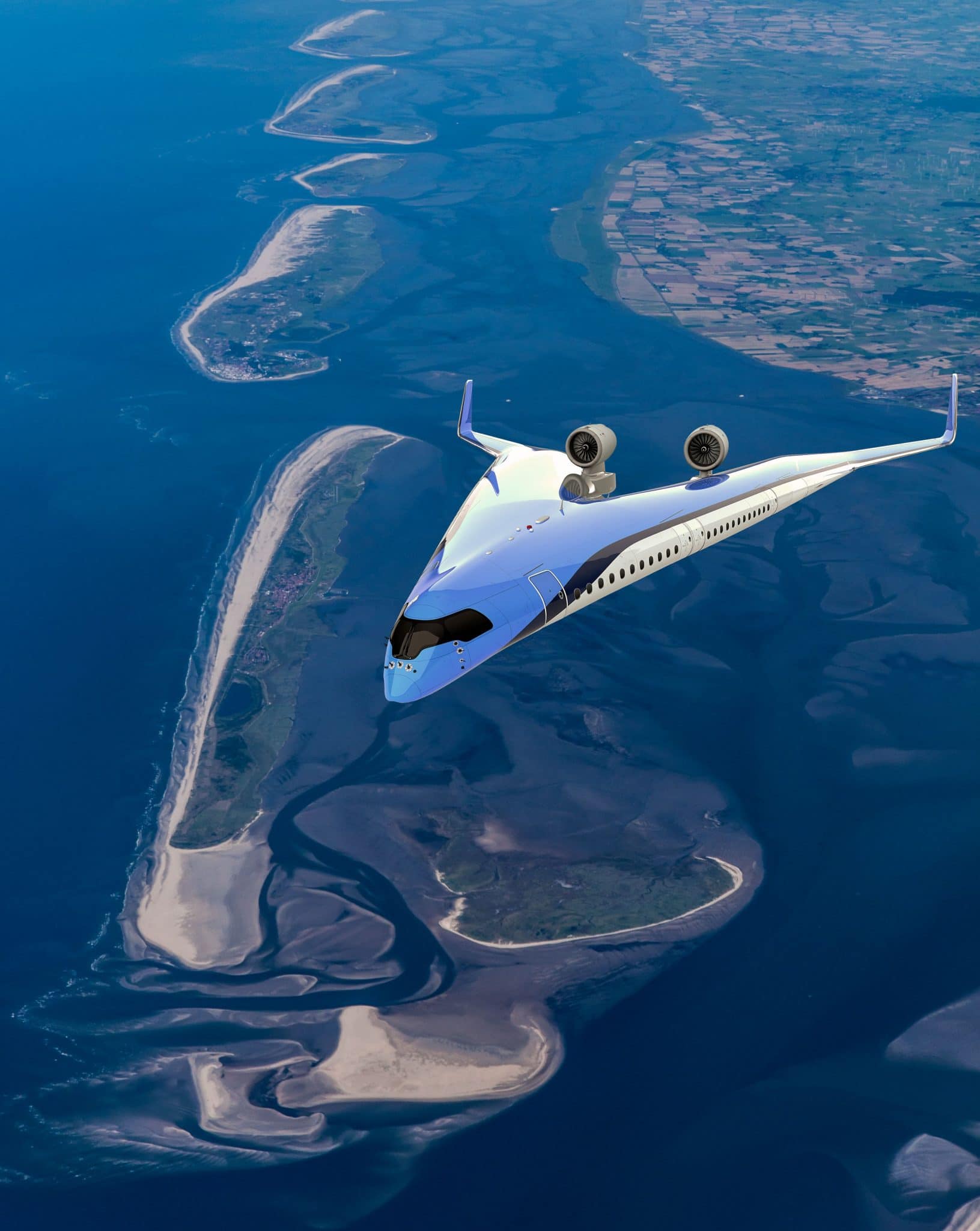
Flying-V
Airline KLM and TU Delft are working together on the Flying-V: an aircraft that can carry slightly more passengers than the Airbus A350 and uses 20 percent less fuel due to a better aerodynamic shape and lower weight. According to KLM director Pieter Elbers, the development of the new aircraft – an idea by Justus Benad of TU Berlin – contributes to sustainable aviation. According to Professor Henri Werij of TU Delft, the ultimate goal is emission-free flying. The Flying-V still flies on kerosene, but can reportedly be easily modified to be suitable for, for example, electrically assisted jet engines.
Volocopter
According to the Spanish aviation authority Enaire, we will see them in Barcelona's airspace as early as 2022: flying taxis, the three-dimensional solution to the traffic jam problem. Various companies make flying drones for passenger transport, and Volocopter is at the forefront of this development. Volocopter made its first test flight as early as 2011. The further development of VoloCity is a fully electric air taxi that can fly autonomously. From 2022, the VoloCity will operate commercial flights. It still feels like science fiction now, but by the end of this decade we will probably find it completely normal to 'uber' through the air.
ZERO Blended Wing Body
Airbus is working on the world's first zero-emission commercial aircraft, studying various technologies and aerodynamic configurations. With this, Airbus wants to take the lead in phasing out fossil fuels and thus 'decarbonizing' the aviation industry. The primary energy source of the future is hydrogen, which the company believes can significantly reduce aviation's impact on the climate. One of the three design concepts for the first climate-neutral and emission-free commercial aircraft is this ZERO Blended Wing Body (up to 200 passengers), in which the wings and fuselage merge into each other. The particularly wide hull offers various options for hydrogen storage and distribution, as well as different cabin layouts.


