
Taste
Art in Green
Suzanne Swarts' knowledge of art extends far beyond the walls of Voorlinden, the museum she directs.
The knowledge of Suzanne Swarts in the field of art goes much further than what can be admired within the walls of 'her' Voorlinden. In M the museum director shares her insights, experiences and passion in an almost poetic way. Works of art in themselves! Text: Suzanne Swarts
Image: Tomas Riehle Anyone who crosses the border at Venlo and drives for about 45 minutes arrives at an oasis in the German river landscape. Between the trees, plants and hills, roofs of brick and glass protrude from the greenery. They make every visitor curious about what is to come.
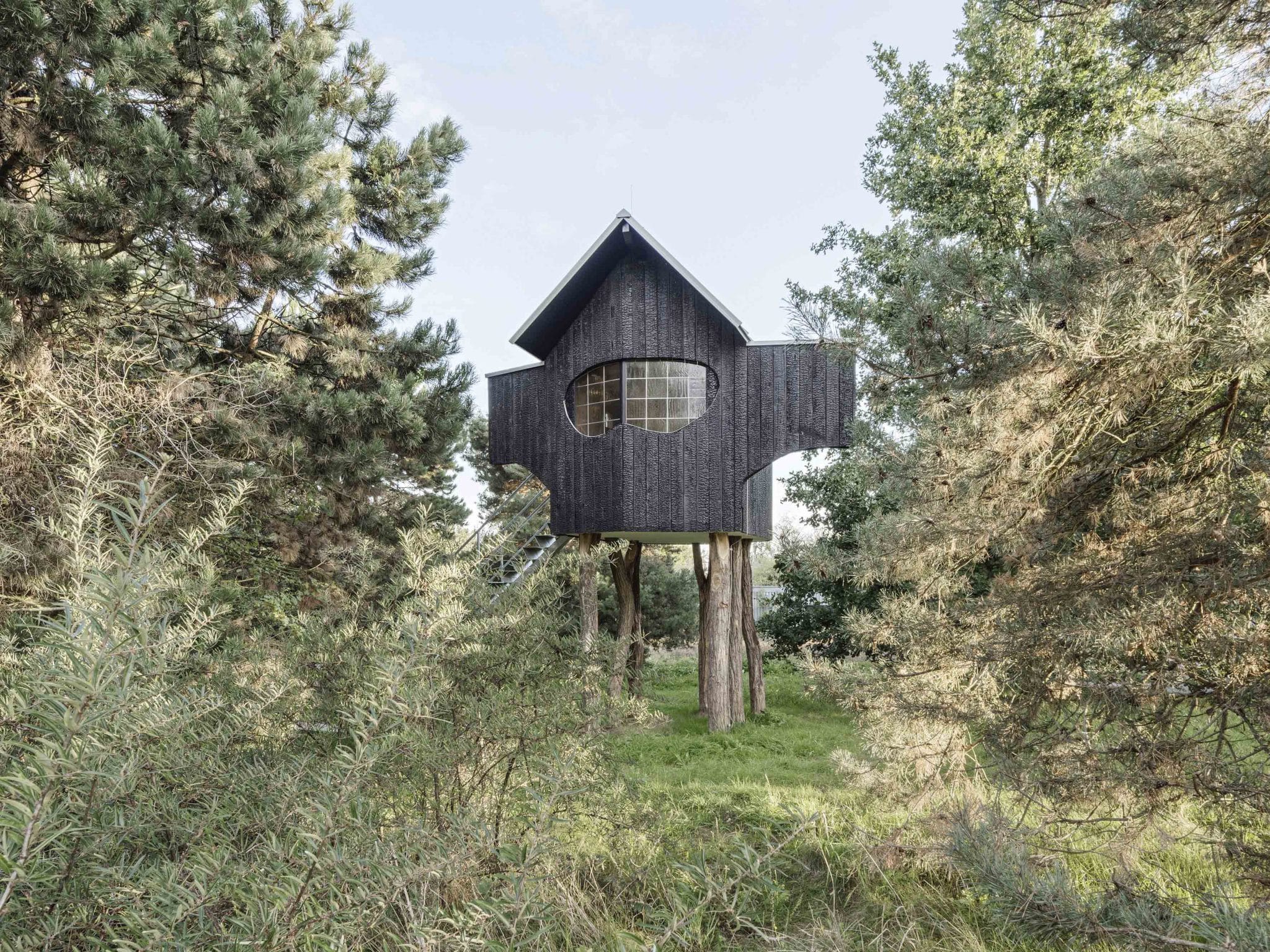
Art in parallel to nature. The Düsseldorf art lover Karl-Heinz Müller, who became wealthy through the real estate trade, was inspired by that statement by painter Paul Cézanne when he turned Insel Hombroich into the museum island it is today. In the early eighties he bought this island, located in the bend of the narrow river Erft. On the ground there was only a nineteenth-century villa, a dilapidated orangery and a tree here and there. Surrounding it were farmlands, stretching as far as the eye could see. Now, almost forty years later, nature, architecture and art come together optimally on the museum island of Hombroich. Müller allowed the water to enclose the land, planted trees and shrubs and created terraces and ponds. Since then, nature on the island has only become more lush: the box hedges reach the sky and the plant vines move freely. Photo: Tomas Riehle Several dozen buildings are hidden in the middle of nature, which Müller, who died in 2007, liked to call 'walkable sculptures'. mentioned. They take the shape of a labyrinth, a coffee house, a greenhouse or a lodge. They are chapels in the landscape, as if you stumble upon a sacred house where a special moment once took place. What you find inside is more than special. During his lifetime, Müller collected work by Henri Matisse, Yves Klein, Alexander Calder, Hans Arp, Kurt Schwitters and Rembrandt van Rijn, among others. But images of the Khmer Rouge and ancient art from China also belong to the collection. They hang in sunlit rooms that are hardly mechanically heated. The doors are open, allowing the wind to blow in freely. There are no signs on the white plastered walls that tell the visitor what he is looking at. There are no attendants around who can tell you more about this wonderful combination of artistic factors. Only in this way can one observe the art undisturbed. Yet in all the years that Insel Hombroich has existed, I have never been told that a case of vandalism or disruption has ever been reported. I understand. Walking through the landscape, without telephone reception, with only the occasional other visitor in my path, it never occurs to me to endanger the peace and quiet in this special part of the world. I only dare to look around breathlessly, to poke my head around the corner of a new brick house, where the vibrant colors of new art shine towards me. The estate also has studios where artists can work on their new projects in peace. I imagine myself as such an artist, surrounded by dozens of walk-in sculptures in more than twenty hectares of hilly nature. I can't imagine a more inspiring environment.
You can read more about this article and more in MASTERS #46. Never miss anything from MASTERS again? With 4 controversial MASTERS editions, the annual LXRY LIST and many more extras, you can easily enjoy reading at home: substantive reports, great photography and unique brands, trends and places in the world. Give it as a gift to yourself or a loved one. Easily close your subscription now here off.Photo: Suzanne Swarts


