
Power
Jort Kelder: "A capitalist bazaar with plenty of camaraderie"
FotografieKároly Effenberger
TekstIrene van de Laar
FotografieKároly Effenberger
TekstIrene van de Laar
Jort Kelder has been one of the Netherlands' most distinctive opinion makers for years. With his sharp observations, sense of style and outspoken views, he knows how to provoke and entertain. In this conversation he reflects on his career, speaks openly about success, influence, friendship and entrepreneurship, and reveals that behind the public figure lies a curious observer.
She once competed in the Miss Universe pageant. Now she uses her charm to persuade fascinating men to sit down for an interview with MASTERS. This time, Irene van de Laar has set her sights on media entrepreneur Jort Kelder.
You have been interviewing others for decades. What is it like to be the subject of conversation yourself?
"Being interviewed is not my idea of fun, especially since I am outspoken and have no patience for pointless drama. Written interviews are flawed because the writer is the director and decides what makes the final cut. That is why I prefer live radio, television, podcasts or, better yet, email. As for the fame: well, you get used to it. And let me be honest: being in the spotlight, being discussed, has brought me a great deal. A better table at a restaurant, access to interesting people, an advantage or sometimes a disadvantage when the police pull you over."
What do you think is the biggest misconception people have about you?
"That I am a right-wing egotist. Yes, I believe in the benefits of market economics, but I am not conservative and lean towards libertarianism. We are increasingly becoming a rule-bound republic, and we really need to resist that, even through civil disobedience if necessary."
Looking back at your younger self: which conviction have you lost and which has grown stronger?
"I know more now than I did when I was that loud twenty-something, but I do not think I have fundamentally changed my view of the world. Perhaps I have come to agree more with Rutger Bregman: most people are decent, or at least well-intentioned. At the same time, I would gladly give anyone who litters, misbehaves in traffic or in public life a good beating ;-)"
You are known for your sense of style and presentation. To what extent is that pure interest, and to what extent is it also a strategic awareness of how the world works?
"When I started as an intern at Quote, almost forty years ago now, I did not wear a suit and braces every day. But I found journalism such a sloppy, badly dressed world that I made braces my trademark as a contrast. It also suited Quote well. I think that did its marketing for me. I still cannot step onto a stage without them or people say: 'Where are your braces?!'"
Someone who is curious about others often learns to know themselves better too. Which encounters have taught you the most about yourself?
"Oh, the only advantage of getting older is that you increasingly figure out where you should not spend your time. So spend as little time as possible with negative types who drain your energy, and learn to say no to requests that make your stomach tighten. On the other hand, sometimes you should take an unexpected path. Last winter I performed the theatre piece Rat van Fortuin 37 times, together with Fré Hooft van Huysduynen. The piece was about, as the subtitle said, 'money, happiness and breakdancing'. I managed the first two themes well enough, but I can still feel that dance in my joints. I drove ten thousand kilometres through the winter and night across the Netherlands, but I would not have missed it because it was not a typical chairmanship, but real theatre with singing and dancing."
You speak with many people, from politicians to artists and entrepreneurs. What makes someone a truly interesting conversation partner for you?
"All those corporate types who surround themselves with nervous press officers: never mind them, and good luck with your bonus and stock options. But a real conversation with fresh insights or, if nothing else, some brilliant one-liners, that was with industrialist Paul Fentener van Vlissingen on his Scottish estate. He was in his later years, had founded African Parcs as an organization to protect vast stretches of Africa, and was reflecting on life. He said something like: in my youth you could get two types of toaster, but twenty species of mushrooms grew in my parents' forest; now there are twenty different toasters but only two types of mushrooms left. What is value, what is scarcity? Quite essential, really, because the consumer society with an abundance of everything stands in many ways against itself."
Which guest have you ever completely misjudged?
"Robert de Niro. I got to interview him last year when Nobu was opening in Amsterdam. As an actor I admire him greatly, from The Godfather to The Irishman, but Mr De Niro had no interest whatsoever, said nothing remarkable and got out of everything with platitudes. A disappointment that was confirmed again when we were allowed to dine that evening under De Nachtwacht. You would think that loosens tongues, but De Niro shut down every conversation, sat bored scrolling on his phone and limited himself to obligatory small talk. He had just met the Pope and done a whole European tour, so he must have been tired; I hope that was the reason and then I forgive him. Otherwise he's just an ass."
Do you ever look back on an interview and think: today I would have handled that differently?
"Certainly. To mask my inexperience and nerves I used to go in all guns blazing. Sometimes amusing to watch, but often embarrassing. On one such occasion I was confronted with young actress Georgina Verbaan. I barely knew who she was and asked questions that were both prejudiced and uninformed. She found my clumsy fumbling rather endearing, so we arranged to meet again, raced in a rally together and stayed together for almost five years. A unique person with an original mind and impeccable language sense, I have always admired her. Incidentally, unexpected things still happen to me these days when I start chattering live on television. Recently I accused women of financial disinterest and lacking the ambition to make the Quote 500. I am factually completely right, but the subject is sensitive, so now divisions of angry career women are showing up on my social media. Well, listening is a skill, and I don't master it particularly well myself either."
You still meet many entrepreneurs and executives at the top. What strikes you about how they built their positions?
"I would not lump these fundamentally different types together, because entrepreneurs differ from managers the way a Formula 1 car differs from a Tesla on autopilot. That latter group, the managers, have worked their way up through clever maneuvering and of course hard work, whereas most entrepreneurs simply had a good idea once and then chased after it like madmen. You need both, the innovators and the administrators, but my sympathy goes to the self-made men, and yes, they are rarely women, sorry, who achieve not the possible but the impossible."
Does a Dutch elite exist, and how has it developed over the past twenty years?
"Elites exist everywhere, even in our flat country. But unlike England or France, we do not have a system where they know each other from school days onwards. Moreover, financial, political and cultural elites barely interact. Those worlds are separate, there is no shared esprit de corps. That is dangerous, because in parliament you hear remarkably foolish things said about entrepreneurship and big business, while in the business world there is far too little respect for the public and cultural sectors. They all need each other, but our egalitarian impulse and populism mean they meet less and less."
The Netherlands has an ambivalent attitude towards success: admiration and distrust at once. Where does that come from, in your view?
"We are an envious people: everyone here must be the same, and we like to see the prime minister cycling to a king in a miniature palace with an apple in his pocket. I sometimes read explanations like the great flood, where everyone had to pass buckets to bail out water. We have no strong military and feudal traditions, and a cosy and dying aristocracy. The hatred that once provoked the Miljonair Fair says it all: just be normal, then... brrrr!"
Which misunderstanding about getting rich and entrepreneurship bothers you most?
"As if it comes naturally. There are rich kids who inherit, certainly, and from a meritocratic point of view that is not ideal. But most members of the Quote 500 are first-generation wealth and had to fight for every penny at the start. All sorts of research into the 1% describes them as privileged people to whom everything came drifting, but that is a caricature. My experience with wealthy people is that they are fighters."
This year MASTERS EXPO celebrates its 25th edition. You have been coming for years, among other things as a presenter. What has struck you most about the event's development over all these years?
"Honestly? At the beginning it was all new to the Netherlands and demonstrators stood outside. It was a bit us, the people arriving in a limo in evening dress, against them, the left-wing activists. It was also called Miljonair Fair back then, so the SP had the tomatoes ready. Now it looks somewhat more respectable and is called MASTERS EXPO, but once you are inside the atmosphere at the VIP evening is comparable. It is a capitalist fair with much camaraderie and Yves as its shining centrepiece. That man has one of the cheekiest grins I know."
What role does MASTERS EXPO play today for entrepreneurs and Dutch business?
"It has something of a secret society, especially in the left-wing city of Amsterdam, where people can meet for a couple of days. I do not know if deals are struck, but there is certainly a lot of clinking of glasses and the women look spectacular sometimes in rather low-cut dresses. You understand, Irene, that I always try to keep my eyes above the shoulder line..."
What do you notice about how the new generation views entrepreneurship?
"I am genuinely concerned about a whole generation of children growing up in ridiculous wealth. Rich kids cannot help it themselves, but I am in favour of a somewhat spartan upbringing, then the wealth will also survive the third generation. In that respect, the 'children of' would be better off not going to MASTERS EXPO, there is far too much temptation to see there for covetous eyes."
What makes someone a leader rather than just a manager or entrepreneur?
"Managers guide processes, fine, but leaders dare to be alone. That requires courage and sometimes a certain degree of madness and willingness to take risks."
You have known Mark Rutte for years. Now that he operates on the international stage: which quality makes him so effective in that role?
"We have known each other since our student days, but somewhere along the way I ended up in the position of a 'Rutte watcher'. Uncomfortable. I thought it was over after his 13 years as prime minister, and then he goes to NATO and I have to keep explaining to The New York Times why this man laughs so much and eats apples on his bike. Let me praise two brilliant qualities: Mark's ability to distinguish between what matters and what doesn't, and always to address the issue, never the person. So it is not about some Mr Trump but about all of our security. Period. Second: a great insight into people combined with an incredible talent for getting along amicably with everyone, regardless of his own ego or preference. And, come on, three: good sleep, good mood."
What development in the Netherlands genuinely concerns you?
"That people, and especially policymakers, do not seem to see where our wealth comes from, namely from reasoning and innovating companies. There is truly a ticking bomb under our prosperity, but all that is growing is the state and the number of rules. That is a real existential problem, but it seems as if no one sees it."
What development makes you optimistic?
"We are a nation of enterprising opportunists with few dogmas and the ability to work together. It just has to get worse first before we do something and it gets better."
Which sectors or types of entrepreneurs do you think will be decisive for Dutch prosperity over the next ten years?
"Tech, tech and tech. And within that tech, especially inventions that benefit from an ageing population, because that is unfortunately the demographic challenge of our regions."
What do you enjoy most these days: the energy of new meetings and conversations, or the moments of peace?
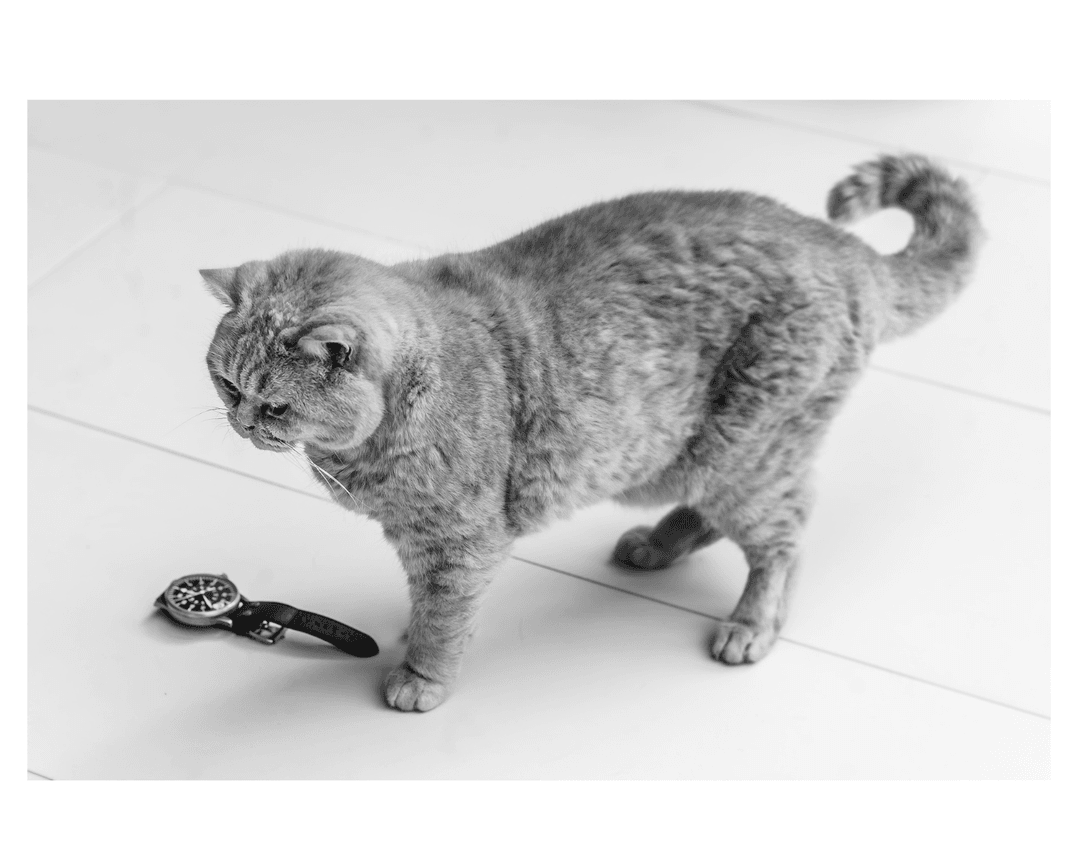
"The contrast, actually. I can have an intense period with lots of public appearances, writing pieces and intense meetings. And then I get in the car, drive to Harlingen, take the speedboat and a while later I am watching the dunes and an endless murmuring sea with my cats. I would not want to miss either the intensity or the peace."
What have you become more lenient about over the years?
"Relationships, women. It is a great sorrow when a love ceases to exist, but even when she left I understood it. Especially in hindsight. I cherish all pure moments, with whoever."
Your curiosity seems to be the thread running through everything you do. What fascinates you most right now?
"How we will look back in a few years on AI as the great game-changer it is said to be. Like the entire internet, it matters, but I struggle to fully grasp its impact. Will it make us better, happier, more complete? Or have we created a monster that will devour us? Hopefully we will still be around for MASTERS 2030 ;-)"