PEOPLE
JAN DES BOUVRIE: HIS LIFE, HIS WORK
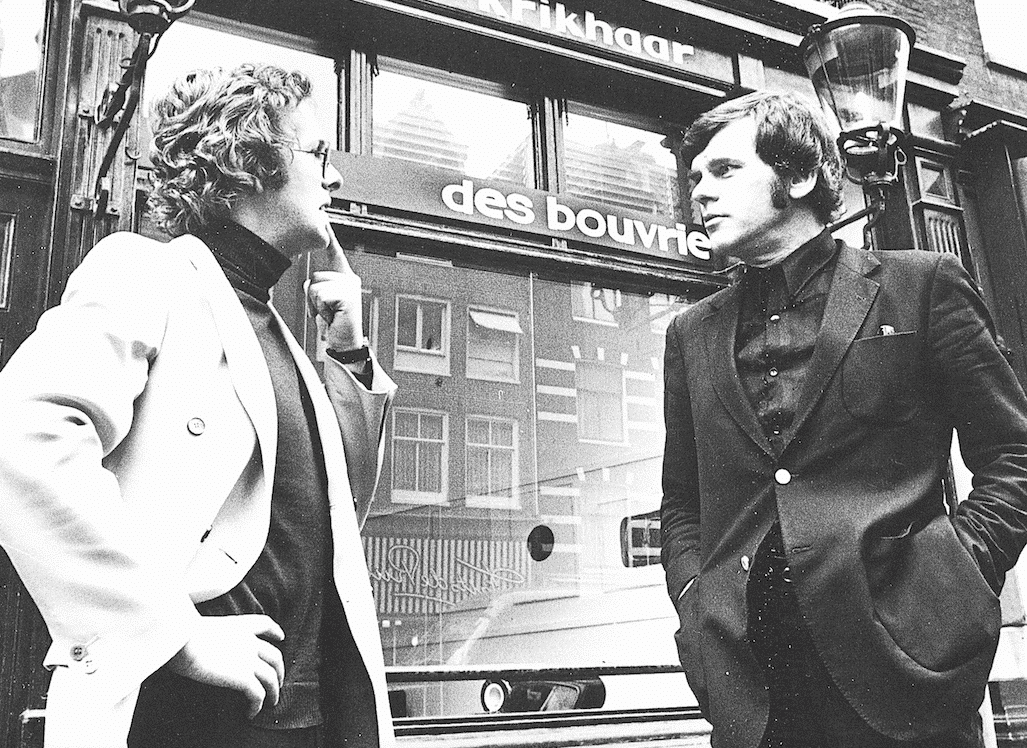
Jan des Bouvrie left a major mark on Dutch interior design. He transformed living rooms full of wood and exposed brickwork into white sanctuaries of calm. The interior architect paved the way for designers such as Job Smeets, Piet Hein Eek and Marcel Wanders. Jan des Bouvrie on his life, his work, his life's work. "Advice is the greatest wealth you can give people."
Jan des Bouvrie has left a major mark on Dutch interior design. He turned living rooms full of wood and clean brickwork into white oases of peace. And the interior architect has paved the way for designers such as Job Smeets, Piet Hein Eek and Marcel Wanders. Jan des Bouvrie about his life, his work, his life's work. “Advice is the greatest wealth you can give people.” Sourced from LXRY Magazine (2015)
Text: Bart-Jan Brouwer
Online Editor: Larissa Schaule Jullens “I was born in Naarden in 1942. My parents had a Goed Wonen business in Bussum. We lived up there. They were always in the business. As an only child, I played there among the furniture. When I was a bit older, I painted my room sometimes black, then white again. Very strange actually: subconsciously I was already thinking about how those colors affected my mood. I remember painting it black and being completely depressed after four days. So I quickly realized that color has a huge influence on emotions. And the other way around, as it turned out: after my divorce, the worst time of my life, I unconsciously created a lot of black interiors. Above my bed my father had a poster of the Guernica by Picasso, which I looked at with admiration. Then I saw those lines of that man, very simple lines with which he told everything. The entire Spanish Civil War is summarized in that one painting. I often drew myself and noticed that I could tell a lot with simple sketches. Which worked out well, because I was word blind. At school I looked outward – I wasn't interested in learning at all, I wanted to create. Creativity runs in my family: my grandfather was an upholsterer and furniture man, my great-grandfather was a carpenter and the generations before that were carpenters, shoemakers... All professionals. At a young age I went with my father and mother to manufacturers such as Pastoe, Gelderland Meubelen, De Ploeg Stoffen and Spectrum. There I met the great interior architects of the time: Benno Premsela, Kho Liang Ie, Martin Visser... I started talking to them. Based on those conversations, Benno Premsela and Kho Liang Ie said to my parents: 'That son of yours has to leave high school and go to the Applied Arts School (the current Gerrit Rietveld Academy; ed.). He's a natural talent.' For the entrance exam I made a model of a glass houseboat. I was sixteen years old then. They were so impressed at the Applied Arts School that they didn't even ask if I had my secondary school diploma. Otherwise they shouldn't have allowed me in at all. I remember looking forward to the mail every morning: would there be a letter from the Applied Arts School? When it finally arrived, I ran upstairs to my parents' bedroom – the mail used to come early – and jumped on their bed: I was accepted! From that day on my life changed.”
Delivery van
“I took the study very seriously. After the first year of preparatory work, I was advised to switch to graphics because I could draw so well. But I definitely wanted to become an interior designer, as it was called then. And if you feel something you have within you, then you have to keep following that trail. Was I blessed to know what I wanted to be at a young age? I think parents can do a lot about that. Mine showed me what the world had to offer. So we went to Paris in their van, with 'YES des Bouvrie Complete Home Furnishings' written on it in large letters. We had no money and slept in that van under the Eiffel Tower – until we were chased away. My father was so brutal, a real Amsterdammer. A fun we had together! Those trips inspired me enormously. When I returned I was bursting with creativity. Traveling has become a common thread through my life. When I graduated from Arts and Crafts School at 21, I went to Manila to design rattan furniture. Together with my friend Paul Huf, who also had to go there. He was the one who photographed my first furniture. At that time you had a few phenomena: Paul Huf for photography, Dick Holthaus and Frank Govers for fashion, Benno Premsela and Kho Liang Ie for architecture... After the war everything was about reconstruction and we had the energy for that. We visited each other and had dinner together on Thursday evenings. These were not only inspiring conversations, there was also a lot of laughter. Now they have all become separate groups, but back then all the different disciplines came together. We were one. As an interior designer, why wouldn't you also be interested in photography? You're just interested in creativity. With Paul Huf as photographer, my furniture came across much better. I didn't just have a photo taken.”
Cube bench
“When I graduated, I started working in my parents' shop. I immediately discovered that I was not a sofa salesman, but that I was asking customers if they could show drawings of their homes, if we could remove a wall, move a door... One morning in 1969 I saw Mr. Oberman, the founder of Gelderland Meubelen, standing in front of our shop window. I walked over to him and said, "Come in." 'No, no,' he said, 'because you think that Gelderland does not make beautiful furniture. Your parents always sold us very well, but you didn't. You praise Charles Eames and Kjaerholm and all that.' I admitted that his furniture could indeed be better. That's how we started talking. At the end of the conversation he said: 'Well, you with your big mouth, the furniture fair is in September. Design something for me. A sofa and an armchair.' That became my famous cube sofa and swivel armchair. I thought it was fantastic to make that furniture at the factory with the model makers. First I had a bracket around the cube sofa, inspired by Le Corbusier. But Oberman said: 'Now take it off and it will be even more beautiful.' Ultimately, the sofa and chair were presented at the fair. I walked around there, but didn't dare go straight to the stand. I thought: soon no one will want to buy my furniture. But from a distance I could already saw that there was a lot of pressure on the stand. The cube sofa and armchair were sold to as many as a hundred retailers. I stood there and thought: green light!”
Wealth
“I soon started running the store in Bussum alone with my mother. My father only wanted to make music. First I started a very small drawing studio there. Later an additional floor was added, then it became a more professional studio. My dissatisfaction with existing furniture lines drove me to further develop my own vision on design. There was more and more a clear line in my work: light and functional. This way my furniture fits into any interior. Take the sofa, for example: put a velor fabric on it and it becomes a completely different piece of furniture. In the store downstairs I was mainly advising customers. Advice is the greatest wealth you can give people, even now. I was once in a fashion shop, where the salesman said: 'This is a new jacket, that is a nice shirt and that is nice trousers.' I felt he wasn't selling me a product, but an atmosphere. I did exactly the same in Bussum. Sometimes my mother would ask, after I had just helped customers, "Jan, have you just sold a sofa?" "No, I just said a wall had to be removed." 'Yes, but then we haven't sold anything.' "You should pay attention when those people come back." And indeed they came back and I was allowed to furnish their entire house. For this I used a combination of furniture that I had designed myself and furniture from manufacturers. I loved Charles Eames, Kjaerholm, the Egg Chair by Arne Jacobsen... I had all that in our store. I received it on consignment. Those importers saw: hey, that's a crazy boy there in Bussum, we dare to lend it to him. At one point I borrowed six armchairs with footstools from Charles Eames. I had set it up around a marble table with a bowl of roses on it. One afternoon, Mr. Sigmond, the CEO of IBM, came in and said, "I want that exactly as it is." Then I took all those chairs to his house with my Deux Chevaux. And it was put there right away.”
Showbiz people
“What also helped matters: there was café Het Brinkje on the Brinklaan, where many showbiz people came, including Wim Sonneveld, Toon Hermans and Wim Kan. My father often sat there having drinks, because he didn't feel like doing the business at all. When he heard that someone wanted to start renovating, he would say: 'You must have my son, he is such a talent!' So I had all these artists come over. That was also because of my own life: I loved joy of living, conviviality. When I was 21, I already set up Wim Sonneveld. And I renovated and furnished Toon Hermans until his death. At Toon's I had to have breakfast with him every morning that we were renovating there. Then he wanted to tell me what exactly he wanted. It was not only the success, but also my appearance and my ability to listen to the client. I remember Toon calling me once, that was in the last year of his life, and saying: 'Jan, I cheated: I bought a classic dining set and it is here now. If you don't make sure he's out of the house within an hour and there's a new dining area…' He bought something on impulse, after which he immediately came back to me. I have that bond with all my customers. Yesterday I visited a house in Amsterdam that I am renovating, owned by a very sweet couple. Beautiful black window frames, a beautiful kitchen... The floor would be blackened that day. I walk through the house and think: oh, it's all getting way too black. So I go to pee - then I always get ideas - and come back and say to her: 'I'll say something I didn't say: that floor should remain natural.' Dead silence. She calls her husband and says: 'Jan has gone crazy. He doesn't want the floor to be black anymore.' That man hugs me. He had already thought about it himself. So that's what it's all about: that bond with your customer.”
Cosiness
“In 1993, I moved my design studio to Naarden-Vesting. Together with Monique, I transformed the monumental building Het Arsenaal into a design studio and furniture store. A place where we ‘teach people to live’. And we ourselves are still learning every day. We are constantly working on our own house. I have lived there for forty years now and have renovated it thirty times in that time. I once had the experience of moving my kitchen to a different location and waking up at night with the thought: it is not in the right place yet. The next day it was demolished again and I put it in the place where it is now. It is not about making something beautiful, that is not so difficult, it is about making something functional. That applies to an office, a house, a restaurant. Gerard Fagel of De Hoefslag knew exactly what a restaurant should look like. He always said: the first person you see when you come in should smile; the interior should look better than at home; and the food should simply be delicious. You see the same thing in Het Arsenaal: there is an informal cosiness there. I send most of the people who work here into retirement. Customers don't come here for nothing. Everyone who walks around here wants something. That's why you have to create good contact with them. That's why many furniture stores are doing so badly, because they just sell sofas."
Cauliflower
“All my life I have been creating interiors that are one step further. Twenty-five years ago, for example, the open kitchen was the future. I removed the wall between the living room and the kitchen, and then we suddenly had space and we could communicate with each other. Because at that time the woman had only one right and that was the kitchen sink. Very luxuriously, she had a hatch through which she could hand out the food. When that wall was gone, a different way of living together emerged. The women only commented that you got odors in the living room: that you could smell the cauliflower there. That was solved with a strong extractor hood. Because the current construction system is too expensive to build beautiful things in the future, I developed sustainable villas for Narvik HomeParcs – crisis means change, so embrace that change in bad times. I used wood for those villas. That saves half the costs. Moreover, you can build quickly with wood and it offers amazing insulation. I am also working on turning vacant offices into homes. I do this by installing ready-made units, with a kitchen, bathroom and bedroom. For example, I always look for ways to make affordable homes or furniture. Because you can design whatever you want, if the public can't buy it, it's of no use. The furniture from Gelderland and Linteloo was always a lot cheaper than the Italian ones, but they were just as beautiful and they fit better. It's not the design, it's what the need is for.”
cigar box
“In addition to sustainability and space, experience also plays a role in my designs. Take the offices I built for UNIT4. Normally when you enter you will see a counter with a lady behind it. I don't think you should enter an office like that. I created a bar where coffee is served, where you can have a short conversation and where you can also check in. You have to create an atmosphere so that the staff enjoys going to the office as much as going home. It's a matter of thinking differently. With this I have been groundbreaking for Dutch interior design. I paved the way for Marcel Wanders, Job Smeets and Piet Hein Eek. When I started, there was nothing. Just grumpiness and clean brickwork. I have ensured that young designers can get started much better. No one had an interior designer. I have revealed their profession. And for a number of years now, two courses have carried my name: the Jan des Bouvrie College of the ROC in Amsterdam and the Jan des Bouvrie Academy (higher professional education), part of Saxion Next in Deventer. I am extremely proud of that: there are few people who have had two schools to their name in their lives. I visit the ROC about four times a year. And the illustrators from my studio also teach there. I attach great importance to students learning to draw. That's how I still make my sketches on the back of my cigar box, that's an impulse. I sometimes give them to Gelderland or to the studio. I think it is one black to convey what you have learned. After the last academic year at the ROC, I awarded diplomas to ninety students. There were three hundred family members there. The joy! You have no idea what kind of rush I felt when I drove home afterwards. Those children can start a furniture store, continue their studies... Wonderful! My work experience has become a learning module.”
Bunk beds
“In my development I have gone from the inside out, from interior designer to architect. My masters had a major influence on this. I also emphasize this during my courses: look for your master. For me these were Le Corbusier and Gerrit Rietveld, from whom I once took lessons. I remember well that I showed Rietveld my first drawing of a children's room. He said, 'Gosh Jan, that looks good. But if you leave everything out, it will be a lot better.' It really bothered me: what does he mean? I had decorated the children's room with nice bunk beds and cupboards and things. Then I took a closer look and saw that there was way too much in it, things that were not necessary at all. At that moment I made the switch: only do what is necessary, then you create space - that's what it's all about. And that's why I make floor plans in which people can move freely, without tripping over every side table. And now I design houses that only have one door: to the toilet. So open spaces. That people no longer think in boxes, but in space. When I was at the Applied Arts School, we once went to the Swiss student house in Paris that Le Corbusier built. When you enter, the ceiling in the hall rises slowly, with very high windows at the end: so you walk towards the light. I then have the talent to understand that immediately. I pick up on that and I continue with it. Not that I actually went 'outside' because of such inspiration. No, someone came to me and said: 'You are now going to build my house.' I had never done it before, but it went well straight away. And that has really taken on huge proportions. This is how I designed an entire neighborhood in Naarden. I was given a guideline that the apartments should have a sloping roof and look traditional. I didn't stick to that. I drew something completely different: three buildings with apartments in them. We submitted that - but I wasn't there myself. It was immediately disapproved. Three weeks later I submitted the exact same thing. Was approved in one go. And that was because there was one guy who understood my emotion. So it is also about transferring your energy. The same was the case with the villa I built in Curaçao. I realized that project at my own expense, because I could not easily find a client for such an insane villa with a very high space. I took the risk because I was convinced it was right. And I like being in Curaçao. I combine the useful with the pleasant. I ended up building and selling five of those villas.”
Joie de vivre
“That's the nice thing about my life: I travel all over the world. I built a hotel on Saint Barth, two villas in Moscow, a house in India… Such a crazy life! I am now working on a five hundred square meter apartment in Miami for clients from Moscow. They recently took us to the Kremlin. You normally don't get in there. Only our king and queen have been there. I was there with Monique. Then I think: yes, who goes through that? I walked like a little boy through that big Kremlin with those enormous golden doors and halls. I experience all that. Because of my profession. I am proud of that; that I have achieved that in my life. Not just designing furniture and building houses, but also the joie de vivre surrounding it. My philosophy of life is: it's fun where I am. What else would I like to do? Creating a total Jan des Bouvrie collection. Sofas, chairs, beds, cupboards... I am now in discussions about this with a manufacturer from India. I'm curious if that will work. I think that's another step.”