Money
The success recipe of Bisous: in conversation with Bas Noorman
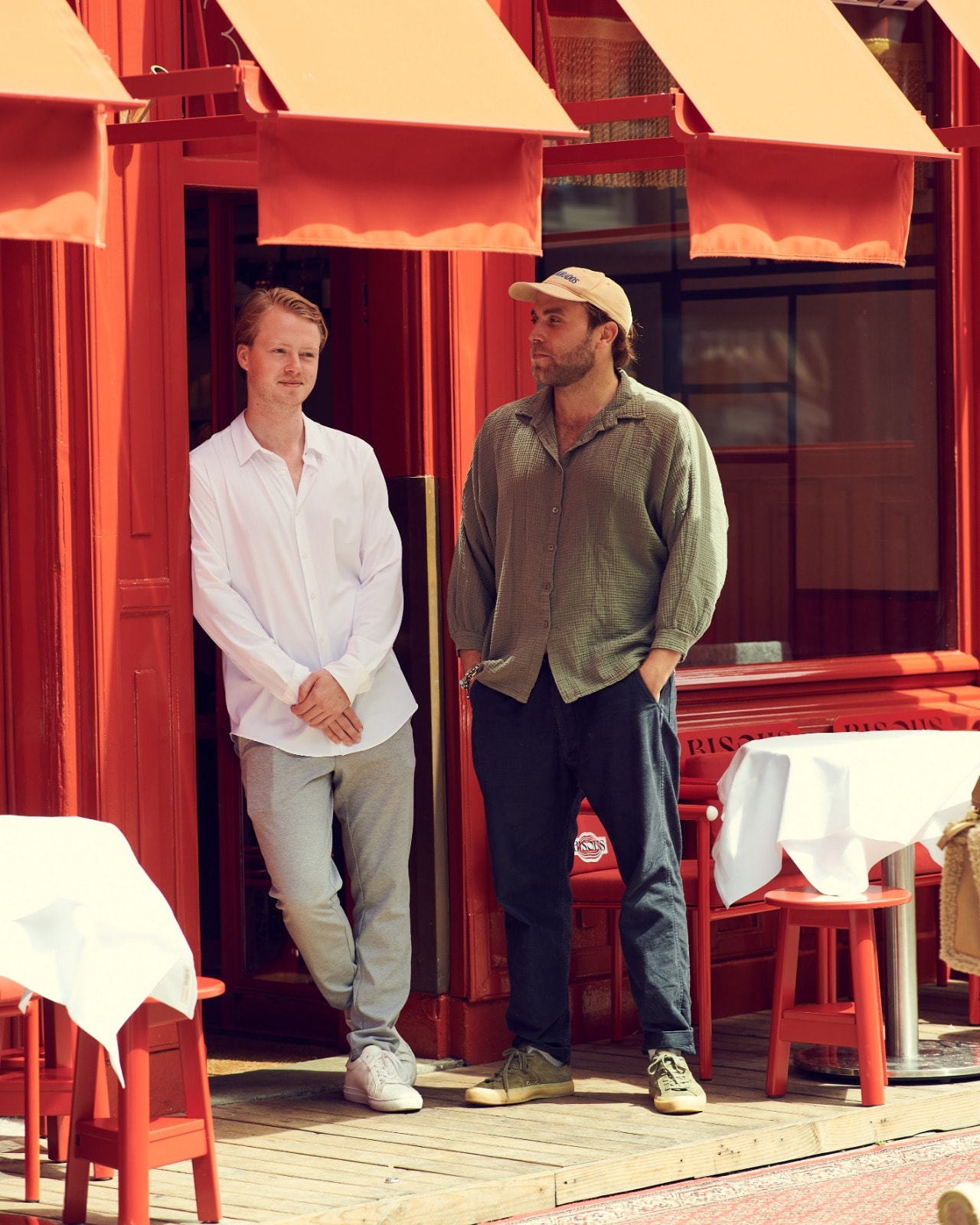
A spot that has been packed since day one and where dinner effortlessly transitions into a night out: Bisous. With a distinct Parisian wink and a keen sense of atmosphere, founders Bas Noorman and Lowie Jansen managed to secure a firm spot on the Amsterdam map in a short time. MASTERS sat down with (young) entrepreneur […]
A place that has been full since day one and where dinner effortlessly transitions into a night out: Bisous. With a distinct Parisian wink and a keen sense of atmosphere, founders Bas Noorman and Lowie Jansen managed to secure a permanent spot on the Amsterdam map in a short time. MASTERS spoke with (young) entrepreneur Bas about building a strong concept and the changing market: “A major shift is currently underway.”
Bisous was full from the opening. What is the secret behind that rapid success?
To be honest, I think there was a bit of luck involved as well. At the same time, there were a few things that helped: the design, that red color, and the fact that people were already seeing us during the renovation because we are located across from a busy spot. Additionally, I think the overall picture fits well, with cocktails, an extensive wine list, good food, and a DJ on the weekends. We were perhaps just a little ahead of the curve with that.
Another factor is that we are there a lot ourselves. I work six days in the office and three evenings in the shop, and Lowie is basically on the floor every day, so one of us is always present. During busy times, we are both there. That personal connection remains important. People like to be recognized and to see a face.”
What makes Bisous different from other restaurants in Amsterdam?
What we often hear is that people really see it as a night out. The place is relatively small, but we serve about 70 to 80 covers here in about 90 square meters, which is actually impossible. Precisely because of that, something is constantly happening. You see the staff moving, dishes passing by, and the DJ building up; there is constant energy in the room.
As a result, you are basically busy looking around you the whole evening. That makes it lively. The idea was also to recreate a bit of that Parisian vibe, where there is something going on all evening. The last thing we want is for people to have a boring evening here.”
*]:pointer-events-auto [content-visibility:auto] supports-[content-visibility:auto]:[contain-intrinsic-size:auto_100lvh] R6Vx5W_threadScrollVars scroll-mb-[calc(var(--scroll-root-safe-area-inset-bottom,0px)+var(--thread-response-height))] scroll-mt-[calc(var(--header-height)+min(200px,max(70px,20svh)))]" dir="auto" data-turn-id="request-WEB:a8f8e861-d672-4d93-bceb-c95896dde357-98" data-testid="conversation-turn-24" data-scroll-anchor="false" data-turn="assistant">That personal connection remains important; people want to see a face.
That success came quickly. How did you build up the experience to set this up?
*]:pointer-events-auto scroll-mt-(--header-height)" dir="auto" data-turn-id="789fd2df-42cb-46cf-9f6a-c3cdc5245786" data-testid="conversation-turn-33" data-scroll-anchor="false" data-turn="user"> *]:pointer-events-auto scroll-mt-[calc(var(--header-height)+min(200px,max(70px,20svh)))]" dir="auto" data-turn-id="request-69de5273-2c88-832b-9be2-bc3e451ae23a-27" data-testid="conversation-turn-34" data-scroll-anchor="true" data-turn="assistant">I have actually never worked in a classic restaurant. My first job was at Domino's when I was fourteen, and from there I slowly rolled into the hospitality industry. Later, I worked at the Foodhallen and in a café, and set up at festival grounds, so I was always in that world.
That really accelerated during the pandemic. That was when, just like Lowie, I started focusing on organizing my own events in clubs. He was with Chicago Social at the time and I was with Lovelee, so we were actually competitors back then.
I studied International Business and Lowie went to hotel school. I never really learned how to run a restaurant anywhere. Lowie comes from a hospitality family, fifth generation, so that is much more ingrained in his background. Personally, I focus more on the business and organizational side. That combination works very well for us.”
How do you view the role of appearance in today's hospitality industry?
I think it is becoming increasingly important. If you look at other global cities, you hardly see a business anymore that doesn't really pay attention to it. People are getting used to it as well.
Many hospitality entrepreneurs want to go that extra mile. Whether that is a distinctive concept like ours, or a classic interior that is just right. If you want to offer a total experience, it has to look good too.
You see a lot of French restaurants opening in Amsterdam lately. How do you explain that development?
I think French cuisine is simply very much comfort food. Lots of butter, lots of purity, really good food. What you also see now is that people have less need for long tasting menus, but prefer to choose for themselves. That suits that cuisine well.
At the same time, that also changes every few years. A while ago, it was mainly Italian restaurants, and now you see more of that French influence returning. That moves with the times.
We opted for a classic French base ourselves, with influences from Zeeland. We work extensively with products from the North Sea and strongly believe in the quality of the product. The piece of fish or meat simply has to be very good, and the sauce serves as a supporting element.
How do you ensure that people keep coming back?
Staying innovative is important. You want to keep classics for regular guests, but also continue to develop with new dishes and cocktails.
What you want to change as little as possible is your staff and the brand identity. We are continuously working on improving the service. Ultimately, the service determines whether people come back.
How do you see the future of the hospitality industry?
A major shift is currently underway. I think you have to be either in the low segment or the high segment. The middle segment is going to struggle.
People are going to make more conscious choices. Either they go all out once, or they opt for something affordable they can go to more often. That makes it exciting, but there are also opportunities there.