LXRY LIST
Buildings of the Future
Not wishful thinking, but concrete solutions for living, working and recreation. These buildings are the foundations for the future, literally. Curious where the Dutch national team will play in 2034? The thinnest skyscraper? Where will they explore how society could develop in the coming decades with the help of science and technology? Writing on the Wall The Museum […]
No castles in the air, but concrete solutions for living, working and recreation. These buildings are the building blocks for the future, literally. Curious where Oranje will play in 2034? The thinnest skyscraper? Where is it being explored how society could develop in the coming decades with the help of science and technology?
Writing on the Wall
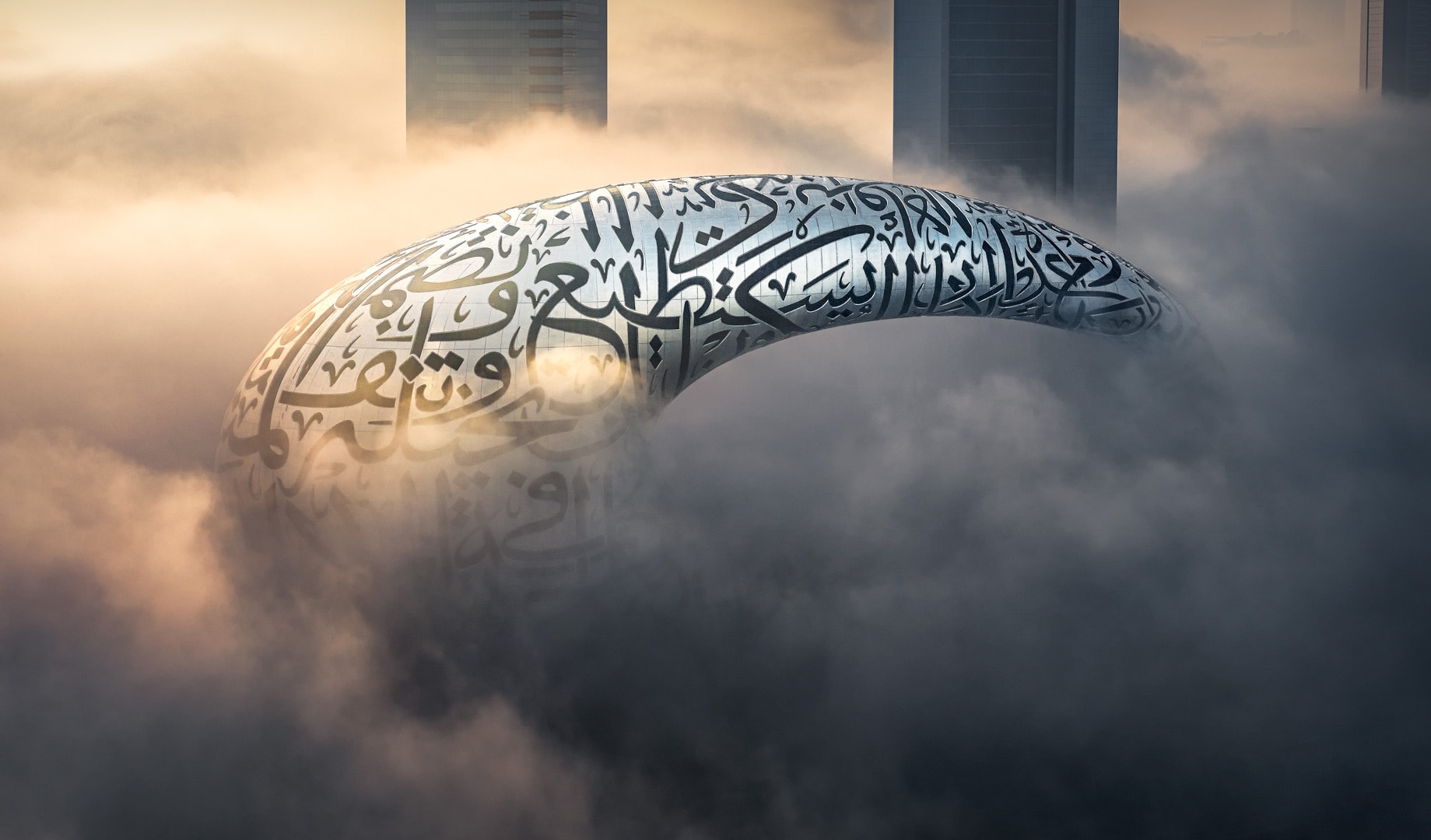
The Museum of the Future in Dubai explores how society could evolve in the coming decades with the help of science and technology. Topics covered include the future of space travel and housing, climate change and ecology, health, well-being and spirituality. The future is also described in three quotes on the façade, taken from a poem by Mohammed bin Rashid Al Maktoum, the Supreme Leader of Dubai. Such as: 'The future belongs to those who can imagine it, design it and make it happen. It is not something you wait for, it is something you create.' The Arabic calligraphy carved into the stainless steel façade also functions as a window. The building has been named one of the 14 most beautiful museums in the world by National Geographic. Fun fact: the museum opened on the special palindrome date of February 22, 2022.
Will the Dutch team play here in 2034?
The New Murabba Development Company, part of the Public Investment Fund (PIF), has unveiled the design for the New Murabba Stadium in Riyadh, scheduled to open in 2032. The project is a cornerstone of the ambitious Saudi Vision 2030, which aims to diversify the economy and reduce dependence on oil reserves. The stadium in the capital of Saudi Arabia is set to host the 2034 World Cup. In addition to sporting events, the multi-purpose destination will also host exhibitions and other large-scale events. The façade is inspired by the indigenous acacia tree. The layered, overlapping surfaces and flaky texture of the bark reflect the country’s natural and cultural heritage. “The stadium embodies our commitment to making Riyadh a global destination for sports and entertainment,” said Michael Dyke, CEO of the New Murabba Development Company. “The stadium will not only be a world-class venue for sporting events, but also a vibrant hub that will enhance the quality of life for residents and visitors.”
Holy cavemen!
Desert Rock is part of an ambitious eco-tourism project in Saudi Arabia, focusing on the majestic granite mountains and the mythical desert landscape. Inspired by the language of the earth, Oppenheim Architecture designed buildings that blend into the landscape and reference the ancient Nabataean civilization that once inhabited the region. Indoor and outdoor spaces are integrated into crevices and caves or set on shady slopes. These discreet locations camouflage the architecture during the day, while at night they light up like small lanterns scattered across the massif. The project marks new frontiers for sustainability: from planning and construction to operations. Most building materials are recycled on site, so that the impact of construction is minimal. Dispersed facilities reduce the resort’s environmental footprint and invite guests to explore the area more widely. Visitors are introduced to the cultural, archaeological and geological dimensions of this breathtaking location. Desert Rock promises to set a new standard for future hospitality developments in the region.
The world's slimmest skyscraper
At 435 feet tall, the SHoP Architects-designed residential tower at 111 West 57th Street in New York City is the second tallest in the Western Hemisphere. With a height-to-width ratio of 24:1, it is also the world’s slimmest skyscraper. It was built using the world’s oldest building material: terracotta—one of the most adaptable materials for architects. The east and west facades of this Steinway Tower are made from differently sized blocks, glazed, and then stacked to create a moiré effect: the facades change dramatically in different lighting conditions or when viewed from different distances. The building tapers as it rises, flattening out at its peak. The tower houses one residence per floor, plus fourteen in the adjacent Steinway Building, for a total of sixty. Amenities include a twenty-five-meter swimming pool, a fitness center, and a terrace.