Next
Formula 1 on pole position
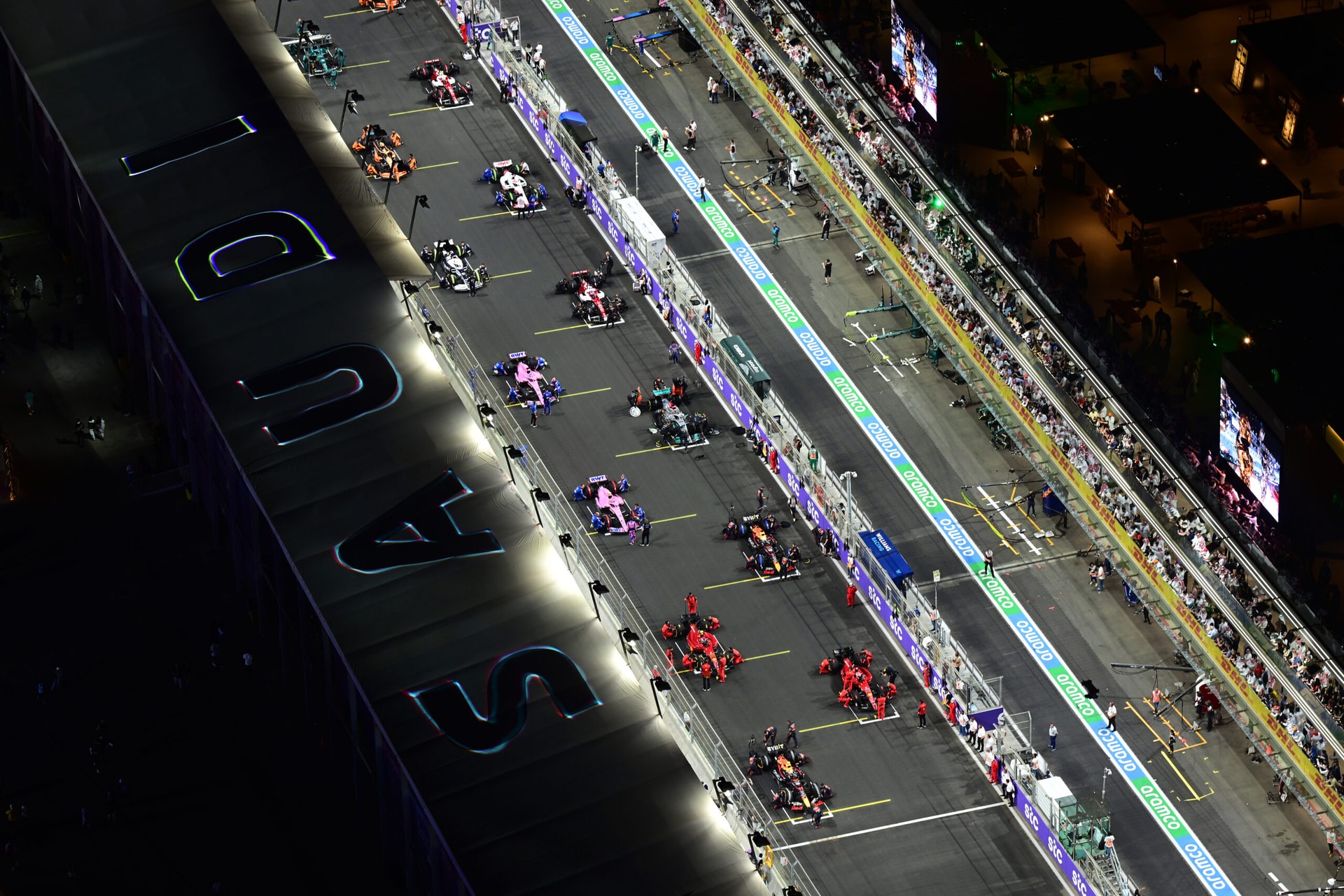
The figures are staggering, Formula 1 is breaking all records. Not a week goes by without owner Formula One Marketing or one of the ten racing teams announcing a new sponsor or new initiative. From tough business to innovation and sustainability: everything this sport touches turns into gold. Jaap de Groot investigated how millions are quickly and effectively converted into billions.
The annual figures of Formula One Marketing (FOM) speak for themselves. In 2022, turnover increased from 2,1 billion dollars in 2021 to 2,6 billion, with a net profit of 173 million. An increase of $133 million compared to the previous year. Furthermore, 1,55 billion people watched the 22 races, which were attended by 5,7 million spectators. The appeal of Max Verstappen & co is also evident from the number of sponsors. At the start of this season, there were 275 companies directly linked to Formula 1, but that number is now moving towards 300. The sponsorship amounts fluctuate between 1 and 70 million dollars. For the minimum package of 1 million, you will be mentioned in various communications and the team logo may be used in your own marketing activities. It is clear that Red Bull Racing, Max's team, is currently closing the best deals. For example, the new partner Oracle, which specializes in cloud database services, will pay no less than 2026 million dollars per year until 60, 10 million more than the crypto company Bybit pays annually. All in all, 32 companies are involved as sponsors of the best racing team in the world, ranging from Hard Rock International and Ocean Bottle to Mobil1 and Siemens, in order to finance the costs of between 400 and 500 million euros for the racing team. Although Formula 1 has a budget ceiling of 135 million euros per year, salary, marketing and travel costs fall outside this limit.
Yellow sweater
In addition to the sponsors for the FOM and racing teams, there is room for the drivers to recruit partners themselves. In that respect too, world champion Max Verstappen wears the yellow jersey with Jumbo, Heineken, Red Bull, Viaplay, EA Sports and CarNext.com. With his contract with Red Bull Racing (50 million), the 25-year-old driver's annual income is increased to approximately 65 million euros. For comparison: his teammate Sergio Pérez receives more than 9 million euros from Red Bull Racing. By the way, Lewis Hamilton comes closest to Max with an annual salary of 40 million euros, while the Briton loses out on about 10 million in other income. After Verstappen and Hamilton, Charles Leclerc and Fernando Alonso follow at a reasonable distance with contracts of around 20 million. The second Dutch driver in Formula 1, Nyck de Vries, has a salary of 1 million euros per year at Alpha Tauri. In the meantime, Formula 1 is striking while the iron is hot. Contracts with circuits are extended for even fifteen years (Bahrain) and up to 50 million dollars in fees are paid annually by the circuits to FOM. These amounts do not apply to all countries, because some grand prixes have a special status. Monaco, for example, because of its special appearance, but Zandvoort has also been awarded a friend prize of 2025 million dollars until 22. This cannot be seen separately from how the organization of the Dutch Grand Prix has lifted Formula 1 to a different level in terms of both sport and experience. Whether Zandvoort can still count on such a discount after 2025 is highly questionable.
New Generation
In the meantime, Formula 1 is making enormous steps towards the new generation. Max Verstappen also plays a key role in this. The multi-million dollar deal he concluded with Heineken also includes setting up the gaming platform 'Player 0.0'. After all, racing in a simulator and/or behind a computer is extremely popular among young people, who will never get the chance to be active in Formula 1, but can still experience the real racing feeling. Here too the difference in level is enormous. Ranging from a simple computer game to very advanced sim racing - racing in a way that can hardly be distinguished from real driving on a circuit. Max Verstappen has perfected this so much at his home in Monaco that he already knew his new Red Bull car inside and out without ever having driven it. Together with Heineken and EA Sports, he will now develop 'Player 0.0', which will not only attract the young generation, but also create a revenue model with unprecedented possibilities. FOM has therefore been fully committed to F1®Esports for several years, in which participants can participate in virtual grand prixes, and the F1 Esports Series, which earns the winner 175.000 euros. Last year, more than 600.000 participants took part in the qualifying for the main competition in the F1 Esports Series, which is ultimately watched by millions of followers via the livestream and is sponsored by multinationals such as DHL and Fanatec. And because there is a desire for more, all kinds of branches have been developed through F1 Esports and serious money can also be earned by participating in the F1®Esports Series Challengers, DHL TimeTrial, China Championship and Women's Wildcard.
SIMracing
So-called SIM racing has now become so competitive that several Formula 1 drivers also participate. Such as Max Verstappen, who not only won the world title last year, but also became champion with his SIM racing team Redline. Verstappen: “It is fun, competitive and effective to do. It also requires a lot of perseverance and discipline, because you need at least forty to fifty hours of training before you can seriously participate in an online race. I have a very advanced simulator at home, with all the trimmings. Because I like competitive competition, the online races with Team Redline are a godsend. Especially when the Formula 1 season is at a standstill.” How quickly FOM focuses on youth is also evident from its partnership with the London football club Tottenham Hotspur. A deal lasting no less than fifteen years, under which an advanced electric karting track will be constructed under the new state-of-the-art Tottenham Hotspur Stadium, suitable for international competitions. This complex will also house an F1 Academy, where both car and motorsport talents are trained. Not just drivers, but also engineers, software specialists and marketers. Scholarships are made available to minorities and young people from disadvantaged neighborhoods. Daniel Levy, CEO of Tottenham Hotspur, said: “Since we built this beautiful stadium, we have been looking at how we can attract people from all over the world to North London with other activities besides football. In that respect, our collaboration with Formula 1 is a dream come true. Tottenham's appeal will be enormously increased at international, national and local level.” Furthermore, FOM opened the F1® Arcade Venue in London at the end of November, which will also be expanded in America next year. The first F1® Arcade Venue will open in Boston, after which more than twenty other F2028® Arcades will be added in the US until 1. All gameplay experiences, where the customer can experience all possible variants of motorsport. Also in competition form and in an environment full of audiovisual effects, to make the experience as authentic as possible. In doing so, FOM responds to the current shifts within the Formula 1 fan base, which is currently dominated by the generation under 35 years old and has an ever-increasing percentage of women. The number of American followers of F1 social media channels now exceeds those of Britain and Brazil, which for years were the undisputed market leaders.
MASTERS MAGAZINE #54
Curious about the rest of this article? The summer edition is a fresh cocktail of entrepreneurship and sport. In this edition, several entrepreneurs from the Champions League of business are reviewed. Including Freddy Heineken and hospitality tycoon Richard Caring, whose expanding empire has been called the 'restaurant equivalent of LVMH'. Doing business is top sport, but top sport is also doing business. Take Formula 1: the sport is increasingly developing into an octopus with arms that touch all aspects of our society. Jaap de Groot investigated how millions are converted into billions. Also interviews with gymnast Sanne Wevers, two-star chef Guido Braeken, hotelier Robert-Jan Woltering, designer Maarten Baas and Rico, together with his Naomy. The 'King of Kickboxing' also turns out to be an octopus (with very strong arms): as an entrepreneur he is active in various industries. “When I look back later, I don't want to think 'I wish I had this or that'. I just want to, boom, accelerate, do fun things, enjoy.” Boom, the new MASTERS: enjoy!


