Power
The family business EuroParcs
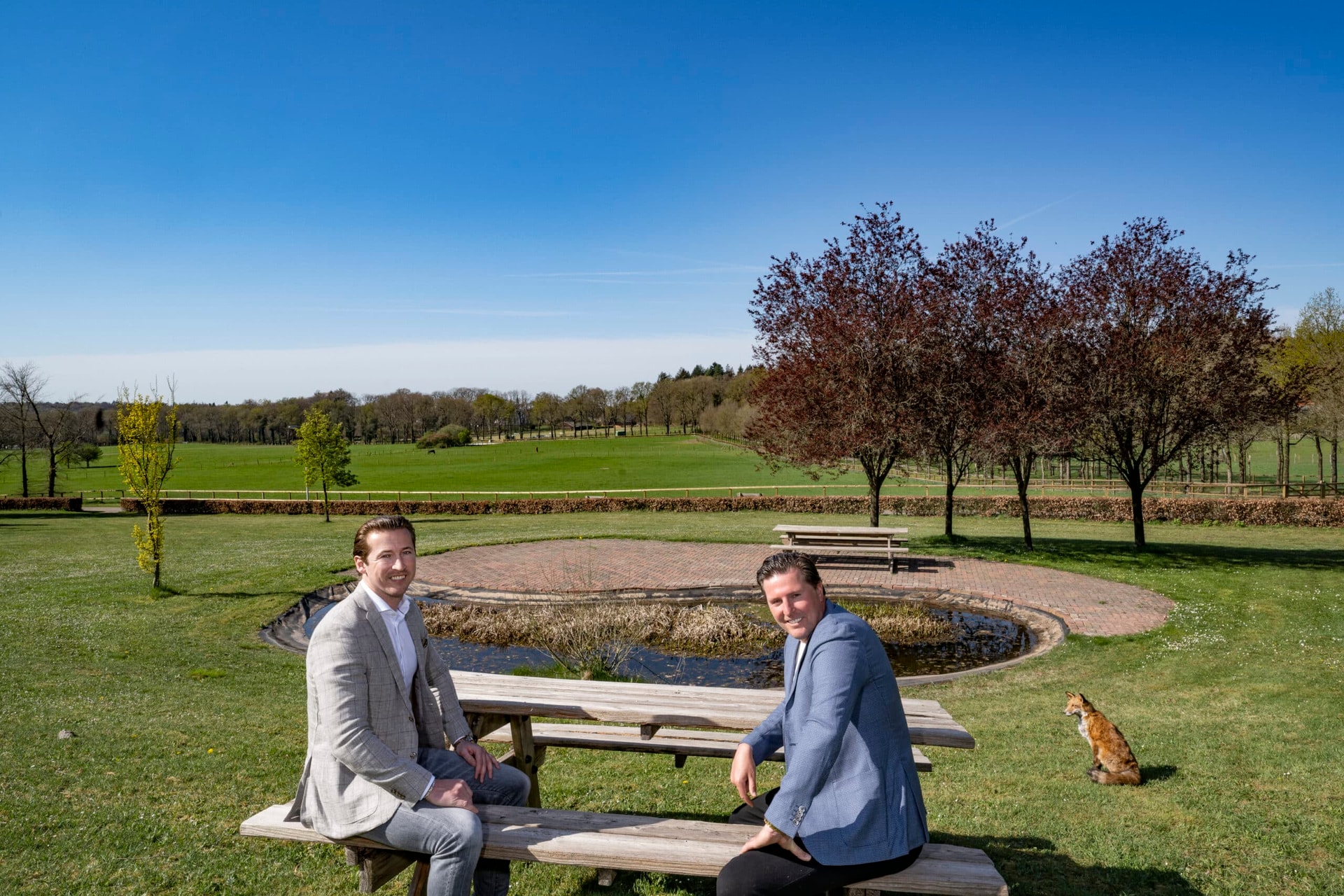
Family businesses form the backbone of the economy. They pass down their development from one generation to the next. As long-term companies, they also look far ahead. In this series, MASTERS portrays family businesses with a story to tell. This episode focuses on EuroParcs, which has evolved over the years from trading in caravans to developing and managing holiday parks. MASTERS visits the fourth generation at the head office in Hoenderloo: brothers Wim (1984) and Wouter (1991). "We were born into it."
Family businesses are the cornerstone of the economy. They show the development from the past from parent to child. At the same time, as long-term companies, they look far ahead. In this series, MASTERS portrays family businesses with a story. This episode focuses on EuroParcs, which has developed over the years from trading in caravans to developing and managing holiday parks. MASTERS visits the fourth generation at the head office in Hoenderloo: the brothers Wim (1984) and Wouter (1991). “We got in when we were born.”
The family business has its origins in the 1960s. What did it start with?
Wim: “My great-grandfather started selling simple caravans, to be used for holidays on the Veluwe, for example. My grandfather continued the trade and my father was the first to also start building chalets, or luxury mobile homes, for sale. He did this in Otterlo, where we now have De Wije Werelt park.”
Where do your memories of the company begin?
Wim: “As little boys, we could always be found at the caravan company in Otterlo during the holidays and during the holidays, where we played and romped, but also helped with answering the telephone, mowing the lawn, selling ice cream and showing customers around. This is how we have grown in the company from an early age.”
Have you never felt pressure from the family to succeed Wim Vos Sr.?
Wouter: “No, that happened naturally, very smoothly.” Wim: “We got in when we were born.”
Wouter: “In addition to growing up in recreation, we were also raised with horses. Wim and I have both had a career in equestrian jumping and have been Dutch and European champions several times. Jeroen Dubbeldam and Gerco Schröder were our role models. We have been involved in equestrian sports since our youth. That has given us a certain discipline: working hard and training to get the most out of it, but also dealing with setbacks. We now also benefit from this in the business world. We always go for the medals, we want to win. Also in entrepreneurship: you set a goal and want to achieve it. You can't do it halfway, you have to go all the way. Our children, in turn, also experience it: they are now involved in equestrian sports.”
Wim: “My youngest of nine has already become Dutch champion twice.”
Wouter: “We continued until we were twenty-one. We always knew that we would stop then and take over from our father.”
Wim: “That has never been a discussion. I also notice it in my children; who say: 'Dad, I also want to go to the camping to work.' That's already starting now.”
Wouter: “The day after my last competition, I was having coffee with my father in the morning: 'Dad, it's done.'”
What used to be the talk at the kitchen table?
Wim: “About horses and making money.”
Wouter: “That's no different now, haha.”
Wim: “After this interview, I will go with my eldest, twelve year old, to the Dutch Championship up to fourteen, in which she is participating. Just like my father used to do with us, I am out about two days a week taking the children to training and competitions.”
What have you learned from your father?
Wouter: “He always said: 'There are no problems, only solutions.' And what he was really king at: he made sure that everyone went for him unconditionally. People always wanted to prove themselves to him. He simply approached his employees very well. When he spoke to someone about something, he always first said what that person did right. He still regularly comes here for a cup of coffee and remains involved, but he leaves the matters to us.”
What do you do differently from your father?
Wim: “Over the years we have left more to the people around us. That could not have been otherwise, because the company has grown very quickly. When we founded EuroParcs in 2003, we did everything with ten people. In such a small team you can do a lot yourself. Now we have to let go of a lot more and leave it to the specialists in the organization and the people on location.”
You have made the move to holiday parks.
Wim: “We have had the Ruighenrode estate in Lochem since 2000. There you could camp with tents and caravans. My father started building bungalows and Finnish houses around the water there. When I entered the company, we started renting out the first objects there. That was completely new. That included another organization. We chose the name EuroParcs because we already knew that we would one day expand beyond the borders.”
How did that growth come about?
Wim: “In Limburg I could buy about thirty or forty mobile homes. I go there. It turned out that the campsite there not only had to be empty, but was also for sale. I call my father. He thought Limburg was much too far away. "Don't you know how far that drive is?" he asked. 'Yes, I know, because I'm here now. You really need to come here.' It concerned a location on the Brunssumerheide. You have never seen such a mess: half-burned caravans, rubbish... The councilor wanted a nice park there. We won the tender, which resulted in our first expansion park. The next park soon followed in Susteren, also in Limburg. First I drove up and down every day for a year. I ended up living there with my wife for five years to build the park. I did all the work outside, my wife did everything inside: reception, marketing, website…”
Wouter: “At that time we still had the holiday brochure every year that was sent to five to six thousand addresses. We were very commercial and loud at the time: discount promotions, striking photos, children with ice cream... While the marketing department wanted to place more emphasis on nature and experience. They were probably right afterwards, haha.”
Wim: “Times have changed, you know. Our database is now a lot larger, with about two million addresses. They receive our newsletter twice a week. That change has happened quickly, from paper to digital. We didn't even have laptops back then. When you think back to that! My wife had ordered my first laptop. “What should I do with that thing, man?” was my response.”
How did you as brothers divide the work?
Wouter: “We used to simply split up the parks. At the end of the year we looked at who had earned what. Whoever 'won' paid the hotel bill for Christmas, haha. We were the ones who came up with everything and then inspired everyone. A good idea was a good idea. Nowadays we have to deal with a management team that questions our ideas. "Good idea, but… have you also thought about this and this?" For us, that sometimes takes some getting used to, but in the end it will make your company better.”
Wim: “We did it this way until the takeover of Droomparken in 2020. Then we went from eighteen to thirty parks in one go and several other acquisitions soon followed.”
Wouter: “That was the moment to expand the team. We only had a financial director in our management team, Wim and I did everything else ourselves. We managed the operational managers. Now we have a director for every position. We have invested enormously in this, we have attracted the best people from the market. Our rental director comes from Corendon. That company has also experienced enormous growth, and the culture and dynamics are somewhat similar. Within our four-person group management, Wim is the point of contact in the field of acquisition, development and sales, the entire front end, so to speak, and the directors report on the operation of the park, from maintenance to guest check-in, rental and marketing. and all back office matters report to me.”
MASTERS MAGAZINE
Want to read more about this interview? In the summer edition of MASTERS an interview with Sven Kramer, a driving impression of the Bugatti Chiron Super Sport and a study into the Effect of Max. But above all, it features people who bring light to the darkness. Such as Henk Jan Beltman, who took over Tony's Chocolonely because with a company you can make the world a more beautiful place. Chef Emile van der Staak, who has the ambition to change our food culture and therefore cooks with plants and vegetables that he obtains from the food forest. Designer Nienke Hoogvliet, who has introduced natural seaweed paint as an alternative to harmful textile paint. And Anna Nooshin, who criticizes the current social media culture of pretty pictures. In her documentary she also shares the less beautiful aspects of her life. All people who ask questions, hold up mirrors, take steps. Steps towards a healthier world and more understanding society.


