Power
ERIK KESSELS: "COMING UP WITH AN IDEA IS HARD WORK"
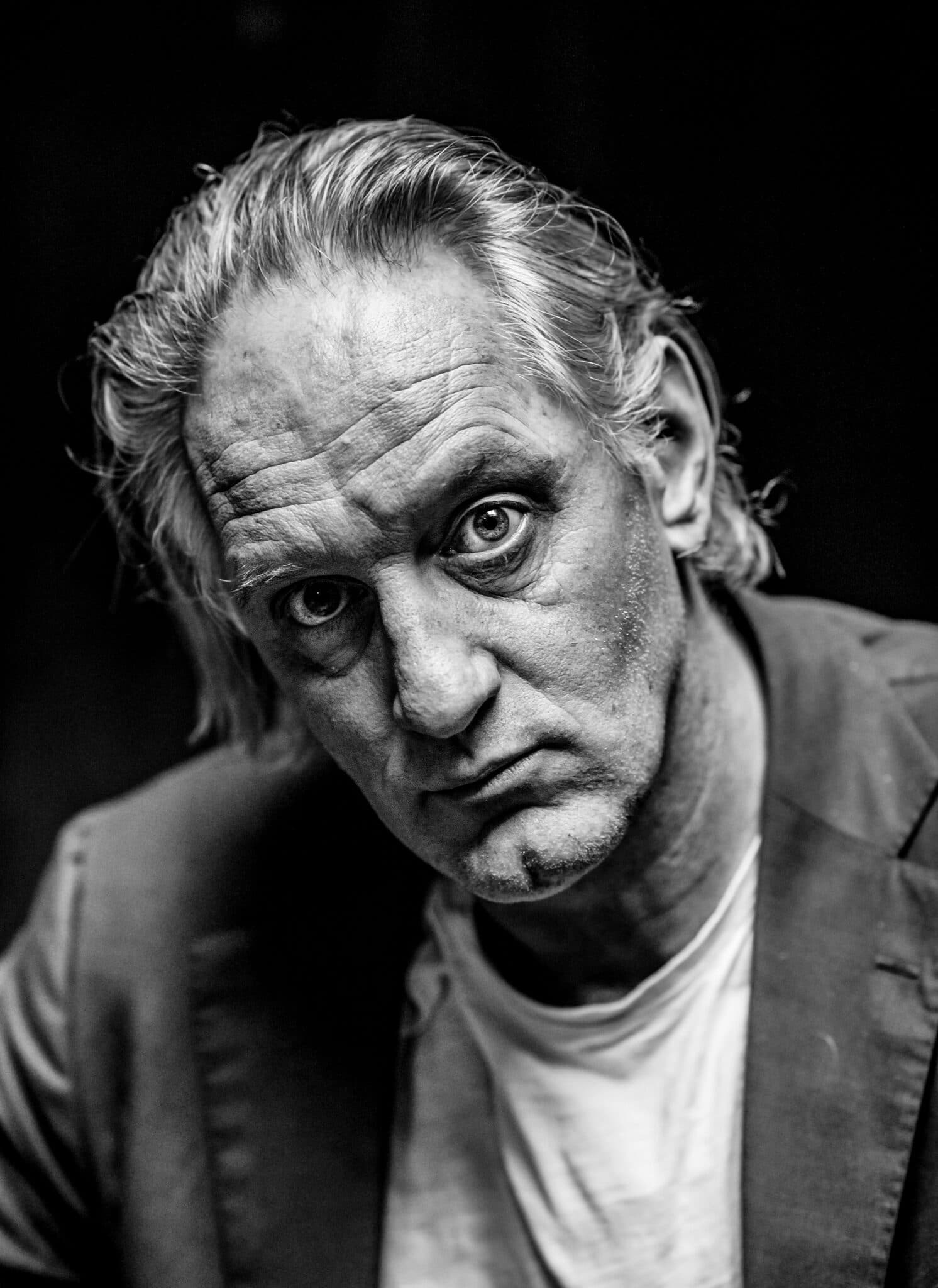
Irene van de Laar turns her attention to Erik Kessels, a visual artist, designer and co-founder.
Irene van de Laar aims her arrows at Erik Kessels. Erik Kessels is a visual artist, designer, co-founder and creative director of communications agency KesselsKramer. He collects photography, published several photo books and curated exhibitions. In his projects he likes to combine existing things in a new way.Text: Irene van de Laar | Online editor: Natasha Hendriks
Image: Karoly Effenberger
How do you look back on 2020?
“The year was a blow to creativity, especially culturally. Of course, a lot has come to a standstill in that area. It's going to take a long time before people get out of there. To be creative, you have to feel comfortable. And of course that feeling is a bit gone. Creativity often flourishes during periods when the economy is doing very well. Because people then think: we will go over it again and again. Almost a kind of decadence, exaggeration. Innovative things often emerge from this. Sometimes it is said: 'Good ideas come in times of crisis.' But those are more patch-up ideas. You also see that during this period: all those frantic attempts to do something about corona or the lockdown. That's a bit of patchwork instead of the real work.”
In 1996 you founded KesselsKramer together with Johan Kramer. What was your mission?
“Before that, the two of us had worked at different agencies in London. But after two years we wanted to return to the Netherlands. Clients often employed marketing people in their companies, but creativity was purchased. More and more was demanded from the creative side. We also wanted to continue with our hobbies – for Johan that was film, for me photography. We wanted to weave that into our projects. That's actually how it came about. In the beginning we also wanted to determine exactly what we did and did not work for, so we said no very often.”
What is your affinity with advertising?
“I come from a village in Limburg where window dressing was one of the most creative professions. That's what I wanted to be, that was my dream since I was five. Eleven years later I went to a school in Boxtel where you could become a window dresser. I didn't last long – it was really terrible. I then decided to try my luck at art school: painting and graphics. After my studies I started making commercial drawings. But I thought that was too lonely work. I was alone in a room and had hardly any contact with anyone. That's why I started working at an agency. I liked that, because all kinds of disciplines came together there. Ultimately, I grew more and more as an art director and editor. I knew something about photography, film, drawing and illustration and brought all those disciplines together. I found it fascinating that I made something that was shown in the newspaper or as an advertisement on TV the next day. Although it wasn't all good what came out of my hands in the beginning. For example, I made the most terrible Piet Klerkx home furnishing advertisements for advertising agency Ogilvy & Mather. I was awakened when someone said to me that it is not so special that something appears in the newspaper. 'That's just what you do. It's better to focus on something that sticks and is meaningful.' When I was twenty-seven, for the first time I had the feeling that I had created something that was really about something.”
Which form of advertising do you prefer?
“I like to make things very humane, so that an advertisement serves as a mirror. You saw that, for example, with the Ben commercials, where we showed everyone on the street. We thought: if, as a mobile provider, you say that you want to be there for everyone, that you are the cheapest and that everyone can buy your phone, then you also have to show everyone. That was very innovative and shocking. Another style of advertising that I prefer is the ironic way, a bit more pointed than just humor.”
What requirements should a good advertisement or advertisement meet?
“I think it should always be different. You have to distinguish yourself in any way possible. We have worked for health insurance before. They had one policy where they said: 'We want you to make a video about it that shows: it covers everything.' We were given a huge list of what was included in that coverage. Finally, there was stuttering therapy. We then made a one-minute film with a stuttering boy. The video was a kind of talking head. The next day the boy was on talk shows and the video was shown everywhere. You have to look for the distinction. This can also be a strategic distinction, as we did with the campaign for the Hans Brinker Budget Hotel. It is a hostel on Kerkstraat with five hundred beds, quite large. Just backpackers, students, in and out, late to bed, chaos. A mess in every respect. The manager of the hotel received a lot of complaints, it drove him crazy. He called us to ask if we could help him. We went to take a look and thought: what hell, how can you make something of this? Then we came up with the idea that honesty is the only luxury the hotel has to offer. We made a kind of anti-advertisement, to completely criticize the hotel: 'Even more dog shit in the main entrance', 'Now a door in every room' – that kind of thing. That worked very well. For years they had around 60.000 overnight stays per year. The first year after the campaign there were already 75.000 and now they have more than 160.000. The hotel has received so much free publicity as a result of our anti-advertising - I have hundreds of press clippings, articles and press kits full. People wanted to go to the worst hotel in the world. While of course everyone knew that was meant ironically.”
How does a good idea come about for you?
“Sometimes, when I am invited by a client, I already have the idea while the conversation is still going on. And otherwise I really have to work on it. Then again I close myself off, then again I mingle with people, then again I retreat to the toilet... And let's see: where can I find it? Then you also go through the most terrible clichés in your head. You have to go through a kind of forest of stereotypes and eventually arrive at a kind of wasteland, where nothing has ever been done. A kind of unexplored area where the idea must be located. There are also emotional things from the past or ideas that you have parked. You are not born with a talent for coming up with a really good campaign idea. It's not like that, it's work.”
Last year you showed the work Destroy my Face at BredaPhoto. What did that symbolize?
“The theme for this festival was 'the best of times, the worst of times'. It was about current social themes. The starting point for my work was the fascination with people's urge to perform plastic surgery. The whole selfie culture fascinates me enormously. Why can't people accept themselves as they are? I have no value judgment about it, but I can do something with it. I put together sixty portraits from eight hundred portraits I found on the internet, all of which had undergone some form of plastic surgery or fillers. The sixty portraits were the result of an algorithm and do not represent existing people. Destroy My Face could be seen on the floor of Skatepark Pier 15. This created an interaction with the skaters who had the opportunity to intervene in the images. As easily as the faces were once made beautiful, they were destroyed again.”
Where do you think the line is in what you can and cannot do?
“There is no limit. An artist is someone who reflects with something. It brings something to light: an opinion or a statement or a work that symbolizes something. An artist is free to do what he or she wants. So in that respect an artist is not an activist or politician.”
How do you express your interest in art?
“When I travel I often buy things that I see at markets. I have over 15.000 family albums. They are in storage. I don't collect as some kind of possessive collector. I'm not a collector. I even hate collectors, because they are too single minded and greedy. For me it is work material. I also buy things from other artists. If I've seen a work and can't sleep, I buy it. In my home there are many things from people I know, with whom I have a personal bond.”
What is the power of a beautiful photographic image?
“For me, the story behind a photo is more important than the photo itself. I am looking for the most meaningless images. I then try to show them in such a way that they suddenly become special. That has to do with the story behind it. We are experiencing a renaissance in the field of images. We are almost at the peak, almost over it. I don't think all the stories have been told yet, but almost all the photos have already been taken. We consume images in enormous quantities. We no longer chew it, it is swallowed and taken out again. I try to make the everyday of some images special or monumental again, by removing it from its existing context and placing it in a new one.”
What do you think is the secret of creativity?
"Letting go. In your head, losing control, letting go of your self-confidence. That feels very naked and then it comes in, I think. Then you can package it again and take it outside.”
You travel often. What is a place in the world you like to visit?
“Relatively meaningless places in the Eastern Bloc, they fascinate me. In 2019 I was in Georgia, Romania, Bulgaria and Hungary. It's nice to see that this is still completely unexplored, in our eyes. It is also special to travel a bit counter-cyclically. I also went on holiday to Romania. Not to hang out in a hotel or whatever, but to discover things. I always want to go to those gipsy markets. Quite a bit dangerous at times. For me that is a form of relaxation. I also often go to Sofia with a friend, there is a large gypsy market where you can buy pistols for robberies, haha. That's a super rough place. I think it's crazy. Then we'll be there at six in the morning. It's a bit of a dirty area, you have to be careful there. It's almost like a huge garbage dump where people live and where you can find stuff. At the moment, together with an artist friend, I have an ideal project: Europe Archive. We call this 'searching European fleemarkets and recreating collective memory'. We then drive through Europe in a golden truck and put together an archive in the back of it, in one of those shipping containers. What we do is collect objects, things that have been forgotten. So with stories involved. For example, a kitchen pan that is built like a house and can no longer be used as a pan. Or a cigar box with seven working bullets. And what I found in Belgium: gas masks for fetish purposes, sex photos or dildos for commercial use. This is a perfect project for us. We are building it now. The idea is that the truck will be displayed at exhibitions in cities such as Tokyo, Paris and Berlin. As a kind of archive of Europe, a memory of Europe in things and in photos. That is quite a dream.”


