People
BMW's vision of the future
With the new 7 Series, BMW is setting course for a sustainable future without sacrificing driving pleasure. Peter Haug, marketing director BMW Group Netherlands, outlines what we can expect from BMW in that future.
The new 7 Series appears with different powertrains: the i7 for the Netherlands, the petrol variant for America... What is the idea behind this?
“The usability and popularity of electric cars varies greatly by region. Particularly due to the available charging infrastructure, of course. In Europe, with Norway and the Netherlands leading the way, this transformation has been underway for a long time. But in many other markets there is still a great customer need for other powertrains. That is why we still differentiate per region. We make what people need, in short: we focus on everything.”
BMW has even developed a completely new 6-cylinder block.
“And when you see what has been gained in terms of efficiency and emissions! Almost no automotive manufacturer does that anymore. Customers for whom an electric car is not the ideal option are entitled to the most modern and cleanest possible technologies. The new generation of 6-cylinder petrol and diesel models have therefore been thoroughly overhauled to make them even more dynamic and efficient, also in preparation for the Euro 7 emissions legislation of 2025. These are not minor adjustments: some variants contain up to 90 percent new or upgraded parts. An example is the 740d of the new 7 series: it has a mild hybridsystem – an electric motor with 18 hp and 200 Nm supports the combustion engine – including new AdBlue catalysts with an integrated filter to make diesel vehicles run cleaner. We are Bayerische Motoren Werke: for us it is logical that you supply the best, cleanest, most efficient and most dynamic engines in anticipation of important European directives. That is part of our brand.”
BMW will produce the iX5 Hydrogen in small quantities at the end of this year. Does BMW see hydrogen as an option for the future?
“Under the right conditions, hydrogen fuel cell technology can certainly play a role alongside battery-electric cars in locally emission-free mobility and in reducing the BMW Group's overall CO2 footprint. We foresee that electric and fuel cell cars will share the same architecture and components, for example the same electric motors. Moreover, it makes good business sense to offer another technology in addition to battery-electric to serve all customers. And also to make yourself less dependent on batteries and the rare earth metals contained in them. Next year, the BMW Group will bring the small series-produced BMW iX5, which is equipped with the second generation fuel cell, to various markets worldwide for practical testing and to promote hydrogen. In the Netherlands we have four of these models available in April and May. In the second half of this decade we want to build a larger series and offer it to customers. In any case, two things are important in the run-up to this. First, the development of a global hydrogen economy and the production of green hydrogen should be supported. Secondly, hydrogen refueling infrastructure (700 bar) needs to be widely expanded in all relevant markets, especially in the EU and the US.”
From 2024, BMW will introduce the Neue Klasse. What does that mean for the future?
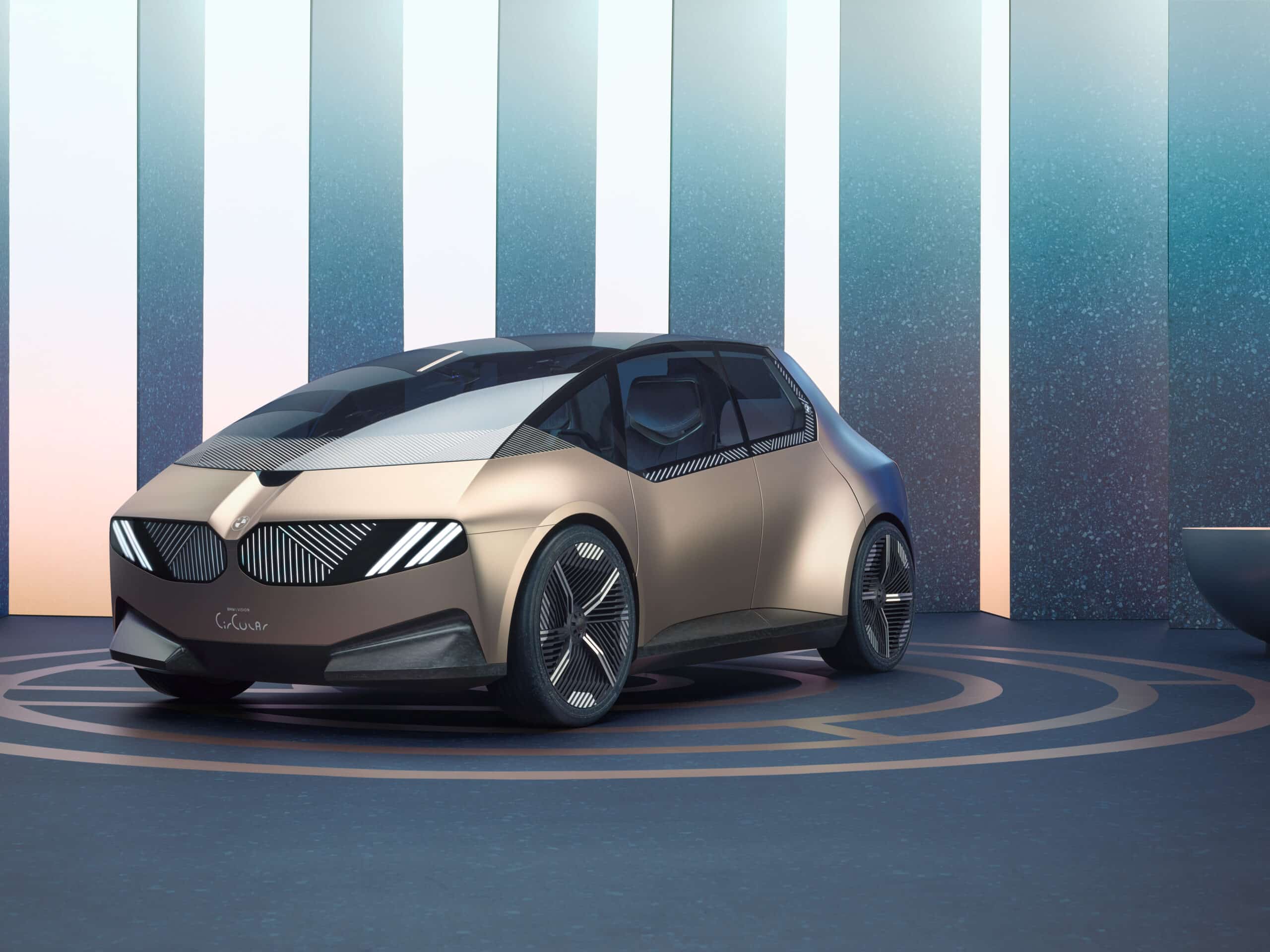
“The Neue Klasse is a next generation of electric cars. The architecture is completely new and developed specifically for electric cars. It is about a new platform, a new design philosophy. And it also represents a major step forward in the field of electromobility. BMW Group will invest billions in battery technology in the near future. For the first time, round battery cells will be used that fit perfectly into the new architecture. The innovative lithium-ion batteries for the sixth generation of BMW eDrive technology provide a 30 percent greater range, more than 20 percent higher energy density and a 30 percent higher charging speed. Only green energy is used to produce the cells and an important share of the required lithium, cobalt and nickel is recycled material. New raw materials for the new generation of battery cells are, as now, only extracted in certified mines. But the Neue Klasse also goes much further in digitalization, which translates into connectivity. What currently only the driver sees in his windshield will soon also be visible to the passenger, for example. The final pillar of the Neue Klasse is sustainability and circularity. That's about the use of materials, recycled materials. The BMW i Vision Circular embodies this approach: one vision car that looks ahead to 2040 and is constructed from 100 percent recycled and reused materials. That percentage is already 30 percent for every BMW and will quickly increase to as much as 50 percent. The Neue Klasse is therefore about much more than just a platform for electric cars: it is about design, electromobility, digitalization and sustainability/circularity. The Neue Klasse will be built in BMW Group's newest, most modern factory, which is currently being set up in Hungary. This so-called iFactory is the blueprint for all other factories in the field of flexibility, efficiency, sustainability and digitalization. For example, there is already a digital version in which Neue Klasse models roll off the virtual production line - to optimize all processes. The iFactory will be the first car factory in the world to produce CO2 emission-free cars.”
“BMW Group will invest billions in battery technology. Round battery cells will be used for the first time.”
BMW has a firm target of 40 percent CO2 reduction by 2030: 20 percent in the supply chain, 80 percent in production and 50 percent in the use phase. What is the biggest challenge?
“We control production ourselves, as well as the usage phase: we make the cars, we make the drivetrains. The biggest challenge is in the supply chain, simply because we work with 12.000 partners. An electric car is not necessarily sustainable. Mainly due to the extraction of rare earth materials, it produces 40 percent more CO2 emissions in the supply chain. Not only do we want to compensate for that, we even want to achieve a 2 percent CO20 saving in the supply chain. We have to be extremely strict about this towards our partners, just as is expected of us - we are already seeing this with large corporate contracts. We challenge the partners to demonstrate savings. BMW Group has been at the forefront when it comes to sustainability for years. We are continuously working to make our products even cleaner and safer, but we will never lose sight of one element: driving pleasure. You can experience that for yourself in the new 7 Series!”
MASTERS MAGAZINE
This article is from MASTERS MAGAZINE. The winter issue of MASTERS was created in collaboration with Jordi van den Bussche. Many will know him as YouTuber Kwebbelkop, but he has been working hard as an entrepreneur for some time, as he explains in the Great Interview. What is new is that his company JVDB Studios offers to do social media marketing and short format content marketing for other companies. “They can also figure it out themselves, but we cracked the code.” Jordi gives a platform to like-minded entrepreneurs such as Jay-Jay Boske, Demy de Zeeuw, Chahid Charrak and Marcella de Bie, and discusses developments surrounding games, crypto and NFT: “Just as bitcoin turned the financial system upside down, will that also happen with gaming.” This extra thick winter issue also focuses on Lengers' first own ship, an interview with Corendon CEO Atilay Uslu, specials about the new BMW 7 Series and Samsung foldables, and - exclusively for MASTERS! – an interview with Max Verstappen.


