
Taste
Black Badge in Brabant: In search of the secret of the south
If you come from north of the rivers, it is sometimes difficult to see the beauty of Brabant. Yet we step into a Rolls-Royce Spectre Black Badge to go in search of exactly that. "We don't shout it from the rooftops here."
As you head down the A2, the Martinus Nijhoff Bridge seems like the logical transition from Gelderland to North Brabant. The bridge is named after the poet, who wrote about the previous bridge in 1934: 'I went to Bommel to see the bridge. I saw the new bridge. Two sides that formerly seemed to avoid each other, become neighbors again.' In high school, I had to recite this poem by heart, but by now I know zero other people who can still rattle it off. I never really found it beautiful, and that bridge isn't the natural border of North Brabant either: for that, you have to drive another fifteen minutes, over the Maas Bridge near Empel. It gives me fifteen minutes longer to reflect on the beauty of Brabant. A few weeks earlier, I had asked photographer Luuk van Kaathoven about it. He was born and raised there, has lived there his whole life, yet he still couldn't provide an answer – remarkable for someone who views living in Den Bosch as the highest achievement in life.
Luxury cookies
Earlier that week, I had picked up a brand-new Rolls-Royce Spectre Black Badge at Cito Motors in Eindhoven. That family business has been around for nearly a century now. Nowadays, Marissa van Laarhoven is at the helm, but Hein van Laarhoven is still present almost every day. The company belongs to the top tier of Dutch car dealers: not only do they carry the Jaguar and Land Rover brands, but you can also go there for a new McLaren. Moreover, the company is the Dutch importer of Rolls-Royce. The Van Laarhoven family is also co-owner of one of the largest BMW and MINI dealers in the Netherlands. “Just keep doing things the way they are is our secret,” Hein van Laarhoven once said. “That is what our customers expect here too: Brabant coziness. We once had to replace the cookie tin with luxury cookies – a requirement from Rolls-Royce. Our customers wanted nothing to do with it; they wanted that familiar cookie tin back en masse. Perhaps that is indicative of Brabant's down-to-earth nature.”
World of work
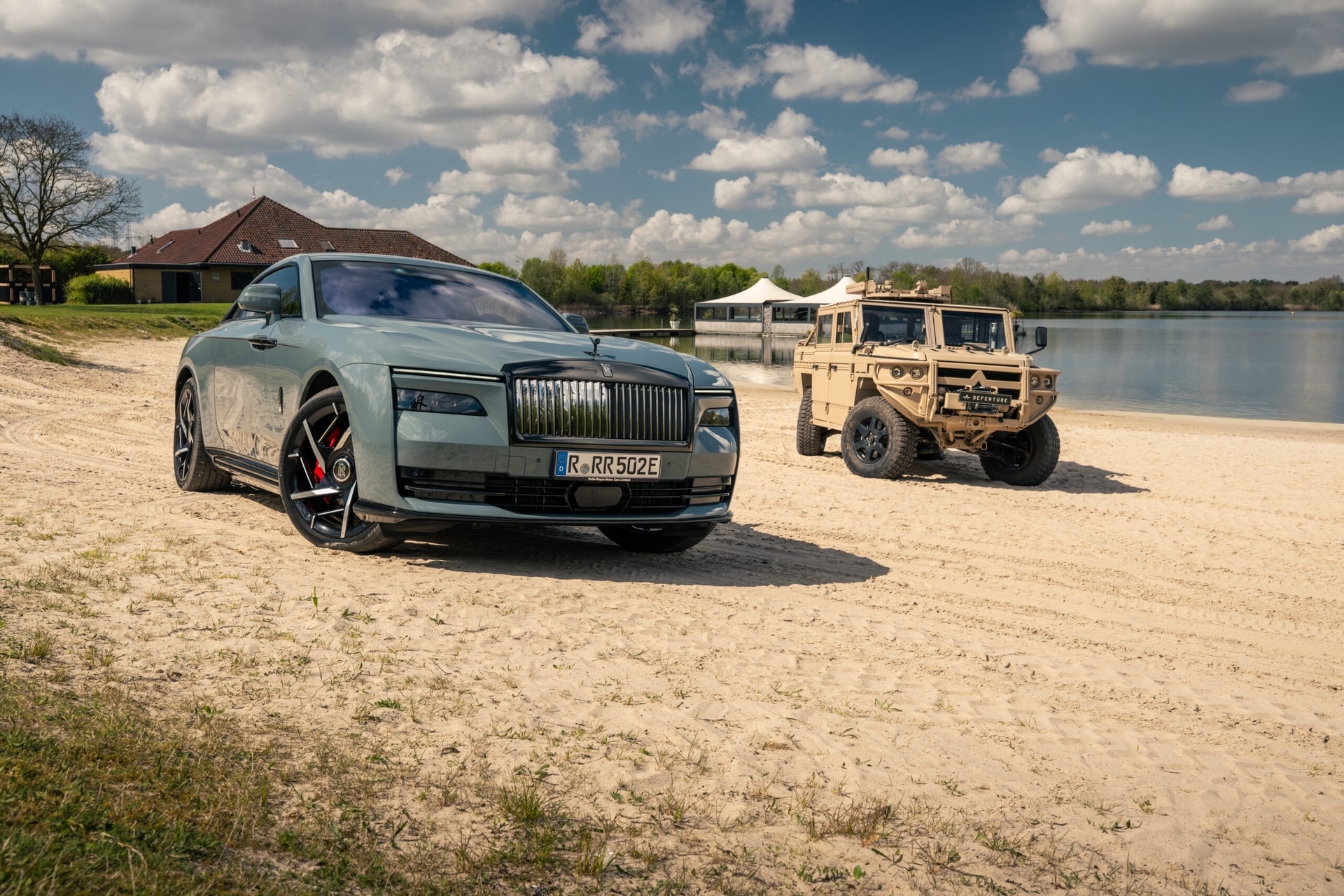
In his letters, Vincent van Gogh did not praise the down-to-earth nature of the people of Brabant, but above all the nature. He was born in Zundert, went to school in Tilburg, and, after various wanderings at home and abroad, settled in Nuenen. 'I still find something here that attracts me to rural life, something that makes me more serious and makes me feel that people here live closer to nature than in the city. It is a world of work and of silence here,' he wrote in a letter to his brother Theo. That is an excellent reason for us to choose the Loonse en Drunense Duinen as our first stop. The nature reserve was a national park from 2002 to 2024. After that, it was incorporated into the larger Van Gogh National Park. Earlier this year, the park was designated the most sustainable destination in the world, making 'our' electric Rolls-Royce seem particularly at home here. We take some photos of the Spectre in this area, but with a busy day ahead of us, we don't have the peace to truly enjoy this national park. Just a few kilometers away, we find our second location for the day: Experience Island, a place where countless business events and corporate outings are organized. That description inevitably brings to mind the obligatory raft building, but entrepreneur Gerard Rond indicates that much more is possible. “Recently, we had thousands of people on the grounds here for TechBeach 2026, where companies try to interest young people in a career in technology. The Ministry of Defence was there, for example, with an F16. And it is organized in collaboration with vlogger MasterMilo. You and I are unaware of it, but you can bet that all young people know about it!” And speaking of the Ministry of Defence: Rond has close ties with them, as he took the initiative for 'the Dutch Hummer'. Rond: “With that description, everyone knows what you mean, and you do the car a disservice. The Hummer, actually the Humvee, is now decades old; at Defenture (manufacturer of high-quality light tactical mobility solutions for military and specialized units of Defence and security organizations; ed.) we build something modern. With one primary characteristic: you must always be able to get home with it.”
Us knows us
That is quite different from what former motocross champion Rond was used to. “We would ride a few laps and the whole bike could fall apart, but that didn't matter to me. When I started riding in the Dakar, things changed completely; there you needed something reliable, a bike you could take to the finish line.” The Defenture factory is located in Gelderland, but Rond does the testing here, and demonstrating the car to potential customers also often takes place in Loon op Zand. “I have a beautiful site of forty hectares here. When I started here twenty years ago, everyone asked what I was going to do with it. Just wait and see, I would answer. Now we aren't allowed to do anything in this country anymore, except here. Even the Defense special forces train here; the helicopters land here. They have a beautiful training ground just down the road, but that is just sand – you don't need to practice there for modern warfare.” Has two decades of entrepreneurship in Brabant instilled in him a fondness for sausage rolls and Bossche bollen, then? “I have to be honest, yes. You have issues everywhere now and then, but here you always manage to work things out, because Brabant is a place where everyone knows everyone. Very different from where I live in the Betuwe. There, you don't know the neighbor two houses down. Everything is a bit more easygoing here, nice and relaxed. That makes you relaxed too. For example, in the summer, when things are a bit quieter with events. Then we open up the park and there are a few thousand people on the beach here every day. By now you know the people who have been coming here for years; that makes it fun. That Brabant, I think it's just fine!”
Show pride
After a short stop at the Van Mossel Museum (the automotive museum of the largest car dealership group in the Netherlands), we head for the DAF Museum, which houses the 98-year history of the truck brand from Eindhoven. “We showcase over 98 years of DAF history here,” explains museum manager Maurice Klaassens. That history spans a wide range. “We present the story of the Van Doorne family, the founders of DAF – the story of a family with a technician and an economist who made the company flourish. We display the passenger cars built from 1958 to the mid-1970s, as well as the Continuously Variable Transmission for which those cars were famous. And then there are the large vehicles: trucks, but also military vehicles and fire trucks, for example. In addition, we are trying to broaden the museum's scope, as we are now entering a period where there are children whose grandfathers no longer drove a DAF. That is why we have a wing where we organize temporary exhibitions. Currently, running through September, we have the exhibition there.” Design with AI — Past & Future“After that, we have an exhibition in that wing about car brands produced in the Netherlands, where, besides DAF, you can think of Spyker and Donkervoort, for example.” Klaassens himself is not from North Brabant, but he has been working there for a long time now. He started at the DAF Museum last year; before that, he worked at DAF Trucks for seventeen years. Has Brabant gotten under his skin by now? “I consciously want to stay a bit on the outside, to be able to judge it better. That ‘just act normal, that’s crazy enough’ mentality is deeply woven into the DNA of DAF and formerly the Van Doornes. Sometimes we could let go of that modesty a little bit. It can all be quite a bit bolder. When I say that to people who are actually from Eindhoven, they sometimes give me an angry look. You can certainly show a bit more – show pride – of everything that has been done and happened here. The mayor told me recently that, industrially speaking, the city is built on two major pillars: DAF and Philips.” Perhaps the Philipses were just a bit more marketers and the Van Doornes more technical people, because there isn't a single statue to be found in this entire city related to DAF. But perhaps we can change that with the centenary on the horizon.”
Forbidden City
Now that Klaassens has dropped the name Philips, we must look for the traces the electronics company has left behind in Eindhoven. The company is still active in Eindhoven, but no longer as all-dominating as it once was. 'We're a health technology company improving people's health and well-being through meaningful innovation' the website thunders towards you these days. Lighting systems, CD players, coffee makers, toasters, irons, chips, washing machines, TVs – Philips once made it all, but none of these products are part of the range anymore. Some are still sold under the Philips name, such as the Philips Hue smart lighting systems, but the Philips name is used under license for these. Philips business units can still be found on the High Tech Campus, and the Philips Museum is also a tangible reminder of the past. However, the place where it all happens in Eindhoven these days is Strijp-S, a former Philips factory site located right next to the Philips Stadium. Strijp-S was once considered a 'forbidden city': in the past, without a Philips pass, you couldn't get past the gatekeeper's lodge. In 2002, Philips sold the site, only to immediately lease it back for a number of years. Now you can live and go out there, but above all, it is the heart of Brabant creativity. It is no coincidence that this is the location where the annual Dutch Design Week is organized.
Cuban cigar ice cream
In the Gloeilampplantsoen, a towering bust of founder Gerard Philips serves as a reminder of the history of this district. Just a stone's throw away, chipmaker NXP and chip machine manufacturer ASML originated as divisions of Philips. Now, however, it is primarily creative companies that you find in this part of the city, with 'reclaimed wood emperor' Piet Hein Eek as the most famous example. Even the ice cream here is creative, as becomes apparent when we meet Jeffrey Claassen. He immediately comes outside to take a look when we park the Rolls-Royce Spectre in front of his ice cream parlor, Intelligentia ICE by Jeffrey. He sees similarities with his own work. “Everything you see is beautifully made. That is what I love when I make my ice cream too. You can use flavor pastes, but you don't have to. If you see banana ice cream here, fresh bananas went into it.” And that creativity? “I’m only 26, but I also worked here for the previous owner. He went bankrupt, partly due to corona, which is why I took over the business three years ago. I started here almost ten years ago with an internship during my pastry chef training. Gradually, we started creating our own flavors. You won’t find a standard flavor like stracciatella here, but you will find strawberry-elderflower or yogurt-lemon curd, for example. During Dutch Design Week, we go the extra mile. Last year, for instance, we had Cuban cigar ice cream.” Claasssen cannot imagine having an ice cream parlor anywhere else. “I come from Brabant myself, and for me, this is the most beautiful place in Brabant. It is typically Brabant here, but also international. Friendly, but not stuffy. There is a lot of creativity here, but during the last hour we are open, the main language is English; that’s when the ASML expats come to grab an ice cream.”
Sweet surprise
Things are much more traditional at the Jan de Groot bakery in Den Bosch, the place for Bossche bollen. You can hardly insult a Brabander more than by asking if that isn't 'just a moorkop'. We take advantage of our visit to the shop to delve into the differences. In both cases, it is a choux pastry filled with whipped cream; in both cases, it is finished with chocolate. However, the moorkop is lighter and made with different chocolate, whereas with a Bossche bol, it is a mortal sin to pipe a dollop of whipped cream on top – let alone place a cherry or a mandarin segment on it. Armed with Bossche bollen, we head for Sint-Michielsgestel – if you're from there, you say Gèssel – where we have arranged to meet Imke Walenberg. The editor-in-chief of MarketingFacts and Twinkle has a passion for cars and is a Brabant native through and through. Although Sint-Michielsgestel is the 'most expensive' municipality in Brabant (average house prices are the highest there), the Spectre in the street where Walenberg lives immediately stands out. “Yes, that was impossible to miss,” she says. “What an incredible car, isn't it?” Walenberg previously lived in Milan and Amsterdam, among other places, but returned to Brabant. “I grew up in Valkenswaard, where I lived for eighteen years. I left with the thought: will I ever come back? Before we moved to Sint-Michielsgestel, we lived in Amsterdam. I found it difficult there to form a really good bond with people. It always remained a bit of a 'it's not a free-for-all' situation there, which is what I am used to.”
Dancing in a farmer's smock
It turns out we are just about the only ones who use the front door. “For as long as I’ve lived here, I’ve never had a doorbell. Not necessary. It wasn’t there when I bought the house, and after that, I never got around to getting one. It’s always just a case of: come around the back here. That easygoing nature is typical of Brabant. My boyfriend is from Haarlem; he always says, too: the people here are so nice.”
Imke didn't know Sint-Michielsgestel before she moved there, she says. “We had a good feeling about this village. But in that respect, Brabant is quite different from Utrecht, for example. If you live in Amersfoort, you probably have no connection to Harmelen or Linschoten. In that regard, Brabant is more of a unified whole. I don't deny my Brabander identity. My accent will always be there, and I am always very proud to say that I come from here.” Yet she does see a change. “The older generation often swept things under the rug. We are the generation of Brabanders who no longer do that. We love a party *and* helping each other, but you are also allowed to really talk about things.” Laughing: “That makes the Brabander a kind of 360-degree person, and that is very pleasant.” With that thought in mind, we drive the Spectre back home, north of the rivers. Brabant is so much more than just dancing around in a farmer's smock during Carnival, an image that often exists in the Randstad. Vincent van Gogh already wrote admiringly about the people of Brabant. 'I love these farmers here very much – they are not people with manners, but they have something genuine.' And: 'I would not want to make them any other than they are, for in their roughness there is something sincere.' The people of Brabant are no longer rough and ill-mannered, but they remain genuine and sincere.
Rolls-Royce Specter Black Badge
The Rolls-Royce Spectre is the first (and so far only) electric Rolls-Royce. As with other models, there is a Black Badge, a variant that is faster and aimed at a younger audience.
Everyone knew back in the day that a Rolls-Royce engine runs so silky smooth that a coin stands upright in it. An electric Rolls-Royce is even quieter. So, if there is one brand that suits electric driving, it is Rolls-Royce. And the hassle with charging cables? That is a non-issue, the friendly salesperson in Eindhoven explains to me. “No one drives their Rolls-Royce 450 kilometers a day, so you don’t need to charge on the road. They simply charge at home in the garage, so those wet, muddy charging cables you’re talking about are a non-existent problem for them.” Rolls-Royce itself has also previously stated that customers prefer the privacy of charging in their own neighborhood over the public nature of a gas station. Incidentally, the range the brand specifies is 493 to 530 kilometers (depending on the tires fitted). Those who wish to drive more can, of course, use regular charging stations and fast-charging points. The Spectre Black Badge has a power output of 659 hp, 75 hp more than the regular Spectre. More would have been possible, but accelerating from 0 to 100 in three seconds is not comfortable, an engineer from the brand once explained to me. Prices for the electric Spectre start at around 400.000 euros; the Black Badge adds an unknown premium on top of that. Because it is electric, the tax on this model is low. This ensures that the Spectre is the most accessible Rolls-Royce in our country. However, the base price is irrelevant, because due to the extensive possibilities for personalizing a Rolls-Royce, the price rises rapidly. The average Spectre is equipped with well over a hundred thousand euros worth of options and accessories.


