Power
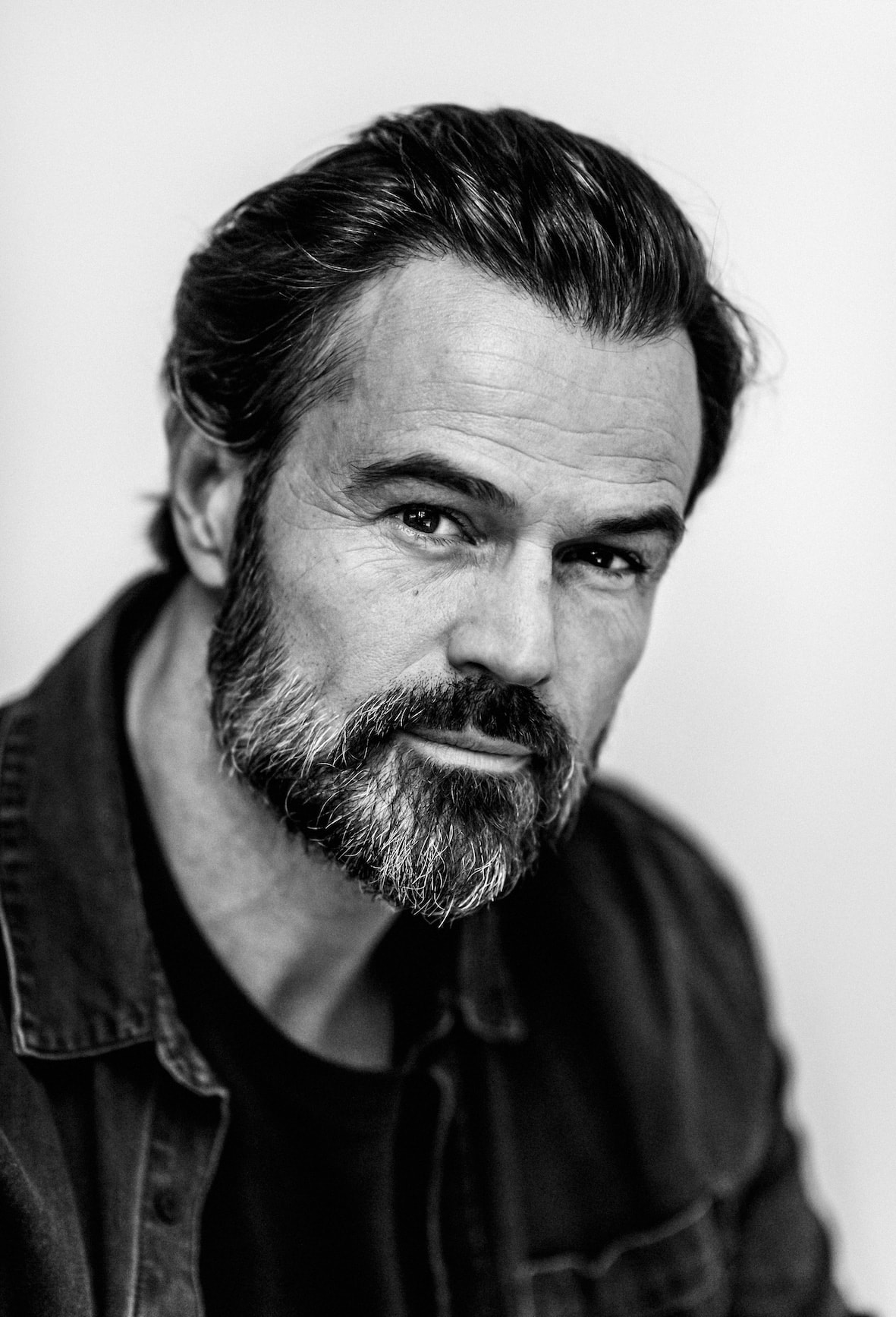
ARIE BOOMSMA: "I TRY TO LIVE IN THE NOW"
She once competed in the Miss Universe pageants, now she uses her charms to seduce exciting men into an interview for MASTERS. This time Irene van de Laar focuses on television presenter, photo model and gym owner Arie Boomsma.
Text: Irene van de Laar | Online editor: Natasha Hendriks
Image: Karoly Effenberger
Arie Boomsma was born as the second son in a pastor's family in Marken. He is the owner of the Vondelgym gyms, fitness & health specialist at RTL Boulevard, a popular speaker on fitness and vitality, and wrote, among other things, the books The man and his body, Move and the bestseller Fit, in small steps to a healthier life. His latest book was recently published, Persevere. I meet Arie in the creative environment of Spaces Zuidas in Amsterdam.
What are your morning rituals?
“There is a big difference between how they were and how they are now. If I have an ideal situation, I get up at six o'clock, after a good night's sleep. I would prefer to walk outside first in the summer. Sunlight in my face, moving barefoot in the grass a bit and then going inside with the newspaper. Then I eat and take a cold shower. That's actually my ideal start to the day. It must include meditation, and I don't mean sitting still for half an hour, but just breathing for five minutes and observing a bit outside. Start quietly, no phone. The situation is very different now, my three children are under the age of five. The oldest is four, the youngest six months. So yeah, that's up really early. They are often awake at half past five after a broken night. Then I'm with them first and that's fun too, it's a different routine than before: my own day doesn't start until around half past nine. But I really enjoy that morning with the kids.”
What is the charm of the morning?
“I love the morning, always have. When I used to play basketball, we had those crazy times where you had a training session at half past four in the morning, which felt like the middle of the night. Then I discovered the romance of that isolation in the morning. No one is active then, so you feel like you have some kind of edge over everyone you're competing with when it comes to sports. That romanticism appealed to me because it feels like discipline and good structure.”
Do you ever read a passage from the Bible?
“Yes, I still read from the Bible, but now usually once or twice a week, previously it was every day.”
What do you do with that?
“Sometimes I argue with myself. That belief is still important to me. That hasn't actually changed, but the belief itself has changed. The interpretation must always be in motion, and for me that means that I keep asking questions about everything. Sometimes I read something that I just find beautiful, especially those books from the Old Testament: beautiful images, beautiful language. Sometimes it is purely meditative and I read certain examples in stories of how you deal with people. I think those are beautiful thoughts, which I try to translate to life now, to social media for example. How do I interact with others? How do I want to be treated?"
Unfortunately, I think the message from the Bible is very far removed from contemporary reality.
“Yes, but that also makes it relevant. Especially now you feel a harshness in society and the economy that - partly due to the entire corona situation - means that people have pent up even more, are angry, and are suspicious of everything. That's what a Bible can also be about, that you put things into perspective, that you continue to look for what is really important, that you continue to treat people somewhat normally or even lovingly.”
You are the son of a preacher. How was the faith practiced in your family?
“The funny thing is: one of my brothers, who is almost the same age as me, so had more or less the same upbringing, the same childhood, believes that we were raised strictly. Going to church every week, going to church twice every two weeks, reading the Bible every day with dinner, praying. If at some point when you were sixteen or seventeen you stayed down after going out, my father was disappointed. He experienced it all as very strict and I experienced it as exceptionally open, because I saw that my parents also had Gerard Reve or Jan Wolkers on their bookshelves, or a certain philosopher. My mother sometimes brought a homeless person into her home for two weeks or a boy who had just come out of juvenile detention, and he would live with us for a few months. So I saw those thoughts and that openness, the beautiful sides. My brother thought it was very bad that it was more or less forced upon him in his education. We differ in opinion on that. But the practical implementation of praying, reading the Bible and going to church and so on, that was all there. My parents did emphasize: we believe this, but there are many people who think and believe differently, and you have to deal with that just as well. They did that themselves.”
You are the owner of the Vondelgym gyms, which now have three locations. How far-reaching were the consequences of the lockdown during the first corona wave?
“It was exciting, because so much was unclear. With Vondelgym we are really building sports clubs. The community is very close-knit, but the location is also very important. We do a lot on social media and online, but that is an extra. We have many more followers on social media than we have members, so that is certainly an important branch, but it really happens in those gyms. When it became clear that they had to close, I was shocked. I found it an exciting period, because every government decision had so many consequences. That all felt very urgent. Whenever there was such an announcement, I usually went for a walk first. Get everything straight. What exactly was said? What does that mean for us? One of the most important decisions for us was to fully enter into the relationship with the members and followers and to take the risk of having no income for four months, or even worse: we didn't know how long. At the time I thought: three, maybe four weeks. We did cancel all subscriptions and chose to continue serving the customer, because it was also a struggle to stay healthy during that period. We provided free training, recipes and yoga flows.”
How extensive was the damage?
“Fortunately, we reached an agreement with the landlords, and our members stayed with us by pausing their subscriptions. While they flew out elsewhere in the country. I was really proud of that. Then I was asked by the big chains if I wanted to do the lobbying for the gyms, which made the visibility enormous, even though I never talked about Vondelgym. It became clear what we, the sports sector, stand for. We got through that crisis well.”
If you were a policymaker, what would you change about the current corona policy?
“I have a lot of admiration for the way our government is tackling it. You'll just have to stand there and make those decisions every time. I will never attack the policy. I don't think that is appropriate, nor necessary. At the same time, I do feel: guys, there is one thing: what you have to keep doing now is keep moving. This can all be done safely and cleanly, if everyone takes responsibility. I would like to see the government now focus on encouraging and inviting health. Education, and also making healthy eating more affordable.”
Last month your latest book, Volhard, was published. What is it about?
“I wrote the book earlier Fit, in small steps to a healthier life – in the areas of sleep, nutrition and exercise. A timeless book with lots of information, tips and tricks. I would like to follow up on that. That has resulted in Persevere. The focus is more on maintaining your good intentions, so that you do not fall back into old patterns. What is discipline? And how do you continue to enjoy your new, healthy way of life. The book is packed with thoughts and fragments about what perseverance is, and how you can organize it. Small steps, big changes in your lifestyle. I really enjoyed working on it.”
What is your objective as an entrepreneur?
“We are now continuing to build and the current three gyms are doing well, so we are thinking about a fourth location, possibly also outside Amsterdam. If I could one day have about ten branches in the Netherlands, I would think that would be fantastic.”
What is the measure of success?
“I feel successful when the things I do contribute to something, when they matter. Of course I also look at it from a business perspective. That I am successful with things I like. That I can make a good living from what I am building and that more and more will continue to be created. I think in perspectives. Part of what makes it successful for me is that it gives me space and invites creativity.”
Masters #44
https://mastersexpo.com/product/masters-44/