
Amsterdam 750
Amsterdam's secrets revealed
The vault cracked. Where gold and banknotes once lay safely behind metre-thick walls, there now stands an inviting entrance.
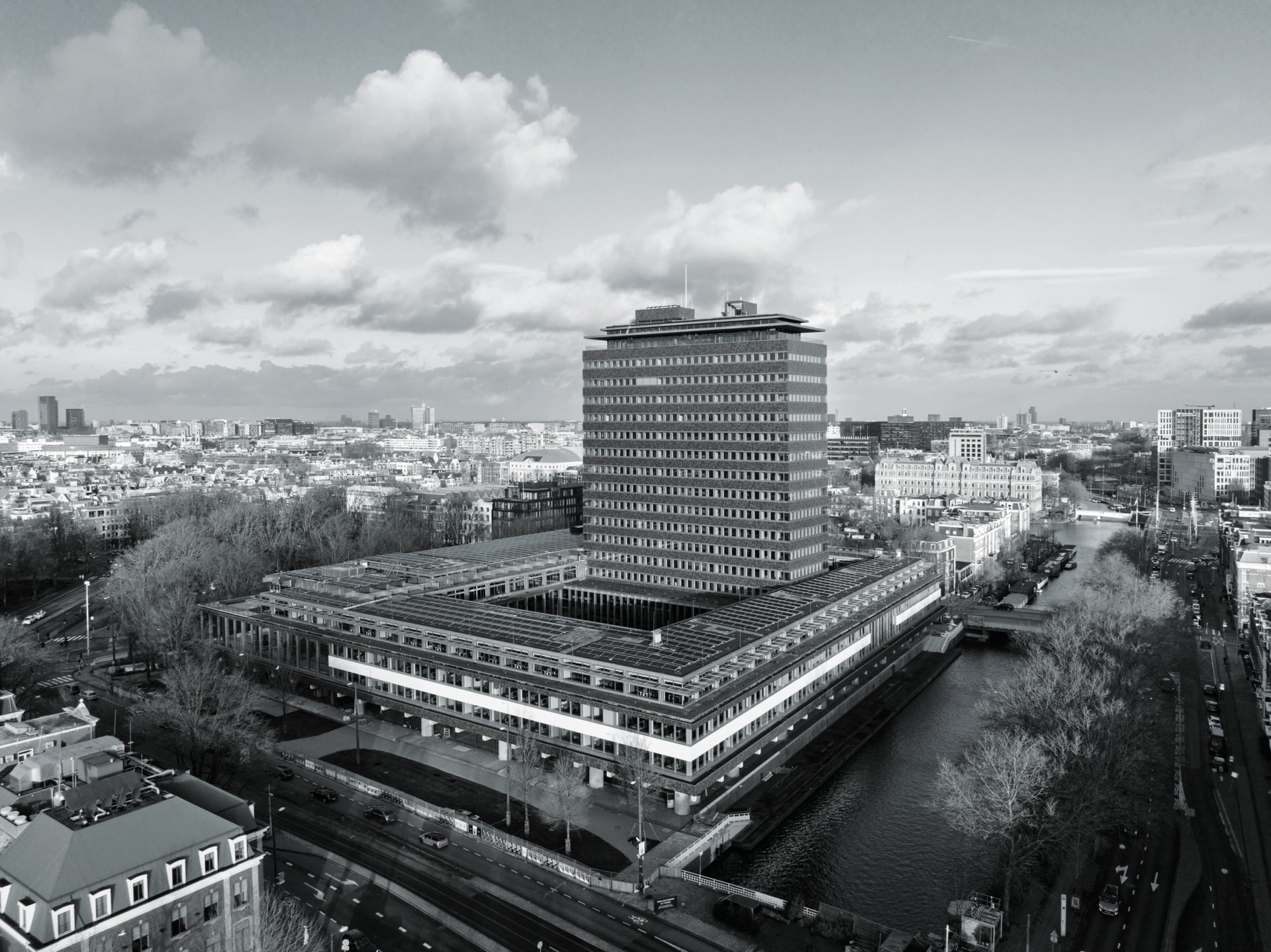
The safe was cracked
Where gold and banknotes once lay safe behind meters-thick walls, now stands a welcoming entrance. The new passageway of the renovated headquarters of De Nederlandsche Bank cuts right through the former vault, an operation that took two days and required two-meter saw blades. What remains is The New Treasury: a public space where people can study, meet, or explore the exhibition about money. The six old vault doors recall the past, while the gold-colored walls retain the echo of wealth.
Invisible masterpiece
A colossal creature rises from the water, immortalized by Keith Haring in 1986. But for years, his monumental mural (12 by 15 meters) was hidden behind steel plates for protection. Now visible again at the Central Market Halls in Amsterdam West, the work—Haring's largest surviving public mural in Europe—remains inaccessible to the public, like a secret only partially revealed. From Willem de Zwijgerlaan, you can catch a glimpse of this iconic creation, a hidden treasure in the Amsterdam streetscape.
The Secret Palace
The Royal Palace on Dam Square conceals more than just splendor. Originally built as a city hall in the 17th century, it houses obscured rooms and hidden secrets. Within its monumental walls lies a secret vault for the city keys, and in the shadow of its official setting lie ancient corridors and chambers, once used for administrative affairs and discreet escape routes. Behind its stately facade lies a labyrinth of stories.
Ship mysteries
The former 's Lands Zeemagazijn, now the Maritime Museum, houses more than just maritime history. This imposing warehouse, built in the 17th century for the Admiralty of Amsterdam, contains forgotten storage rooms and locked compartments. Although the corridors appear not to have been smuggling routes or escape routes, some sections remain inaccessible—silent witnesses to a time when this building was the beating heart of the Dutch navy.
© Twycer / www.twycer.nl
Under the stones of the city
Beneath the Portuguese Synagogue on Mr. Visserplein—affectionately known as the "snoge"—lies a hidden world, tucked beneath the city's cobblestones. Where footsteps fade into silence, cellars open up, seemingly plucked from a fairytale: treasure chambers full of
Gold, silver, brocade, and silk, as if time holds its breath. When voices ring out above and the candlelight dances, ceremonial objects are brought out of these halls: cups, candlesticks, and the yad—a silver index finger that gently traces the words of the Torah. But when the synagogue is silent and stillness reigns, visitors are permitted to descend. Then you enter not only the treasure troves of faith, but also of knowledge: here is Ets Haim, the oldest functioning Jewish library in the world. And once you've been there, you emerge a new person. You won't believe your eyes—but you'll never forget them.
The secret church
In the heart of Amsterdam, tucked away in one of the smallest courtyards, the Swigtershofje, lies a hidden eighteenth-century refuge. What was once a refuge for persecuted Roman Catholics is now a serene place to stay where history and luxury blend. The original ornaments in The Hidden Church whisper stories of times gone by, while on the altar, transformed into a royal bed, you can drift off under a down comforter. A deep bath with a rain shower offers the ultimate relaxation after a day in the bustling city.
Silent spirits
Behind an unmarked door on Reguliersdwarsstraat, the echo of the roaring twenties whispers. Door 74, a speakeasy bar with world-class cocktails, opens its doors only to those who know the secret code. Reservations are made by phone. Once you've found the unmarked door and rang the doorbell with the secret access code, an intimate atmosphere awaits, far from the neon lights and tourist crowds. A journey back in time, to an era when discretion and exclusivity defined taste.


